|
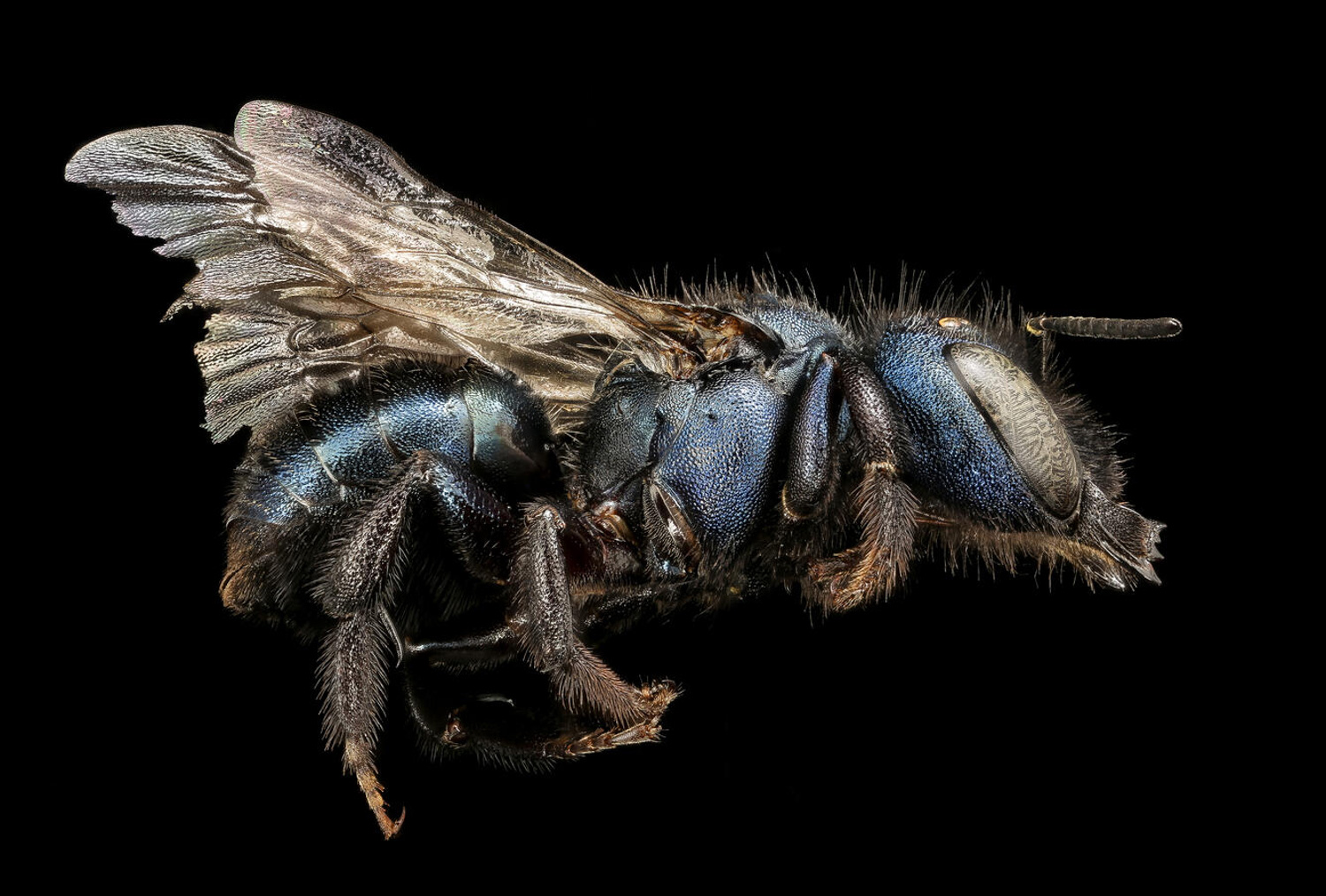
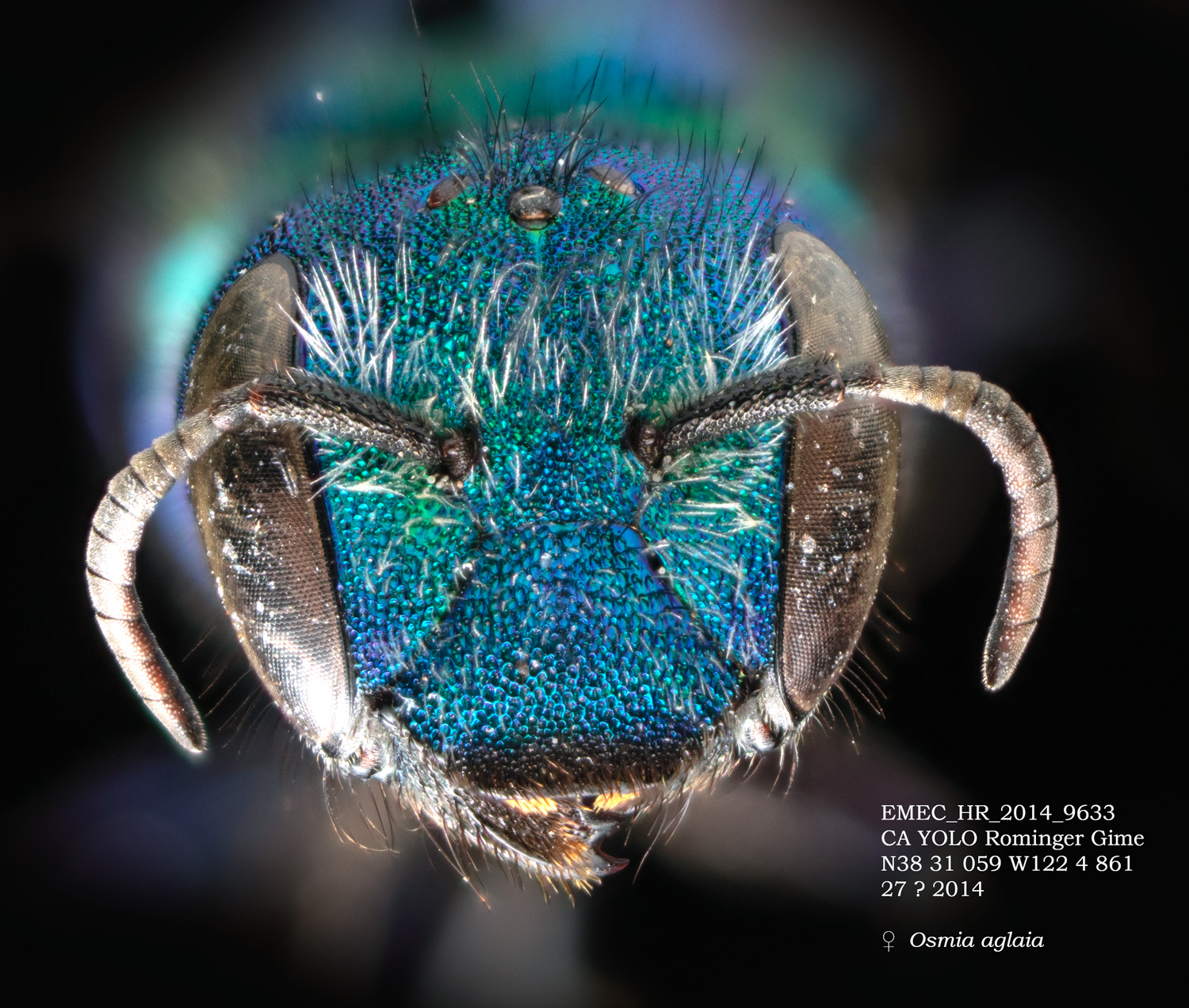
aglaia (CA) albolateralis (OR) atriventris (MI,MD) atrocyanea (OR) cf. caerulescens (OR) calla (CA) cara (CA) |
cornifrons (MI) cf. cyanella (OR) densa (OR) exigua (CA) georgica (PA) |
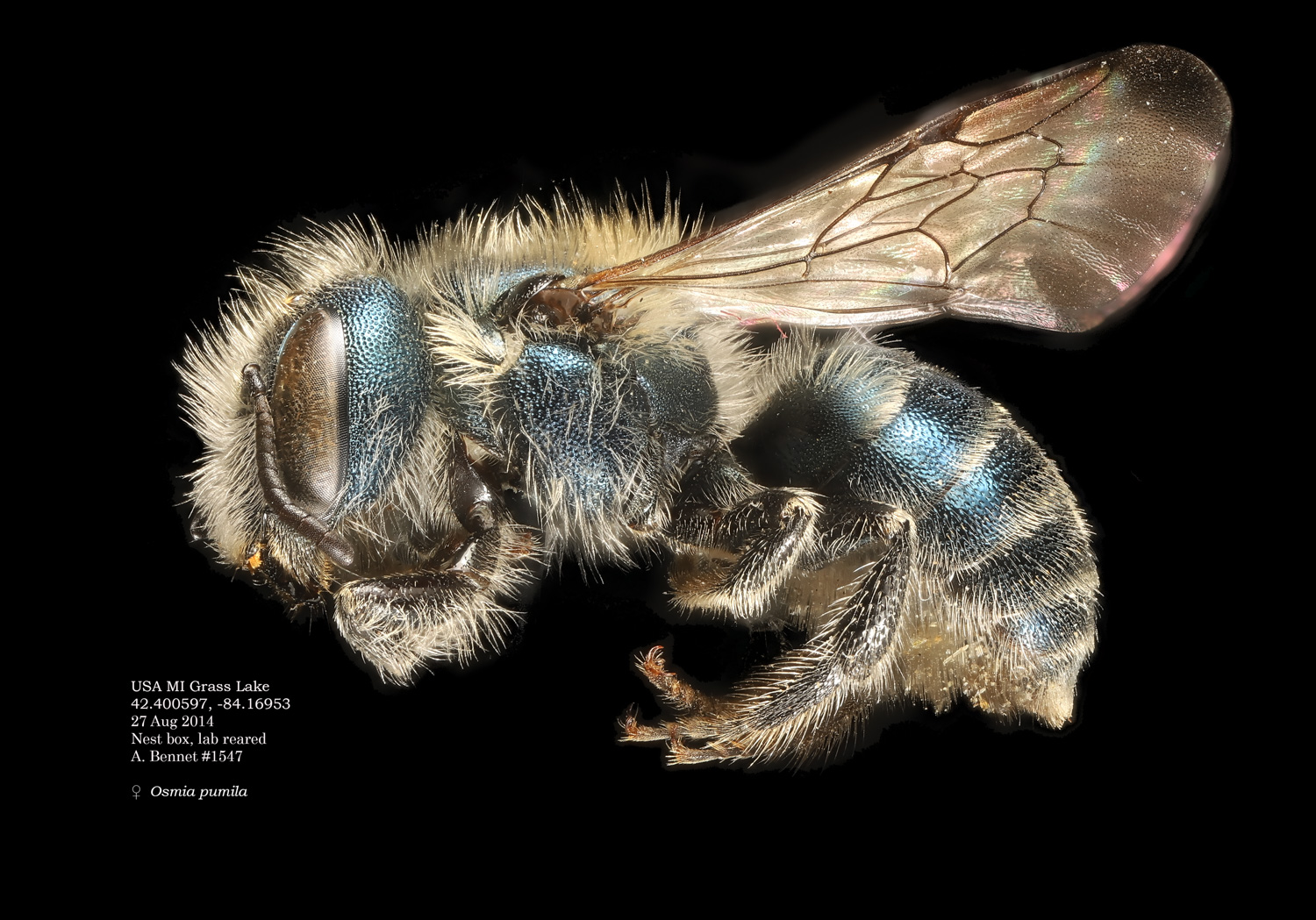
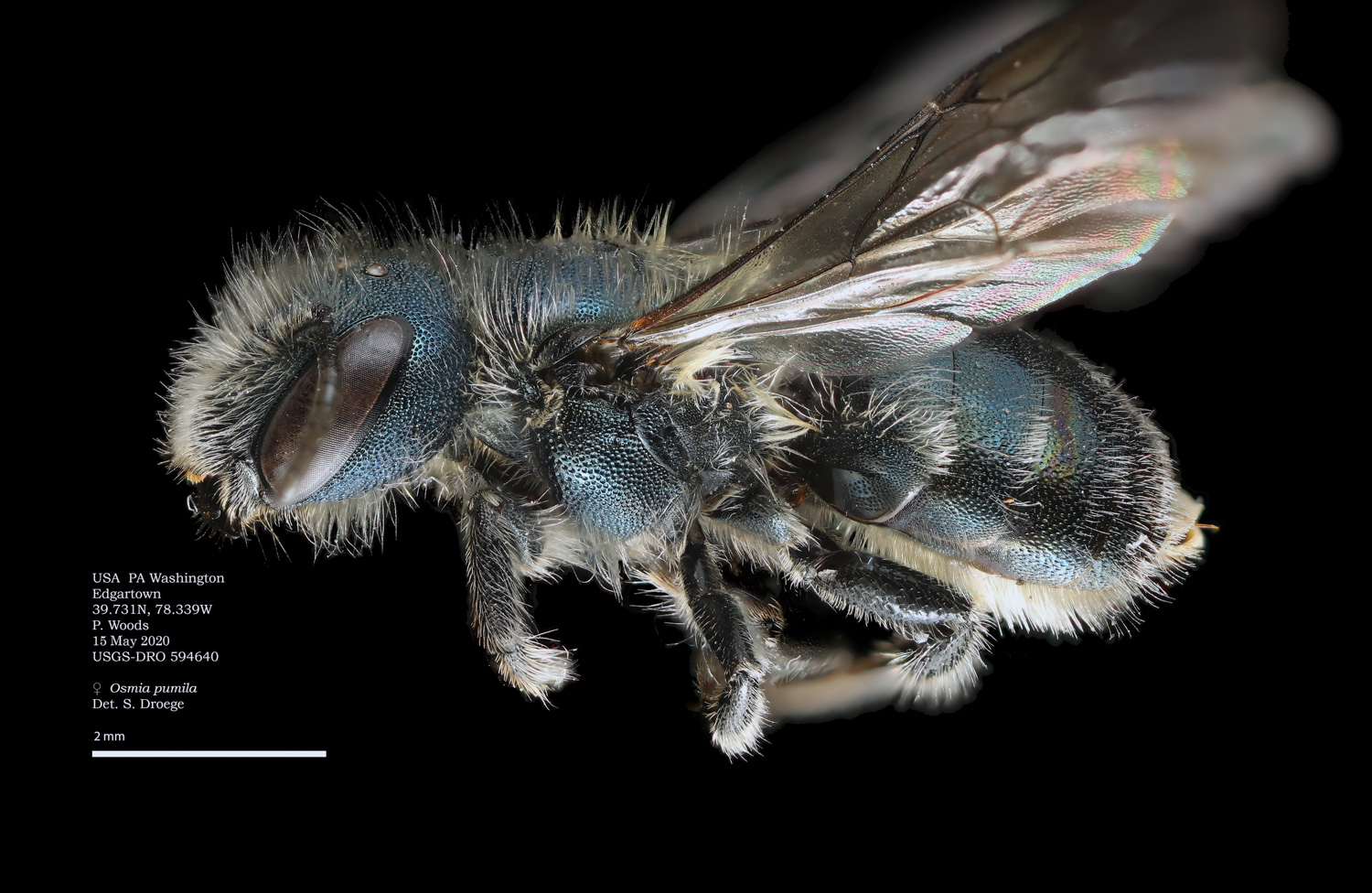
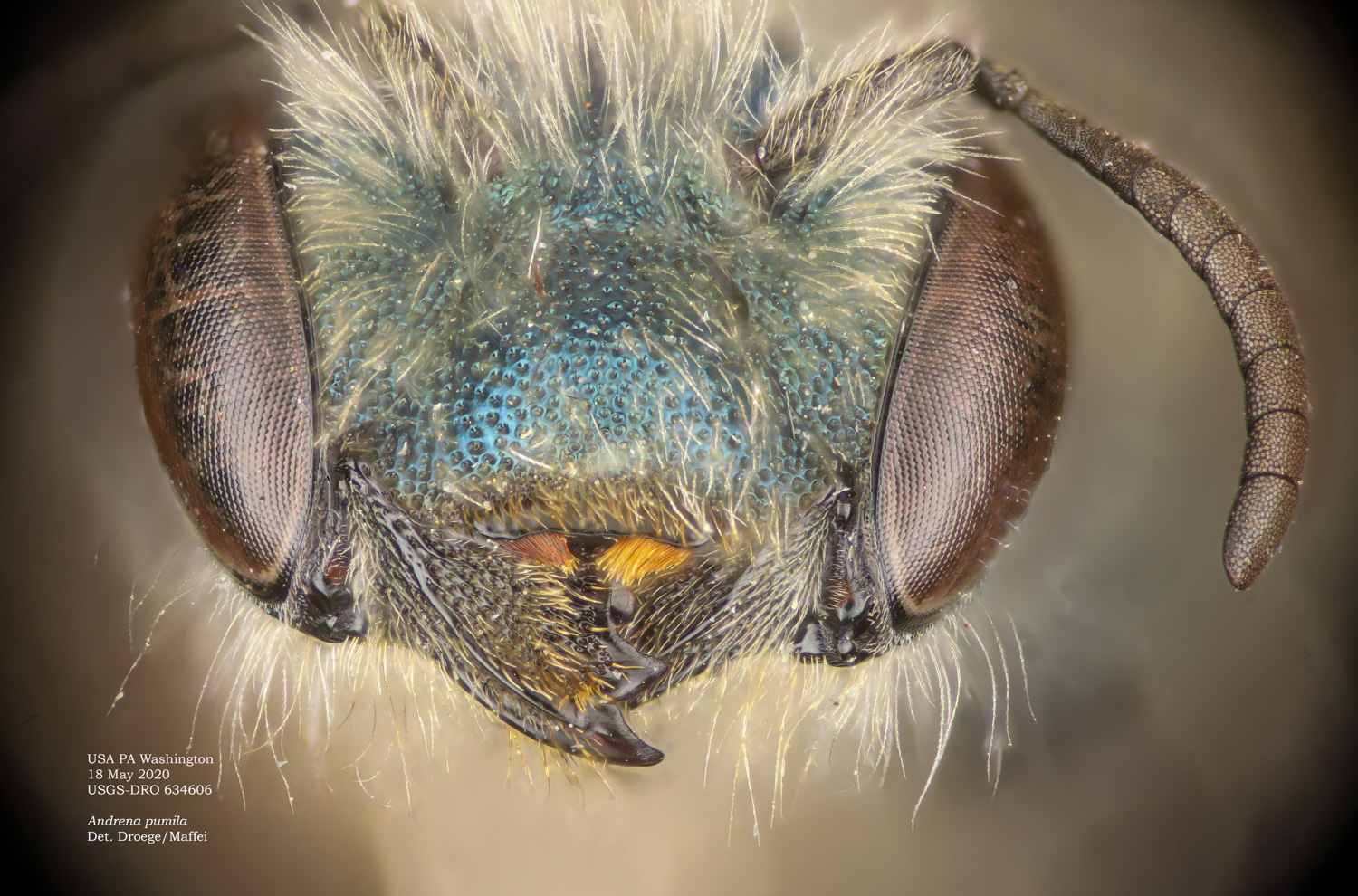
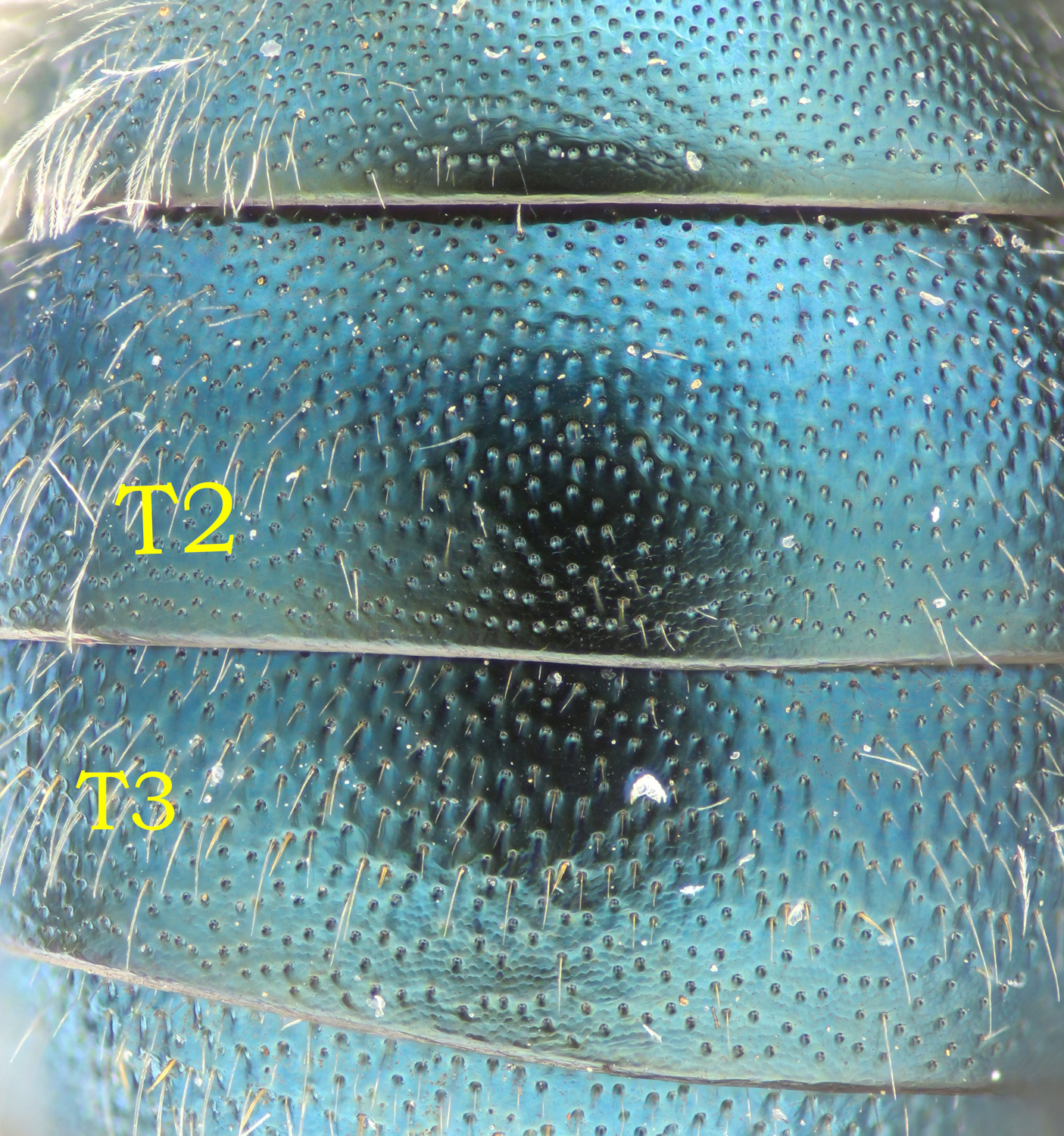
lignaria (OR,MI) nemoris (OR) not Osmia (OR) pumila (MI) sculleni (OR) taurus (VA) virga (PA) |
| I don't have specimens in hand, so can only evaluate what is discernible in photos; these are inadequate to get close to a diagnosis. Evident in photos:
|
So, close to the correct answer? Yes, but beware confirmation bias. Problems ... DL excludes O. aglaia when when I add "unpitted rim of clypeus short, less than 2 pit diameters long." But this condition is evident (to me) in the photos. In any case, Sandhouse states: "Impunc
tate band of clypeus rather narrow." I conclude that DL cannot differentiate the three species, and I question whether the specimen is even one of these; the photos offer inadequate evidence to go further. Images above and right, of specimens from Loren Ponisio's Lab at University of Oregon. |
|
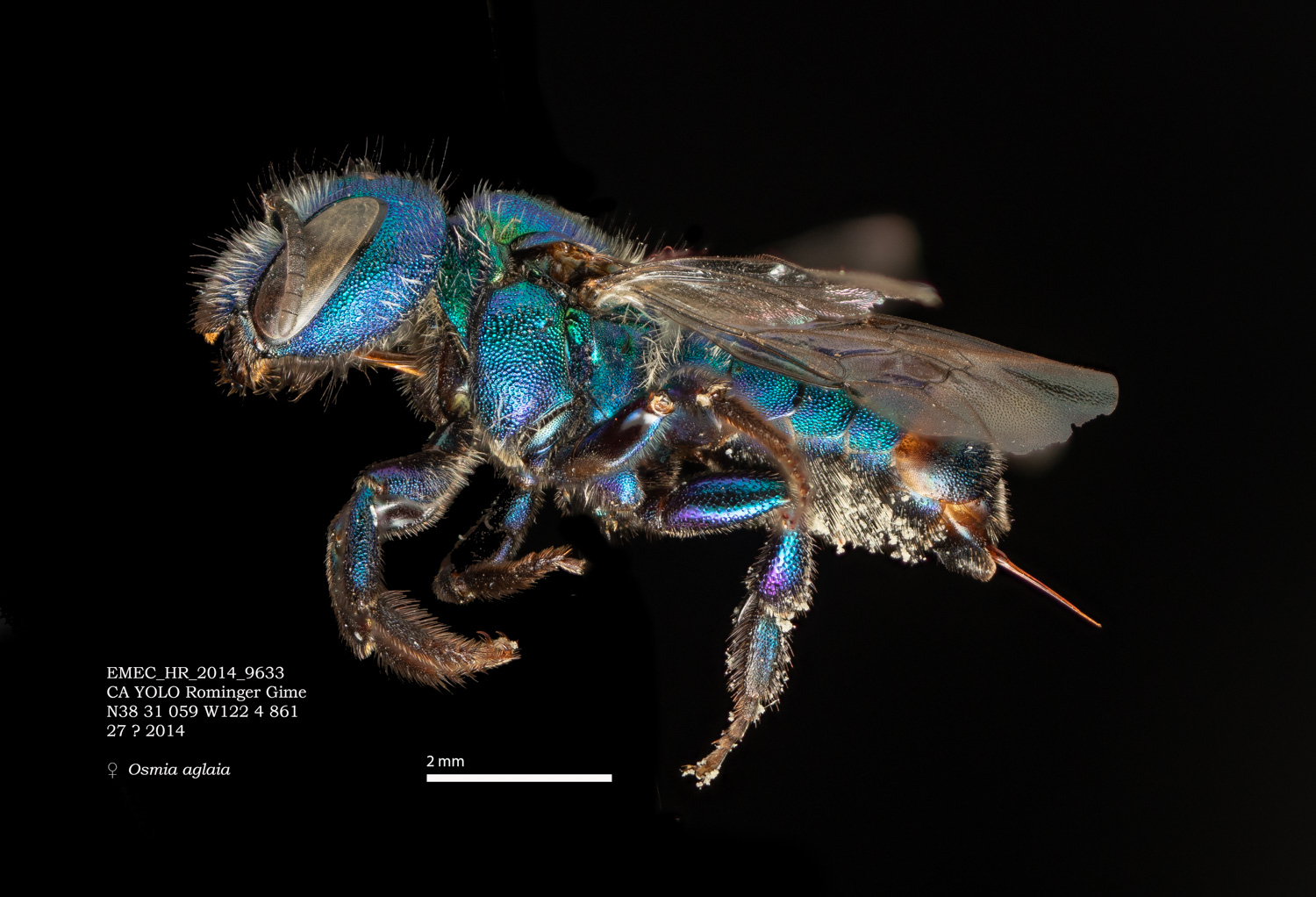
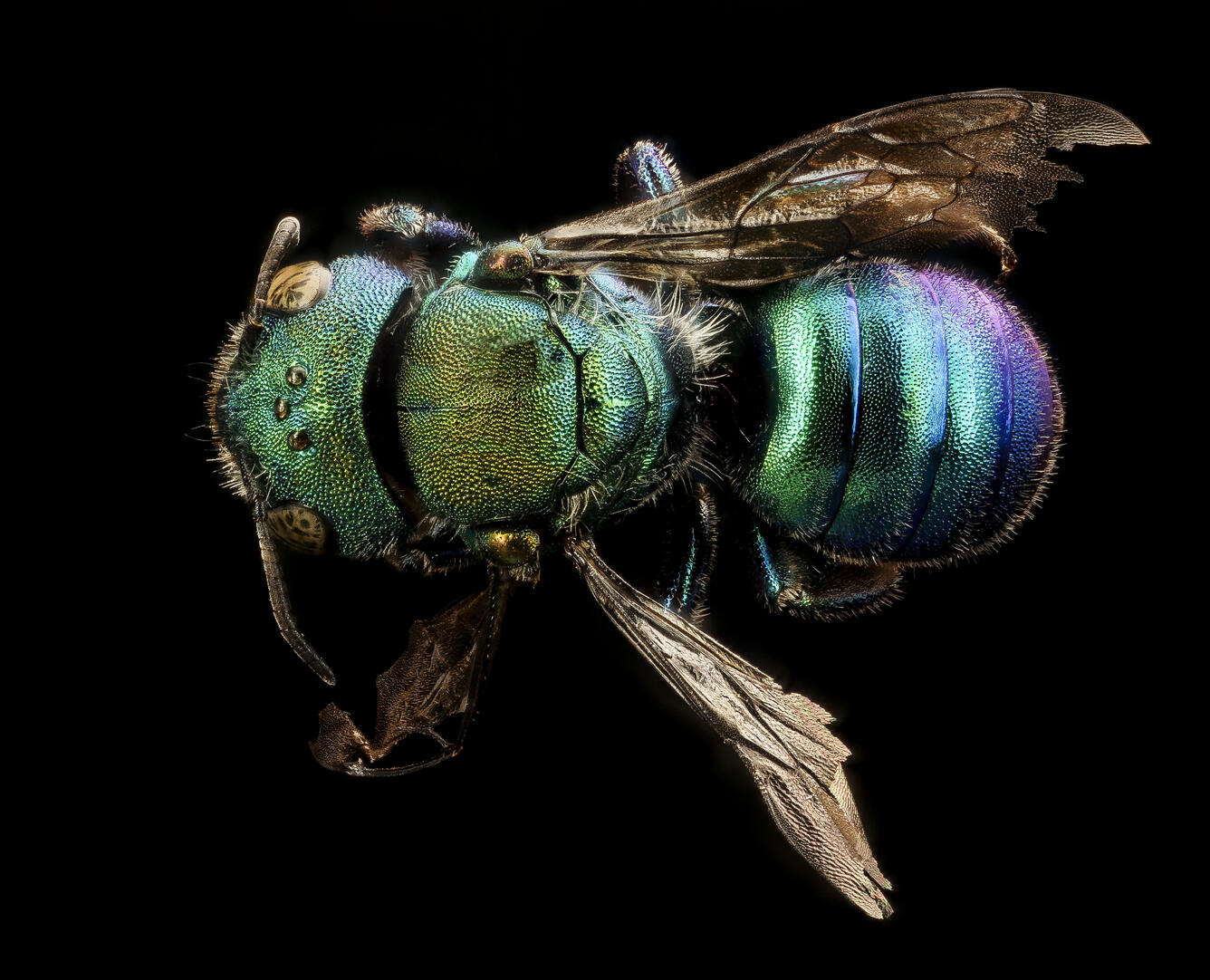
Images this row: USGS Bee Lab, photograph by Anders Croft. "from Yosemite National Park , where Claire Kremen's group has been looking at post burn bee communities in areas of chronic burns. "
|
|
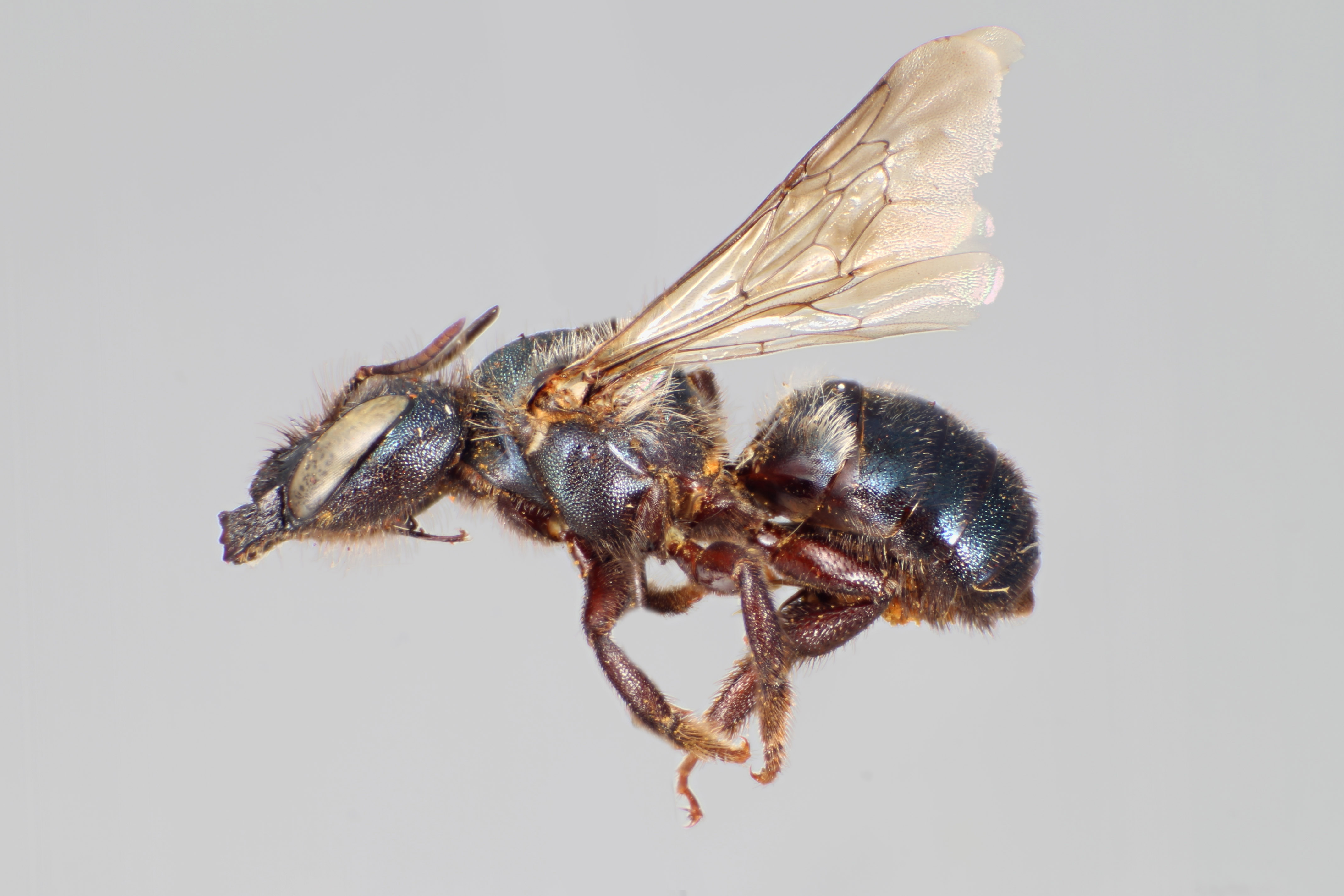
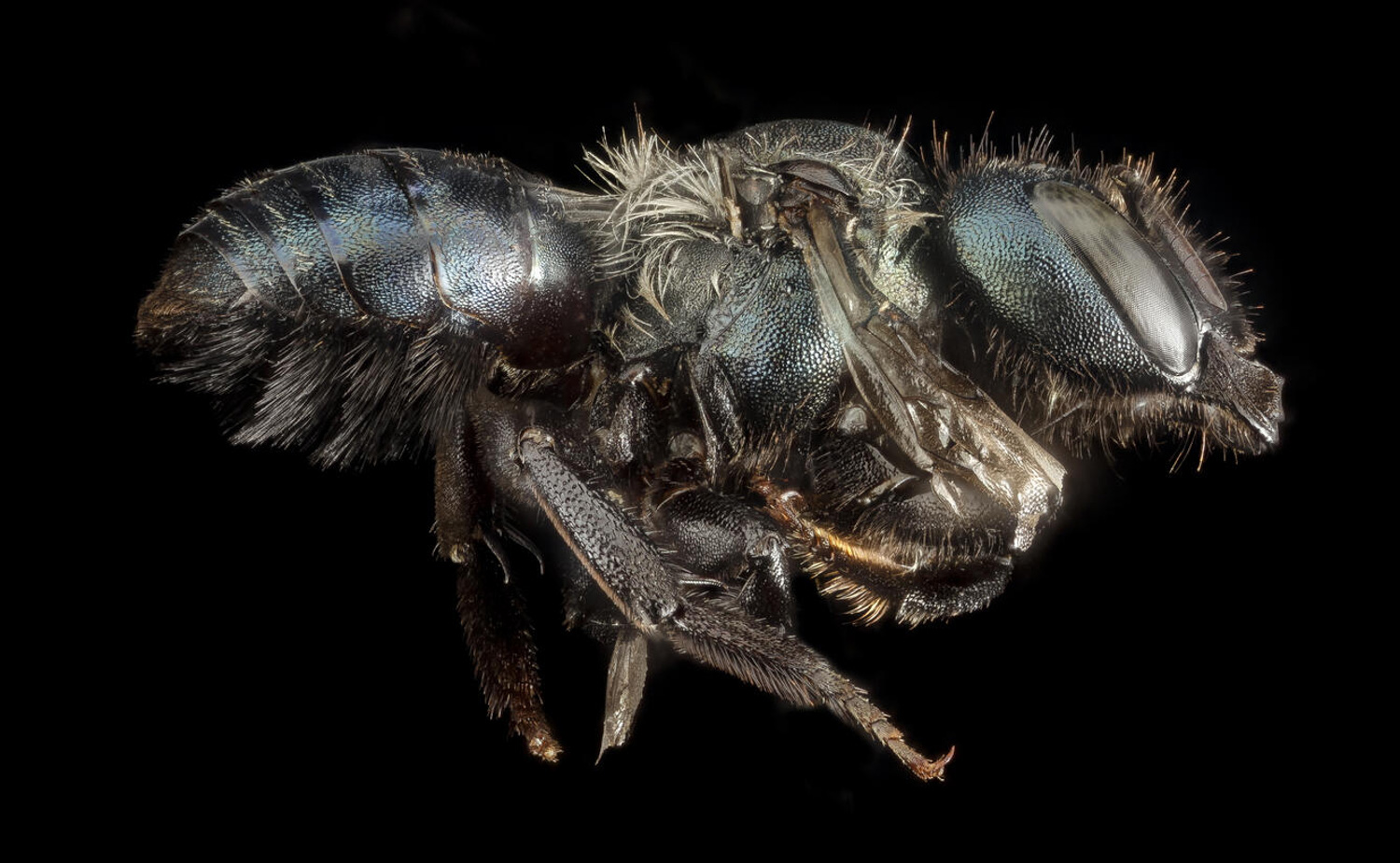
Another example for which I have only standard images, from the USGS Bee Lab, and Laurence Packer. These don't provide enough to support a diagnosis, so I defer to the IDs given with the photos. I note that like for O. aglaia, DL scores O. albolateralis as having a clypeus rim with a long unpitted band; I don't see that here.
USGS Bee Lab image, Elizabeth Garcia, CA specimen/ |
Image above: O. albolateralis, from Bees of Canada, Packer Lab.
Above: USGS Bee lab image, Elizabeth Garcia, specimen from WY.
Below: CA specimen.
|
Easy calls:
|
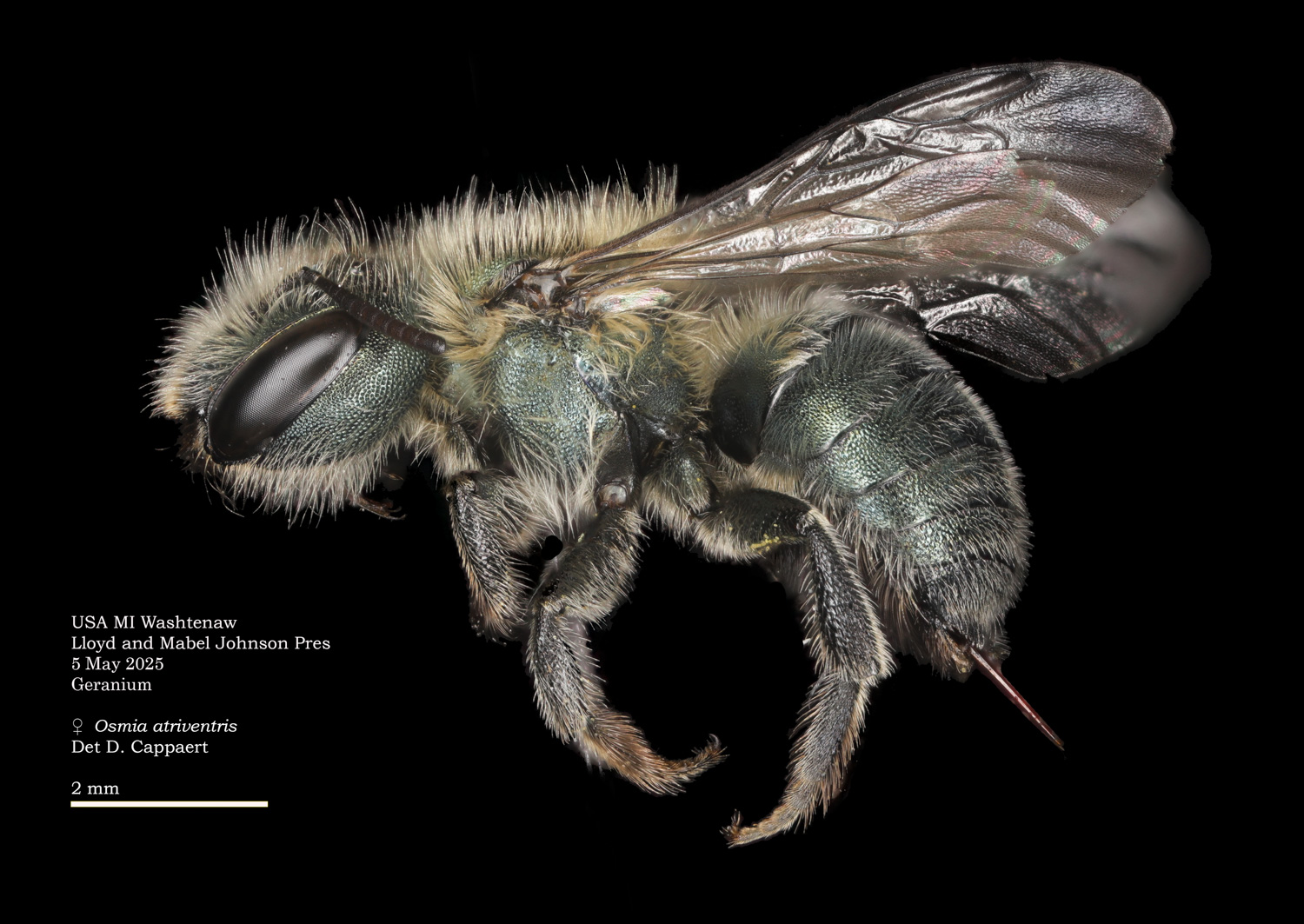
Image above: Michigan specimen.
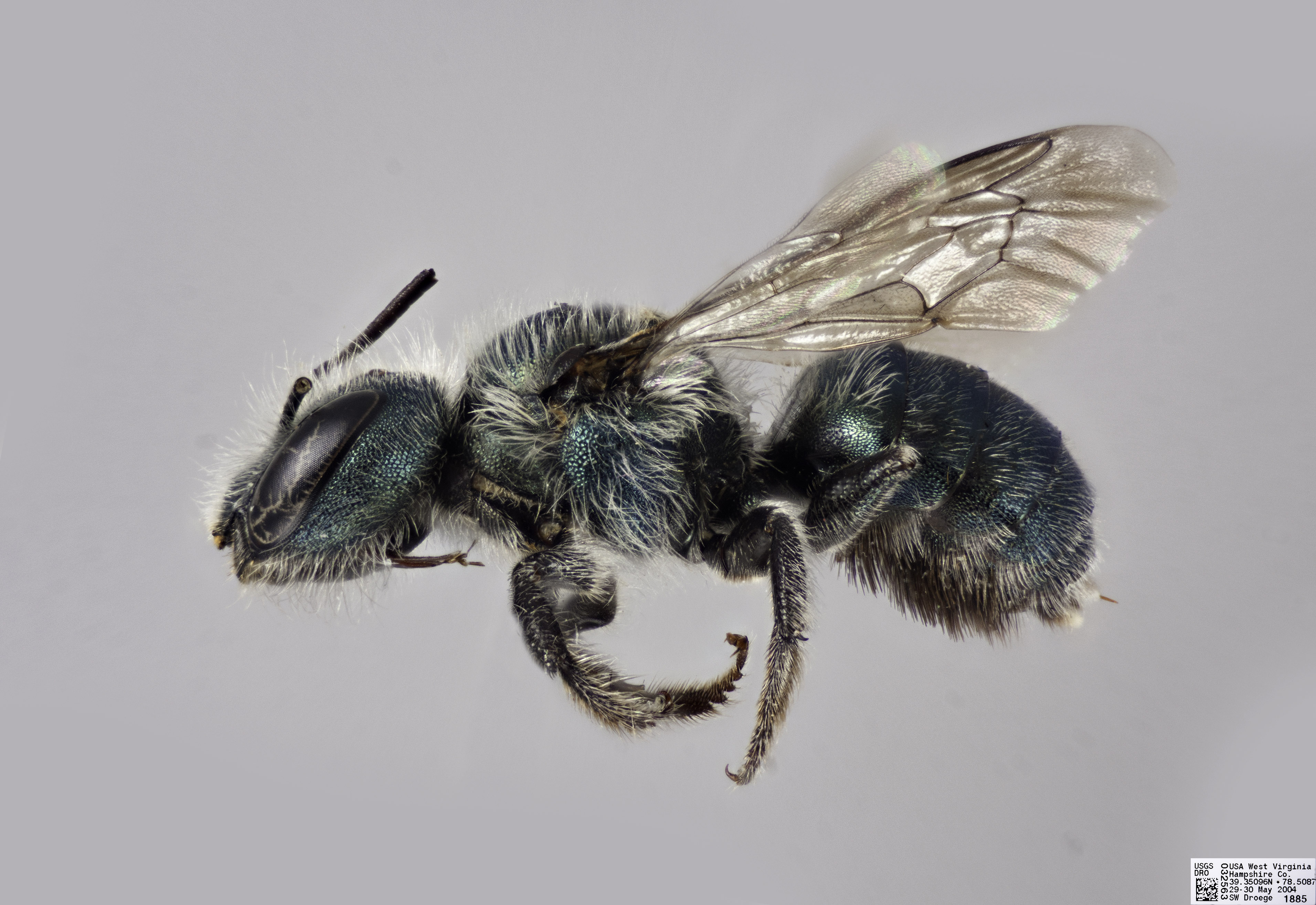
Below: O. atriventris from West Virginia, Bees of Canada, Packer Lab. |
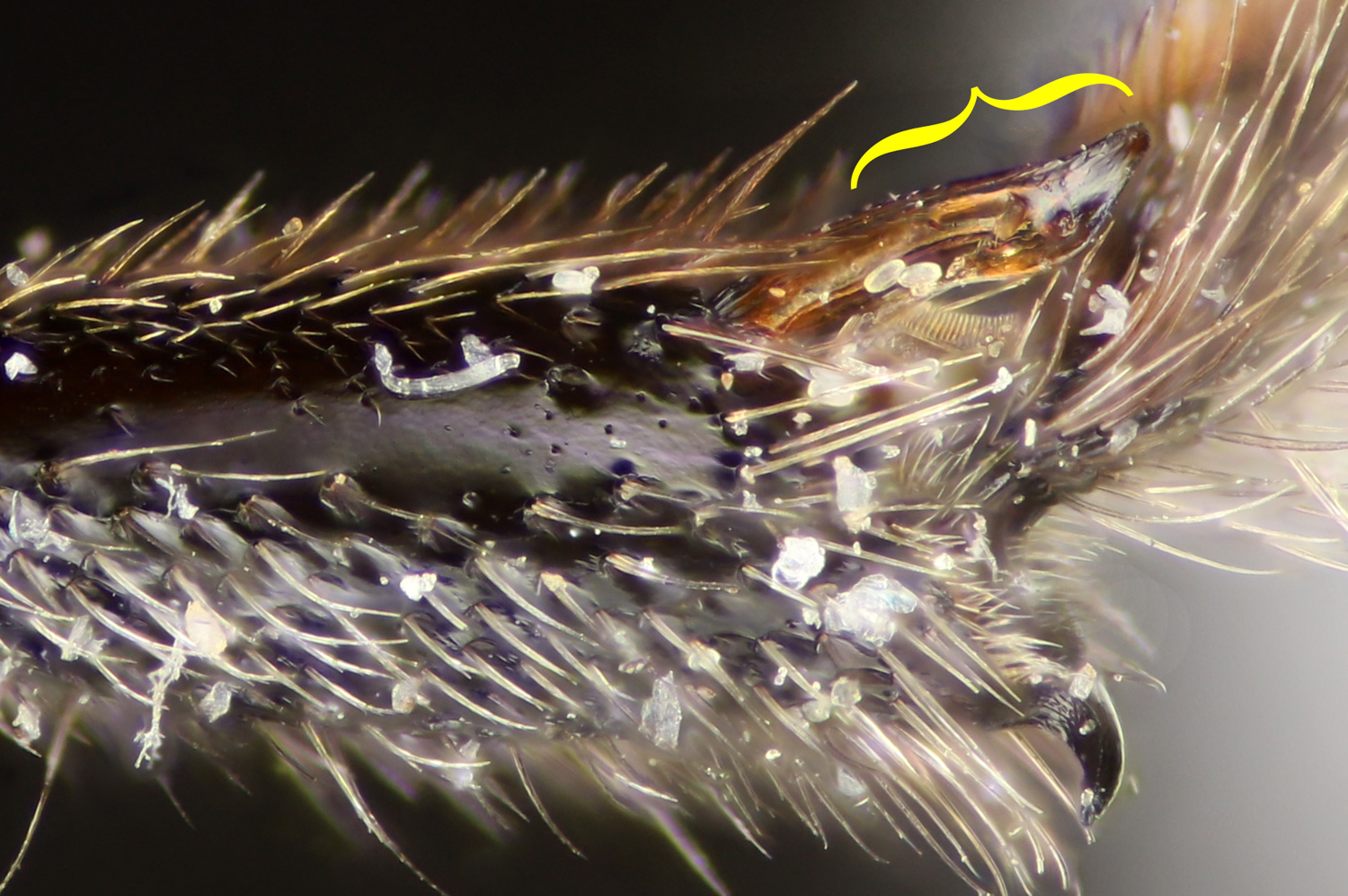
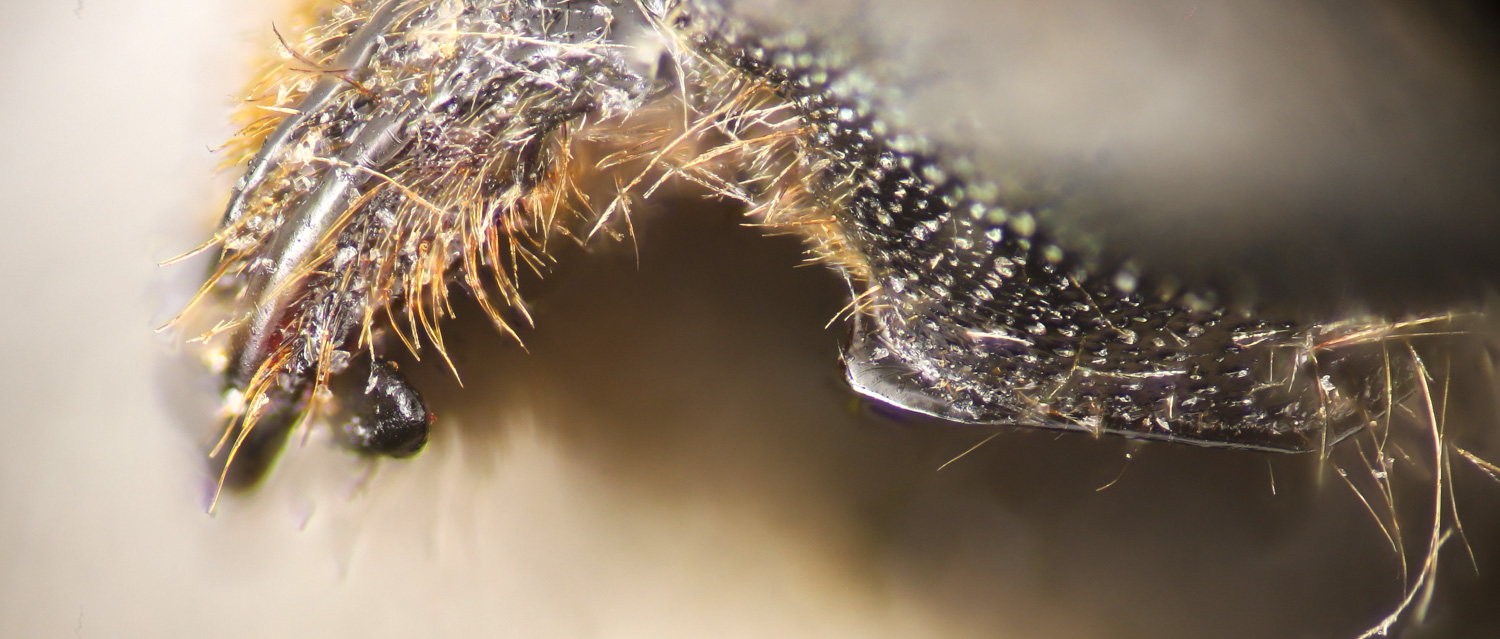
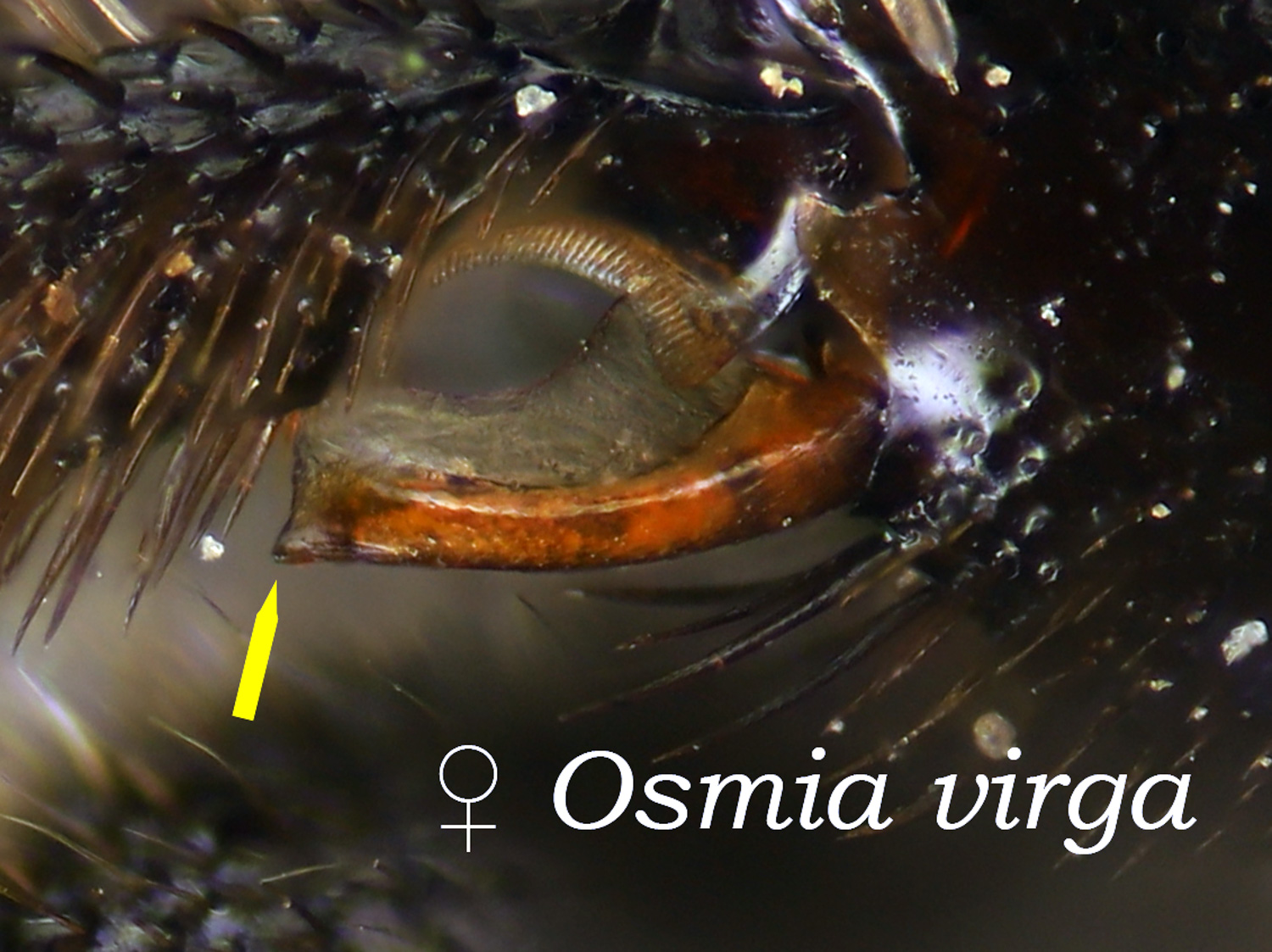
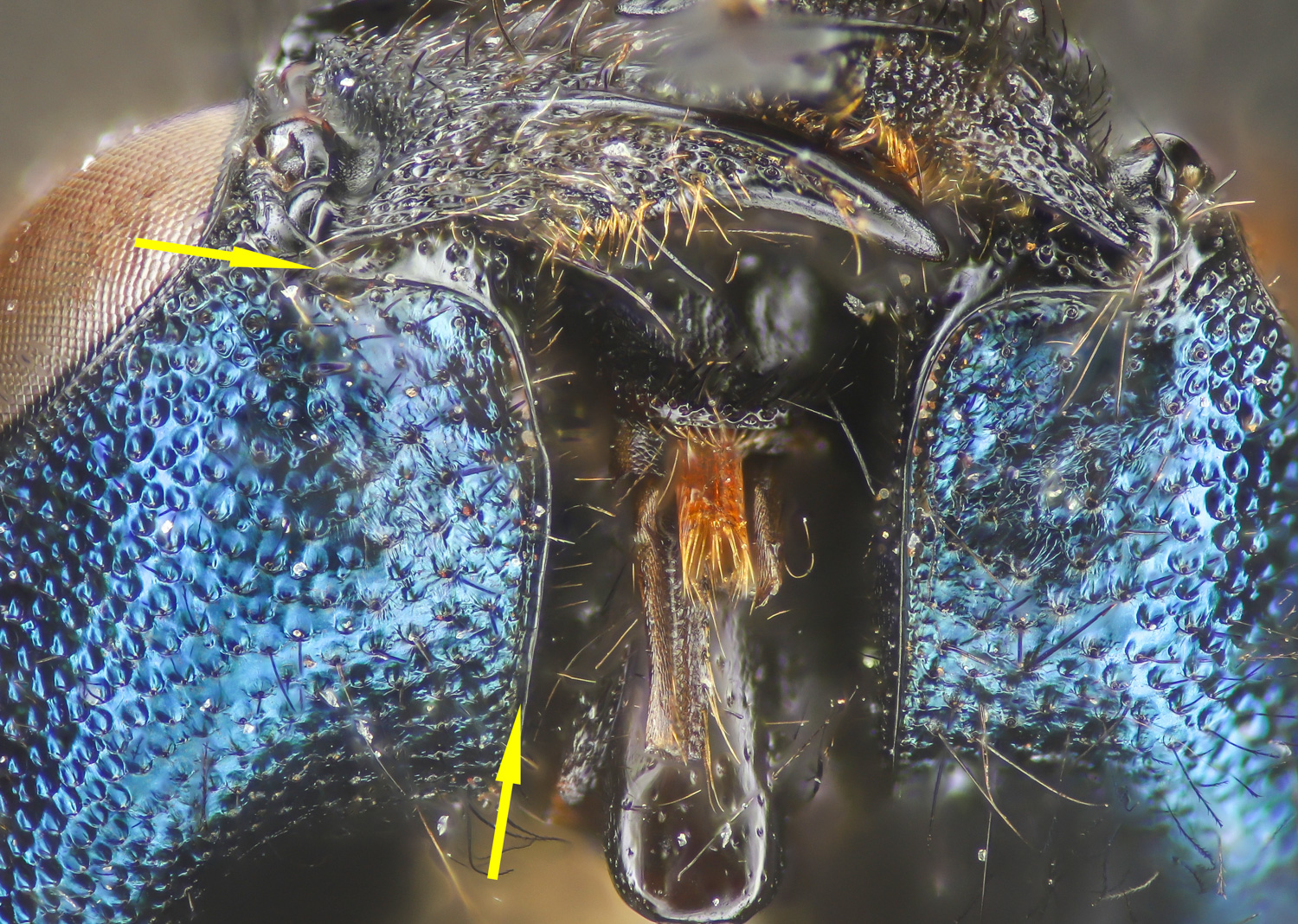
From Rightmyer key: "malus with pointed apical tip" (vs malus truncate for O. virga); Sandhouse says of O. virga: "Spine at apex of strigilis extremely short" )
|
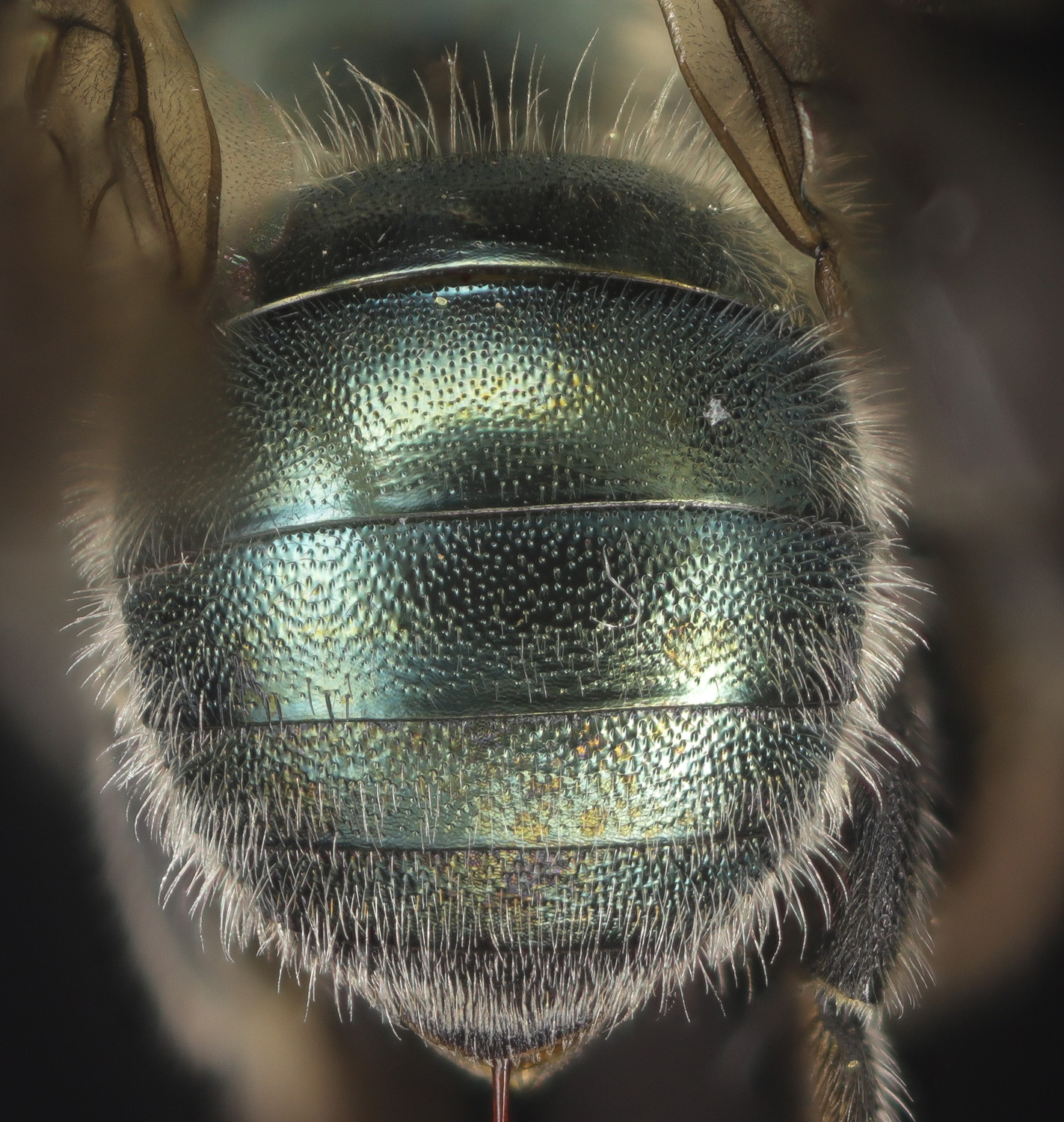
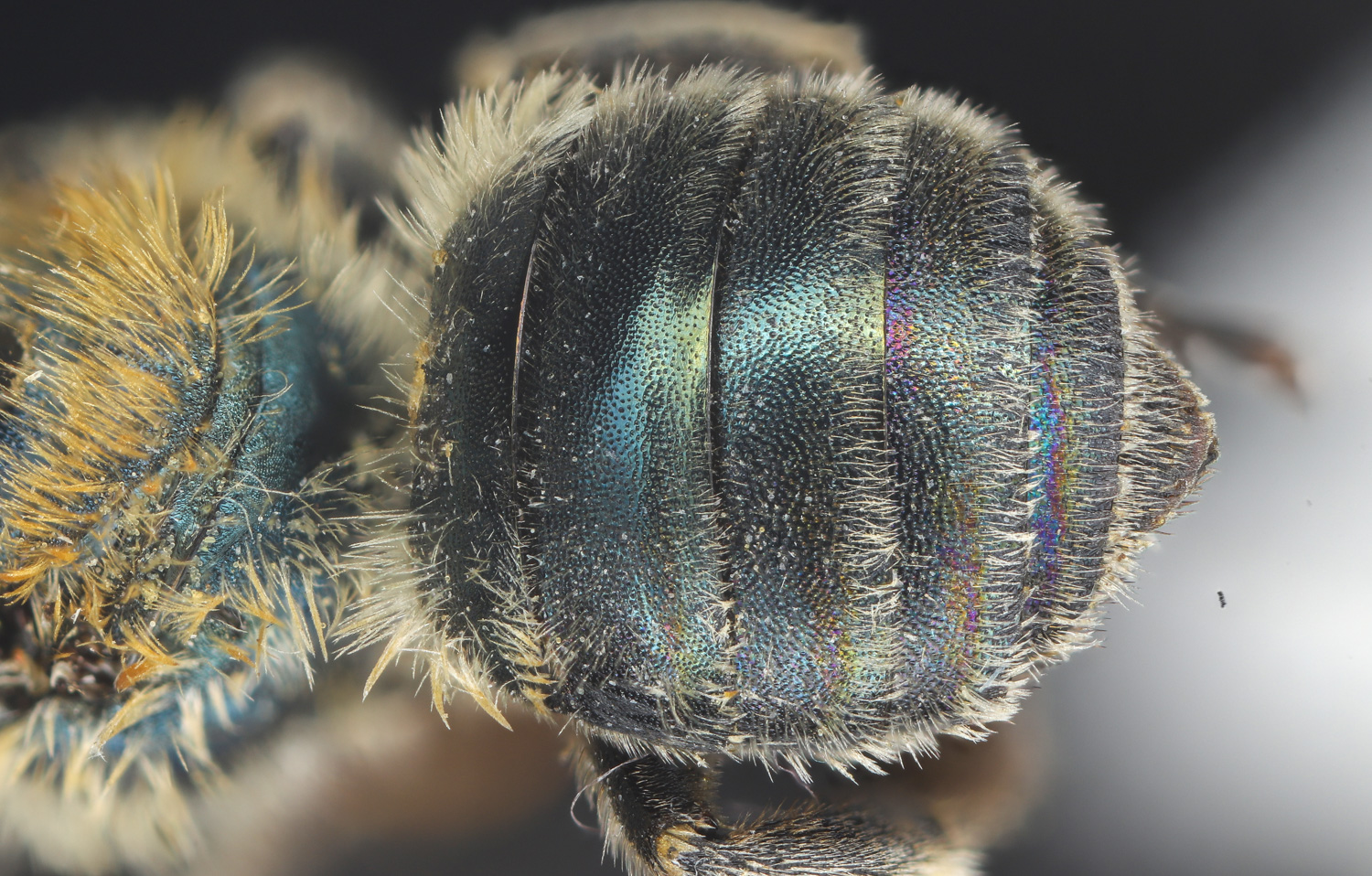
Pale tergal hairs; moderately long T2 unpitted band.
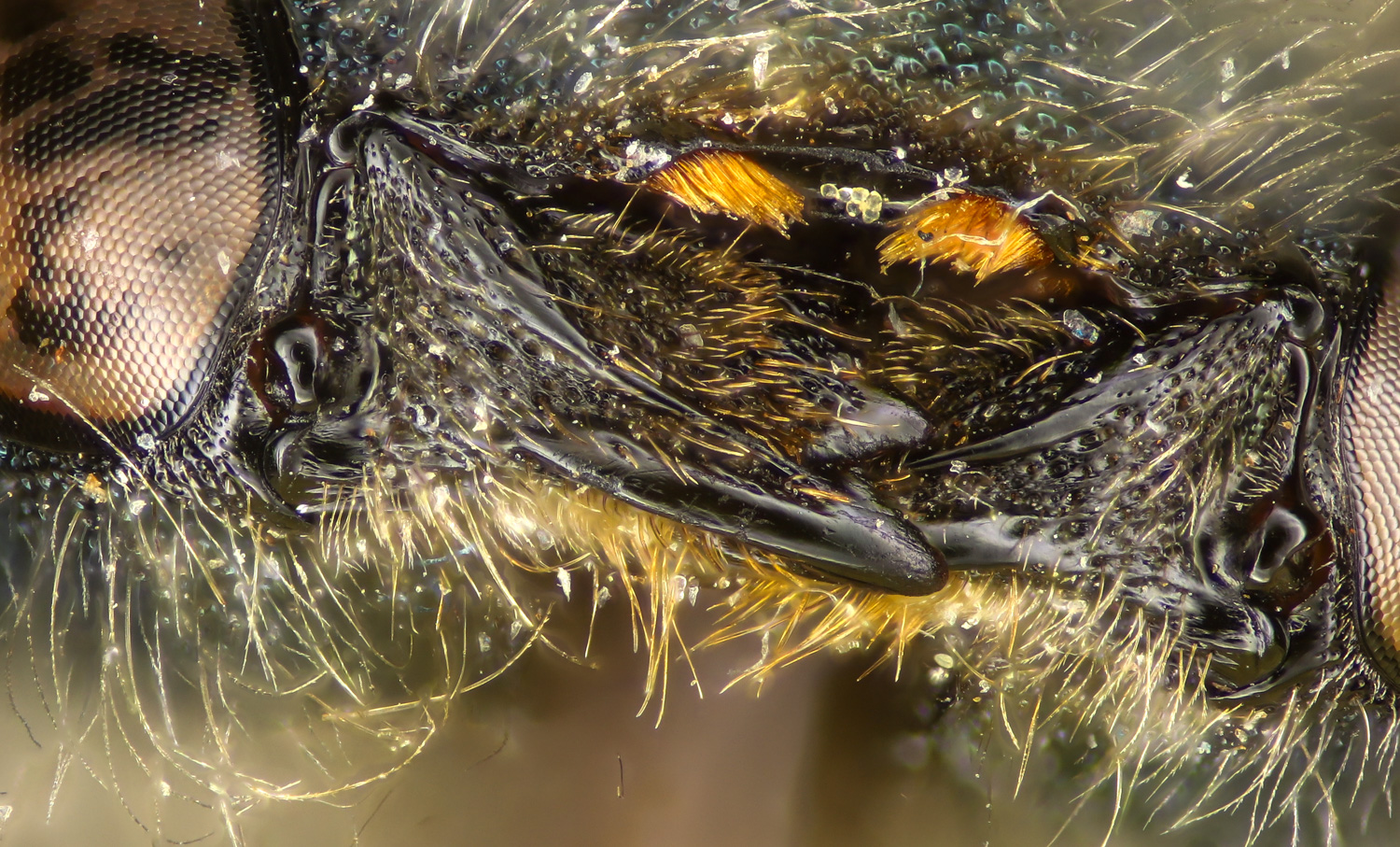
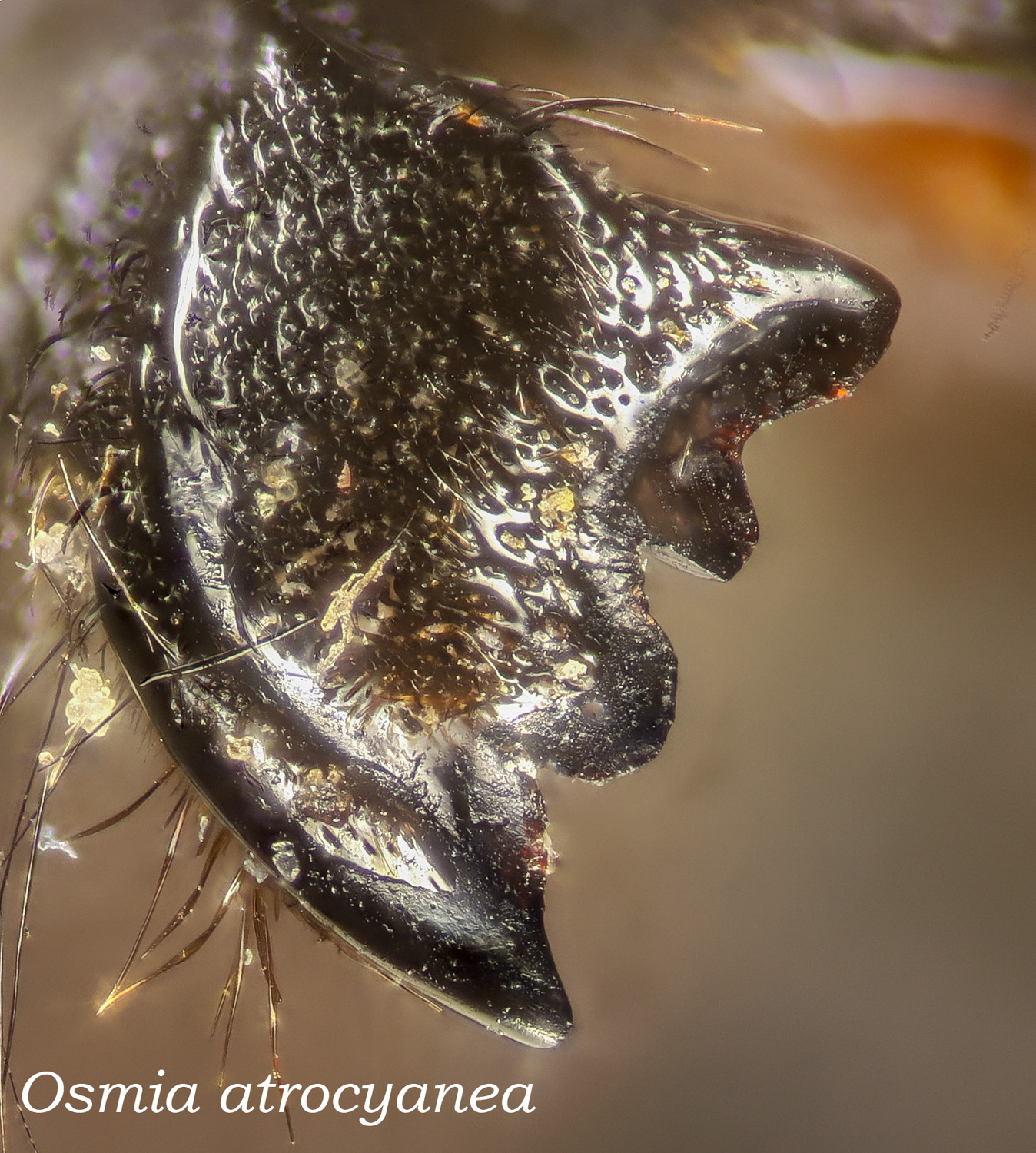
Mandibular carinae converge apically; lower carina thicker.
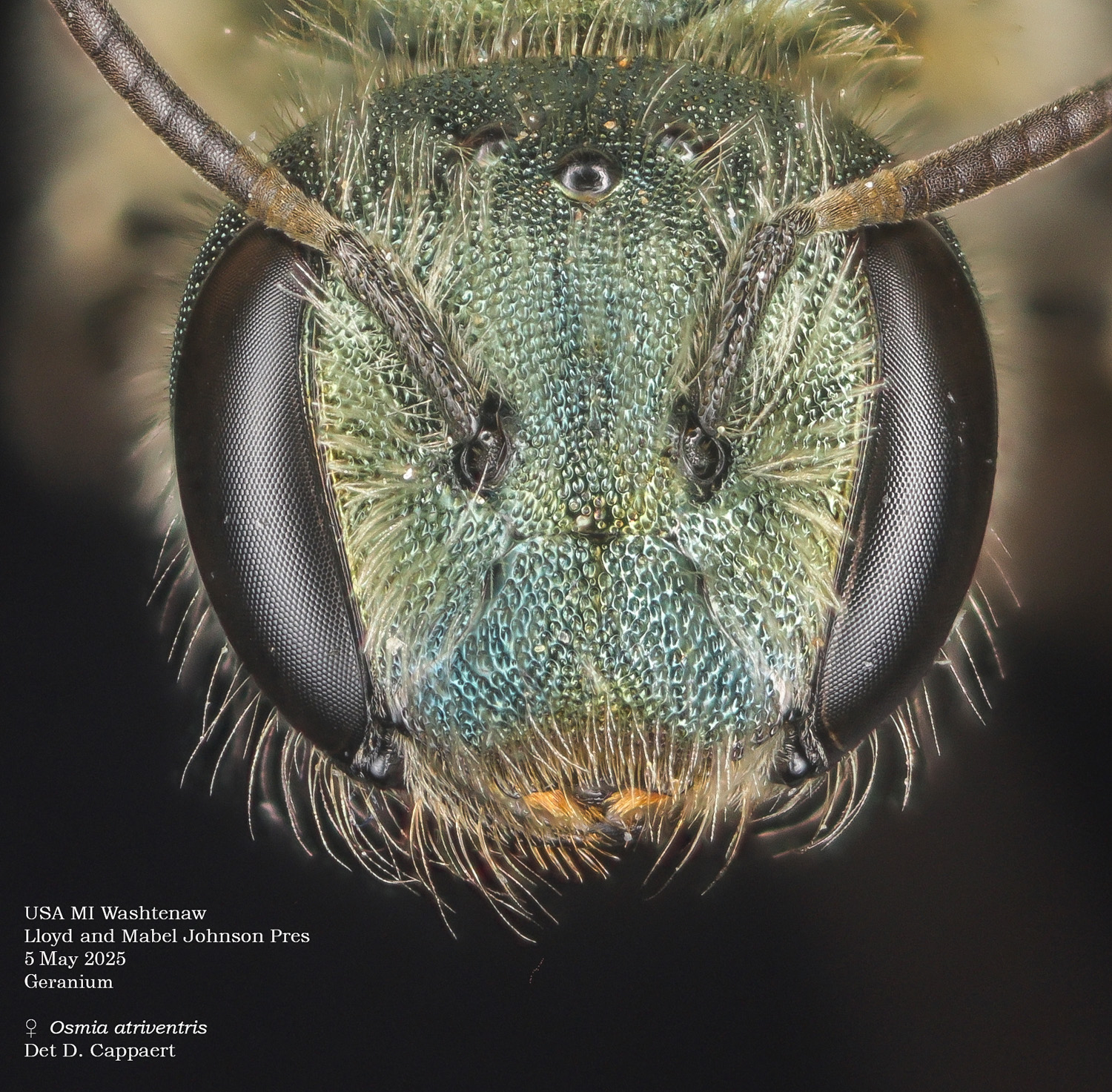
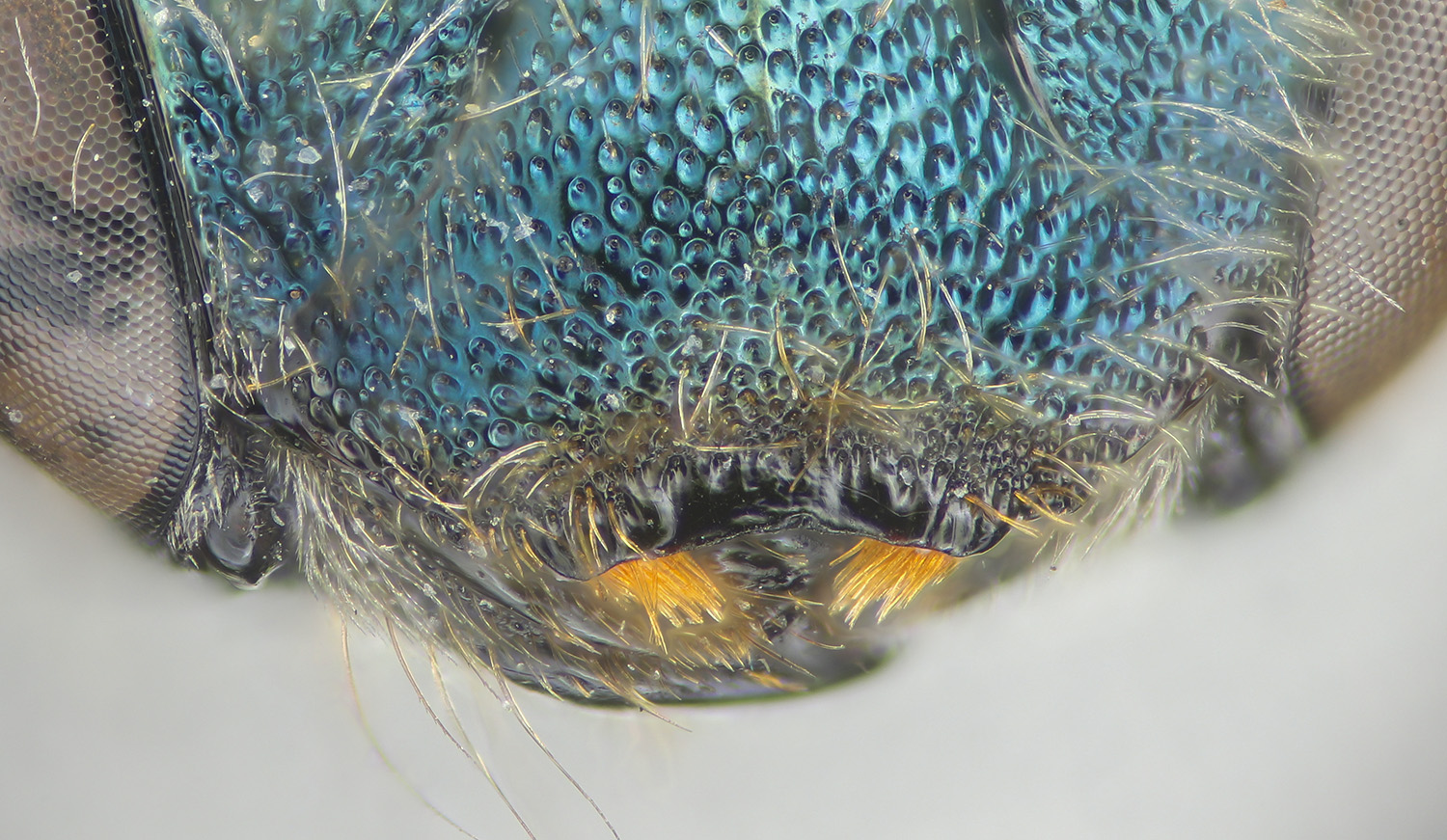
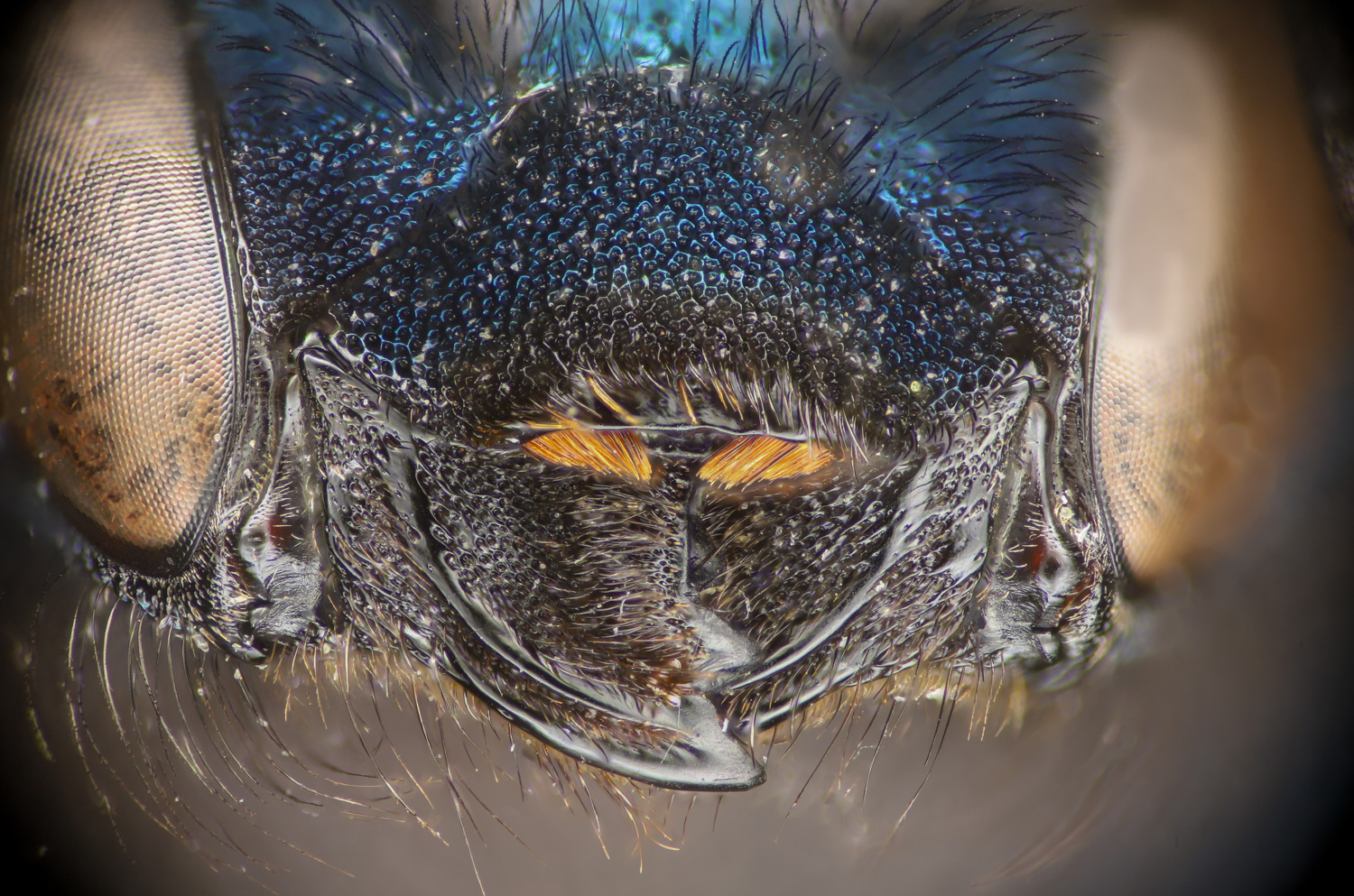
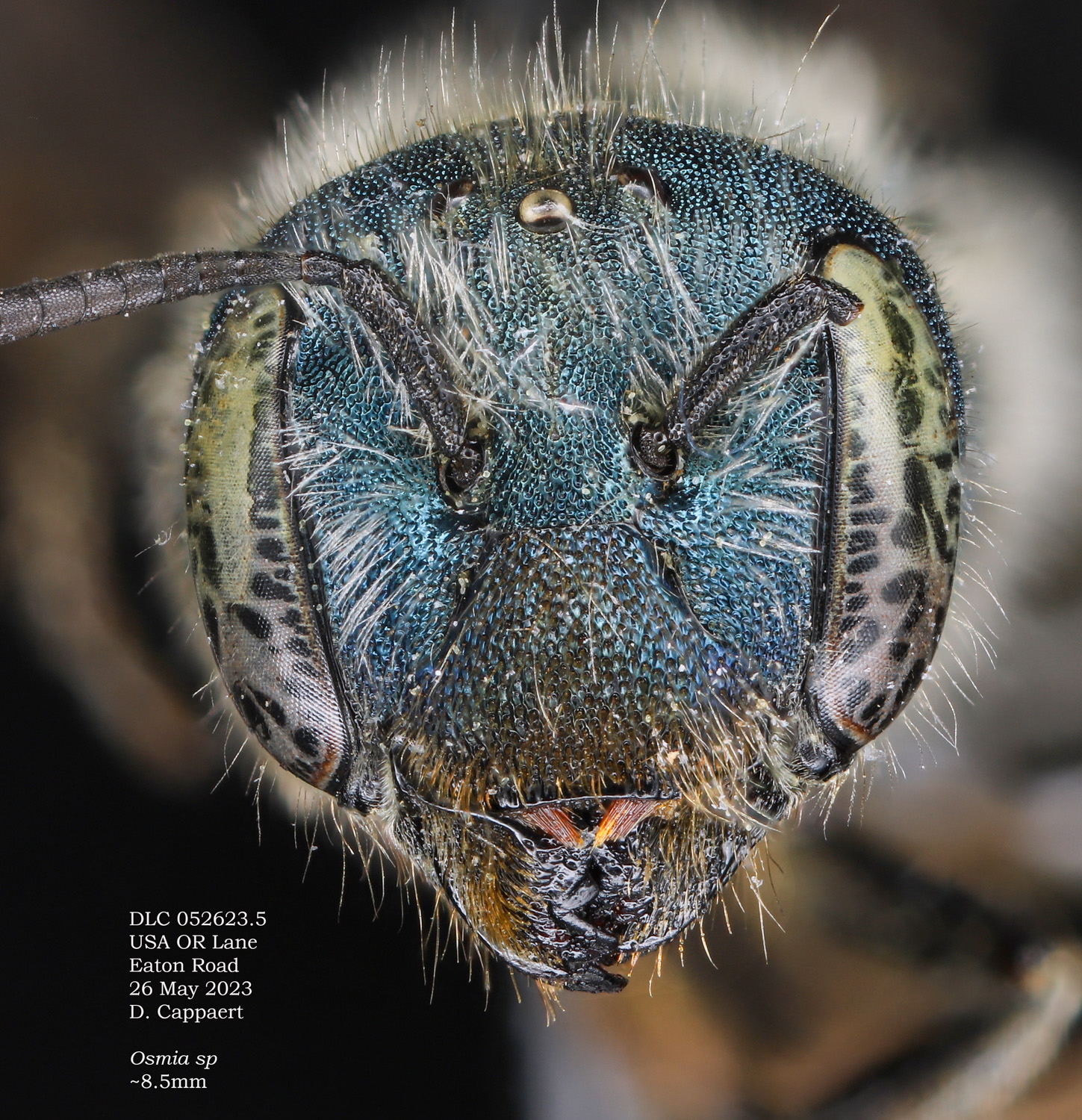
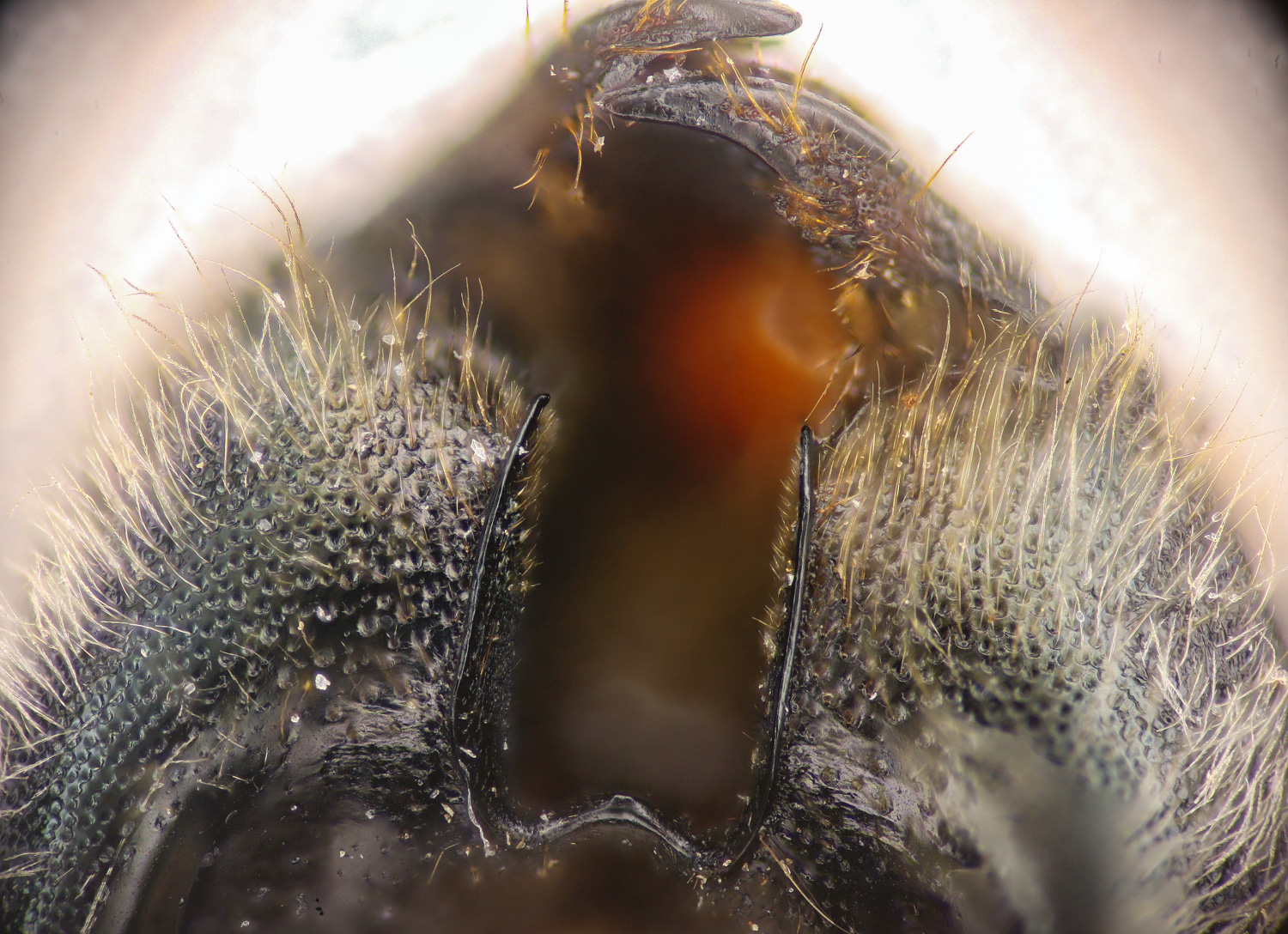
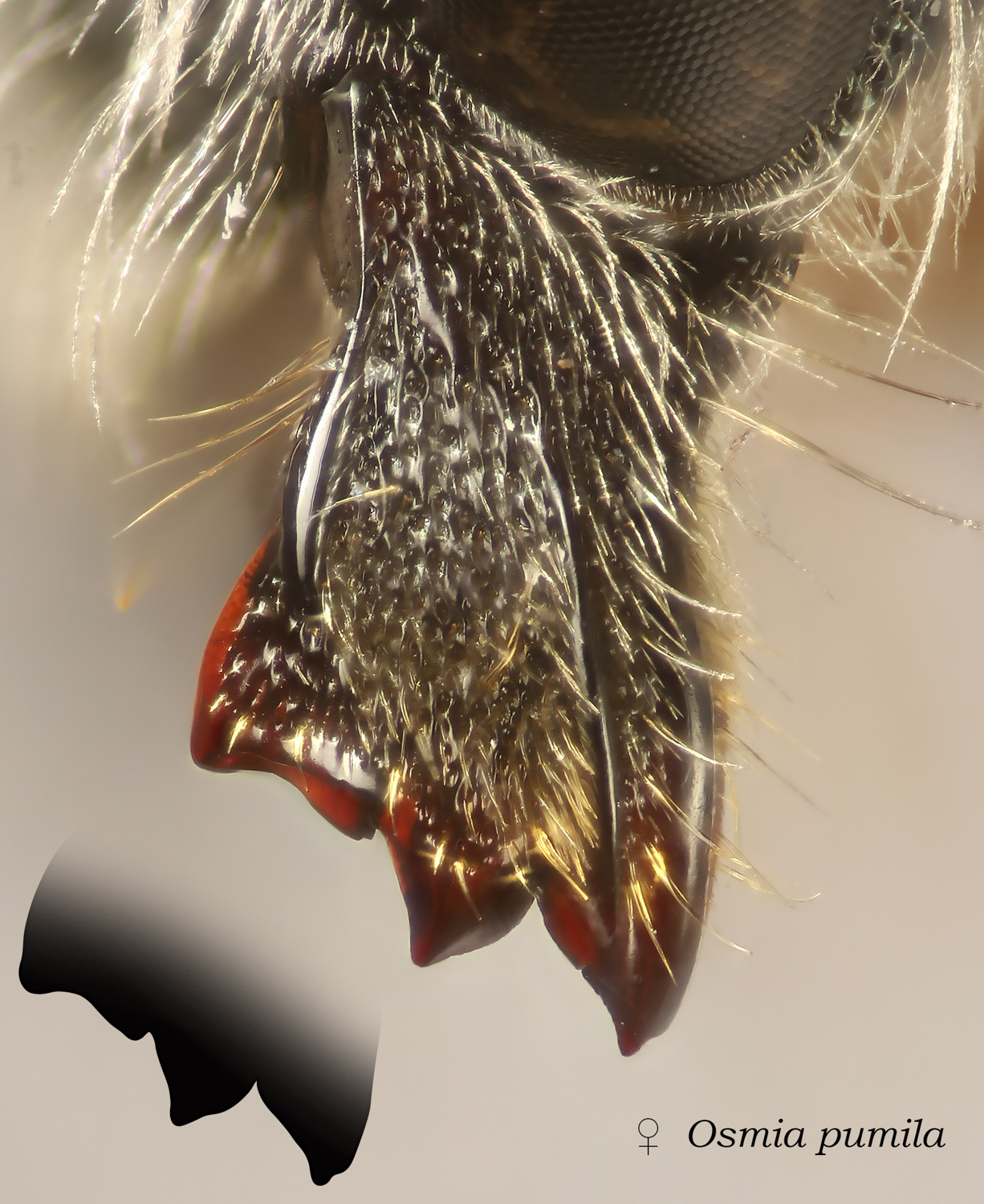
From penultimate couplet in Rightmyer key: "Clypeus with apical margin forming two distinct carinae on either side of two apical tufts of hairs."
By contrast, many other Osmia have an impunctate clypeal apex, but in this case the apex is upturned to form a carina.
|
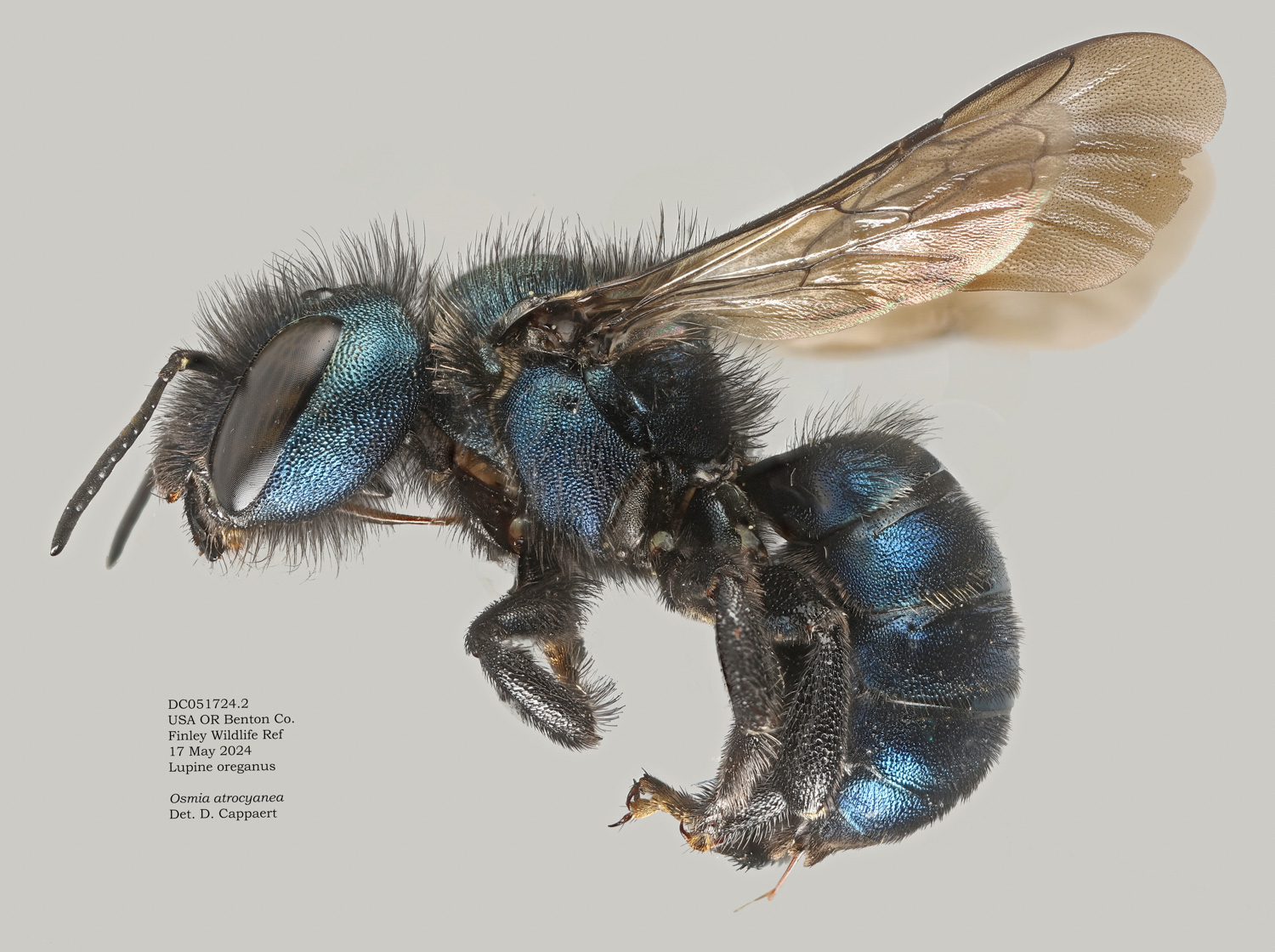
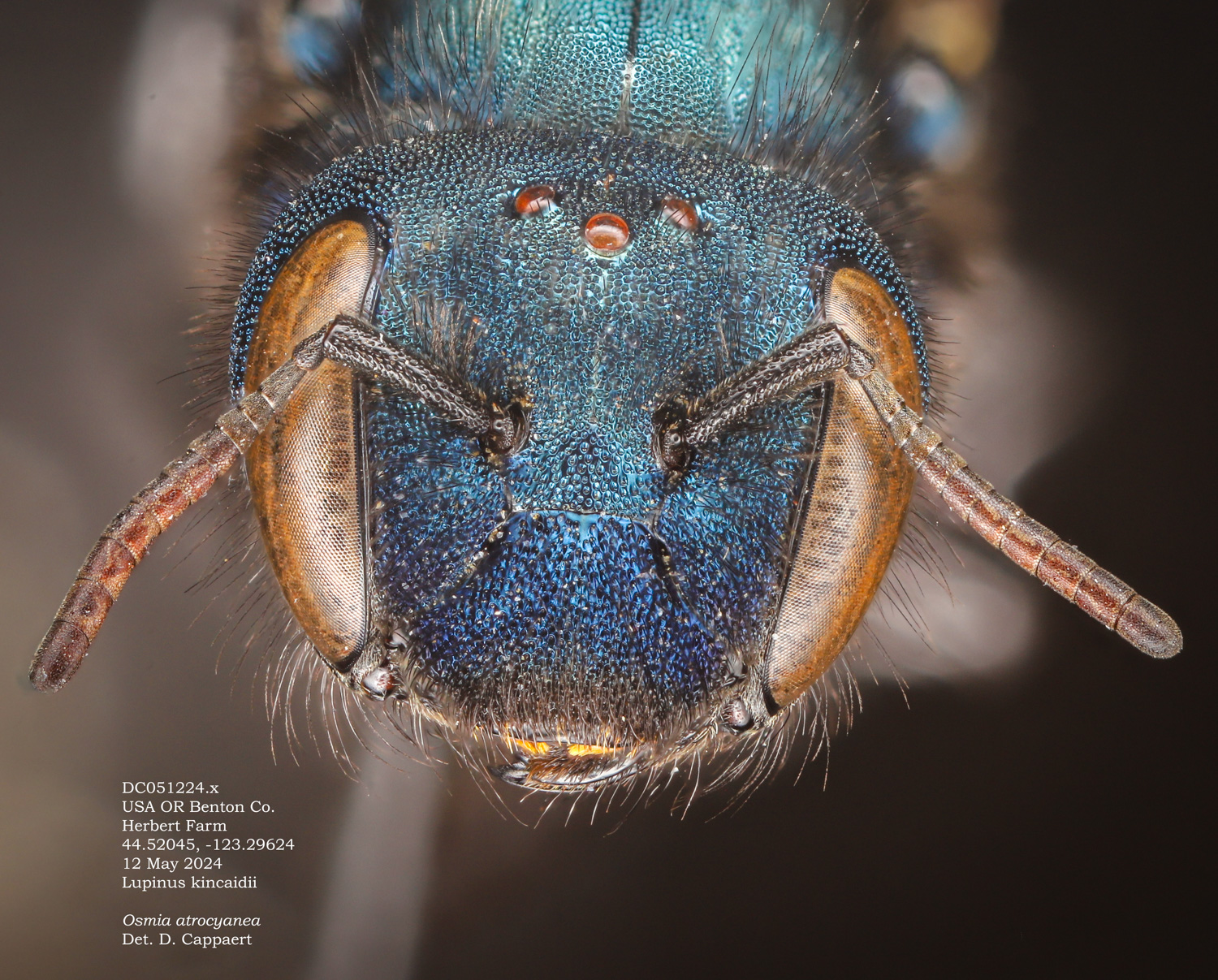
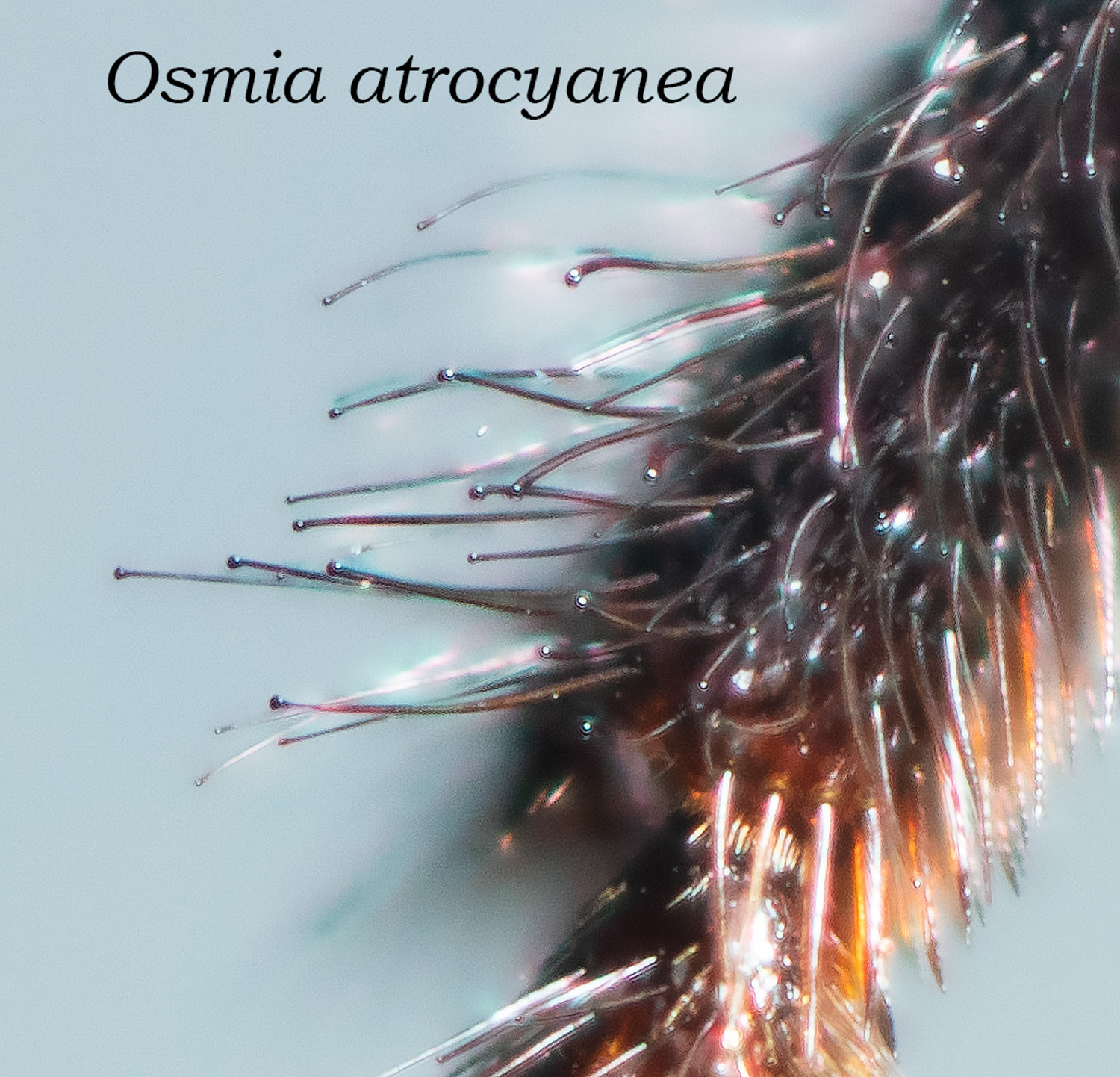
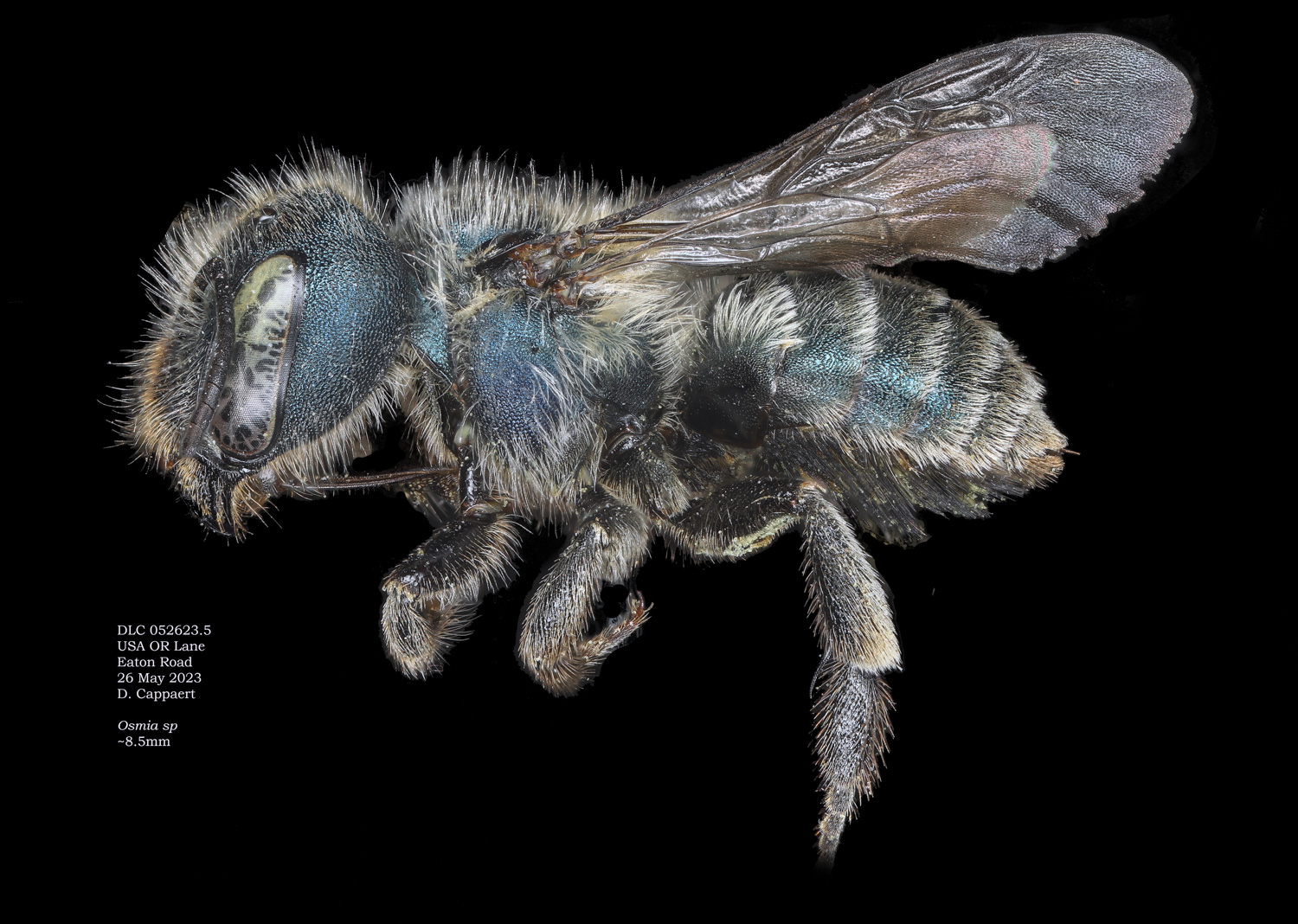
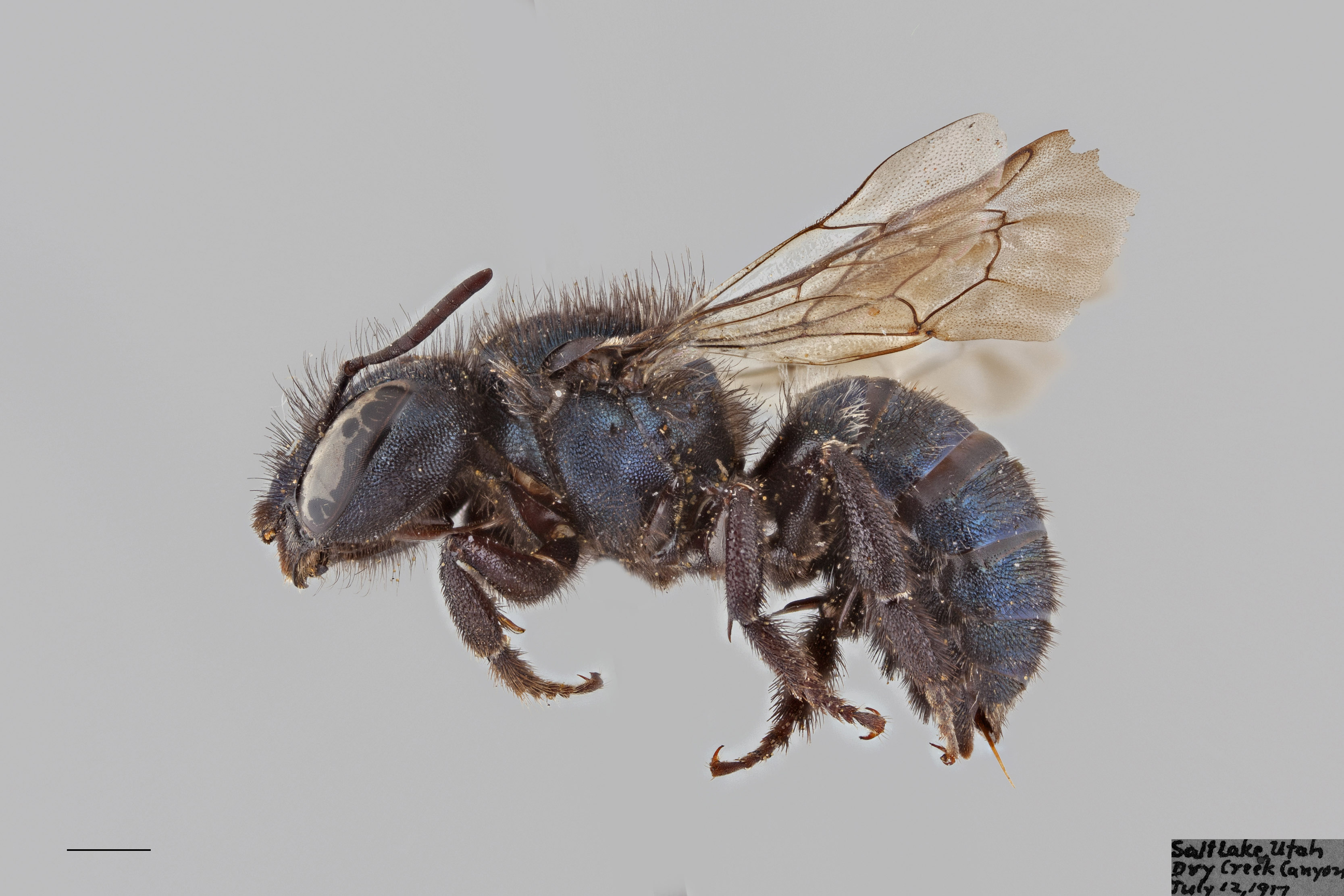
I start with the tentative determnination, from photos, by Molly Rightmyer. The key evidence: blunt "singed" hairs of fore basitarsus. In the DiscoverLife guide, using unambiguous traits, I get 4 alternatives. Not O. bella or O. tristella, which are smaller (8-9mm). O. bruneri and O. cobaltina probably have more distinctly brilliant integument. DL rejects O. cyanella which would have a carinate vertex posteriorially. I reject O. calla, which also has singe-haired foretarsi, as too small (8mm).
Specimens from sites near Corvallis, OR. Hairs and scopa all black, or with sparse light hairs dorsally, as in bottom image. Size 12-13mm
|
![]() |
|
| This specimen is from the Willamette Valley, collected from Lupine. DiscoverLife, ID attempt: Features visible in photos:
However: This species should have clypeal bristles in "four distinct tufts - often one pair of tufts is on the outer surface of the clypeus in addition to beneath the rim of the clypeus." I don't see that here. |
ID attempt in the Mitchell key: I need only specify: no malar space; no inferior mandibular tooth; mandibles simple; tergal apical fasiciae. This yields O. caerulescens, the blue mason bee. There are manyfield photos of O. caerulescens here. Text on the page states: "Females of this medium-sized mason bee are fairly distinctive with their oversized, box-shaped head (almost as big as the thorax)." | ID attempt in Rightmyer key: The first step is to assign subgenus. If I could convince myself that my specimen is Helicosmia (=Chalcosmia), that subgenus key gets me straightforwardly to O. caerulescens--the first couplet. But I have the problem that I had in DL ... Helicosmia have "hairs just beneath apical margin of clypeus arranged into four distinct tufts (two smaller, median tufts and two larger" and "mandible with dense, appressed, orange hairs on outer surface just basal to teeth" (evident in mandible photo of O. georgica, a Helicosmia species). The actual ID: I suspect that there are any number of experienced taxonomists that would look at the lateral photo and instantly recognize this bee. |
I don't have a slam-dunk ID for this specimen. But I have a lot of images.
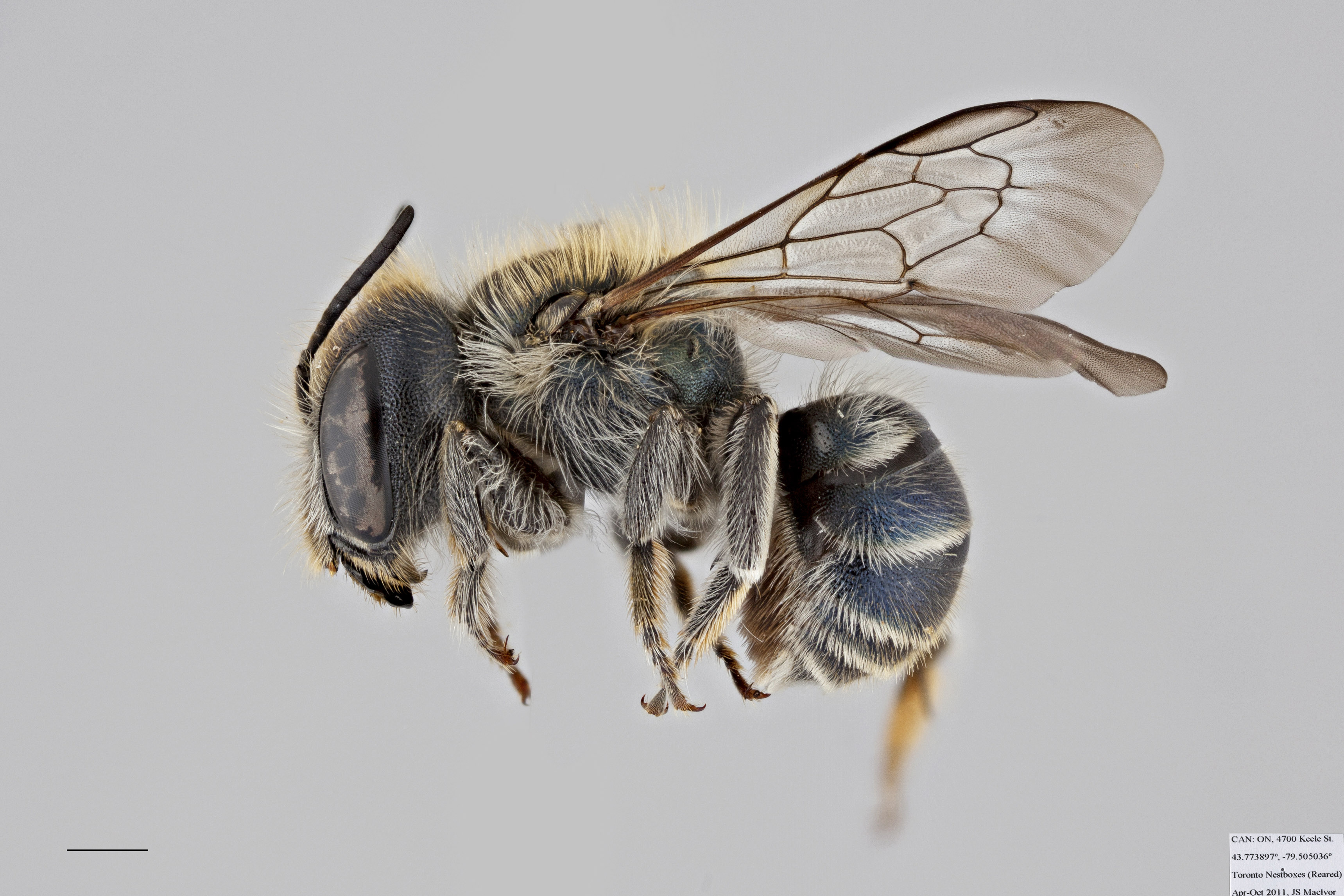
Above: Oregon specimen. Huge head, hair bands. All light hairs, black scopa.
Below: O. caerulescens, from Bees of Canada, Packer Lab. |
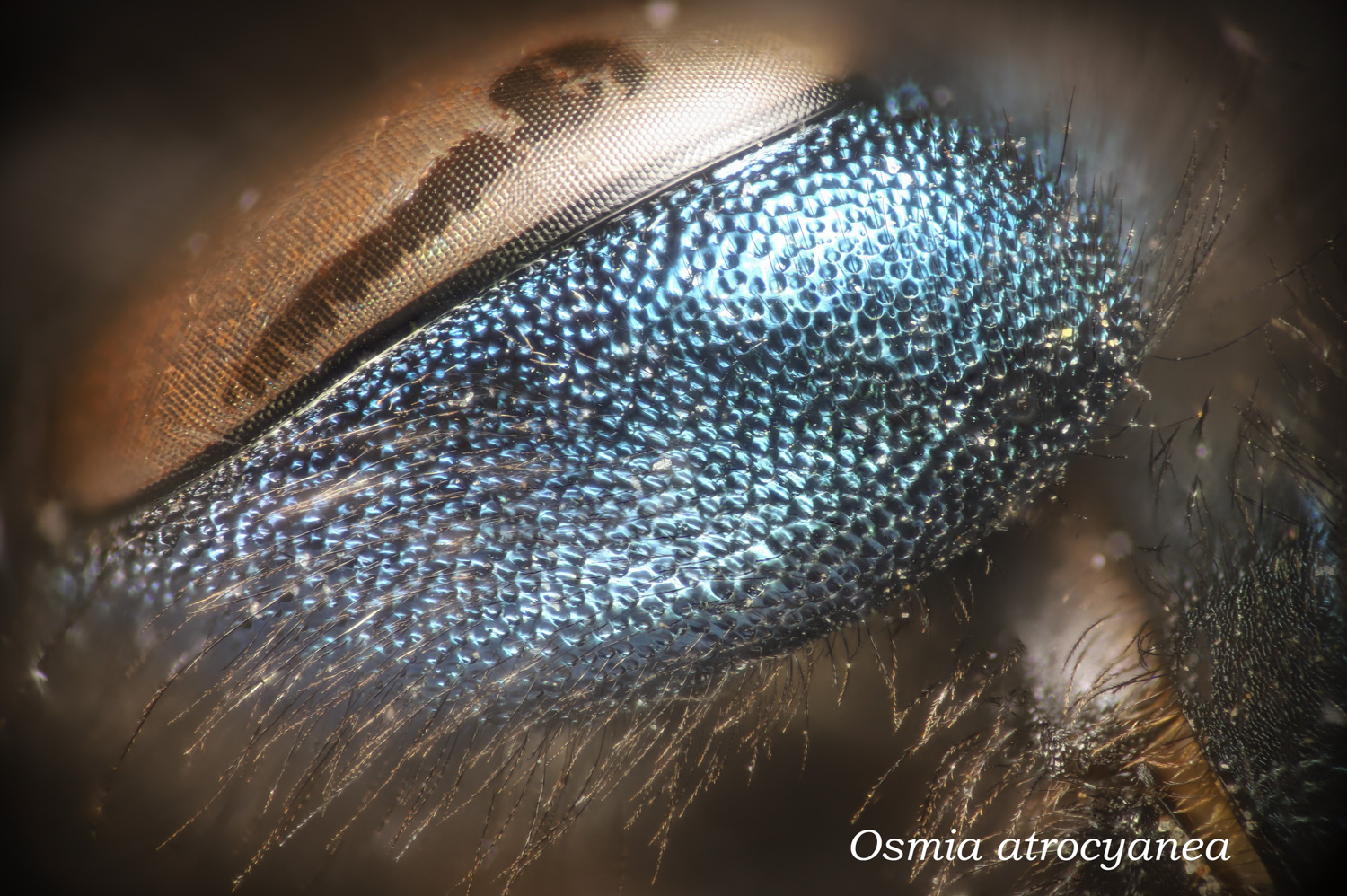
Scutum, left side.
|
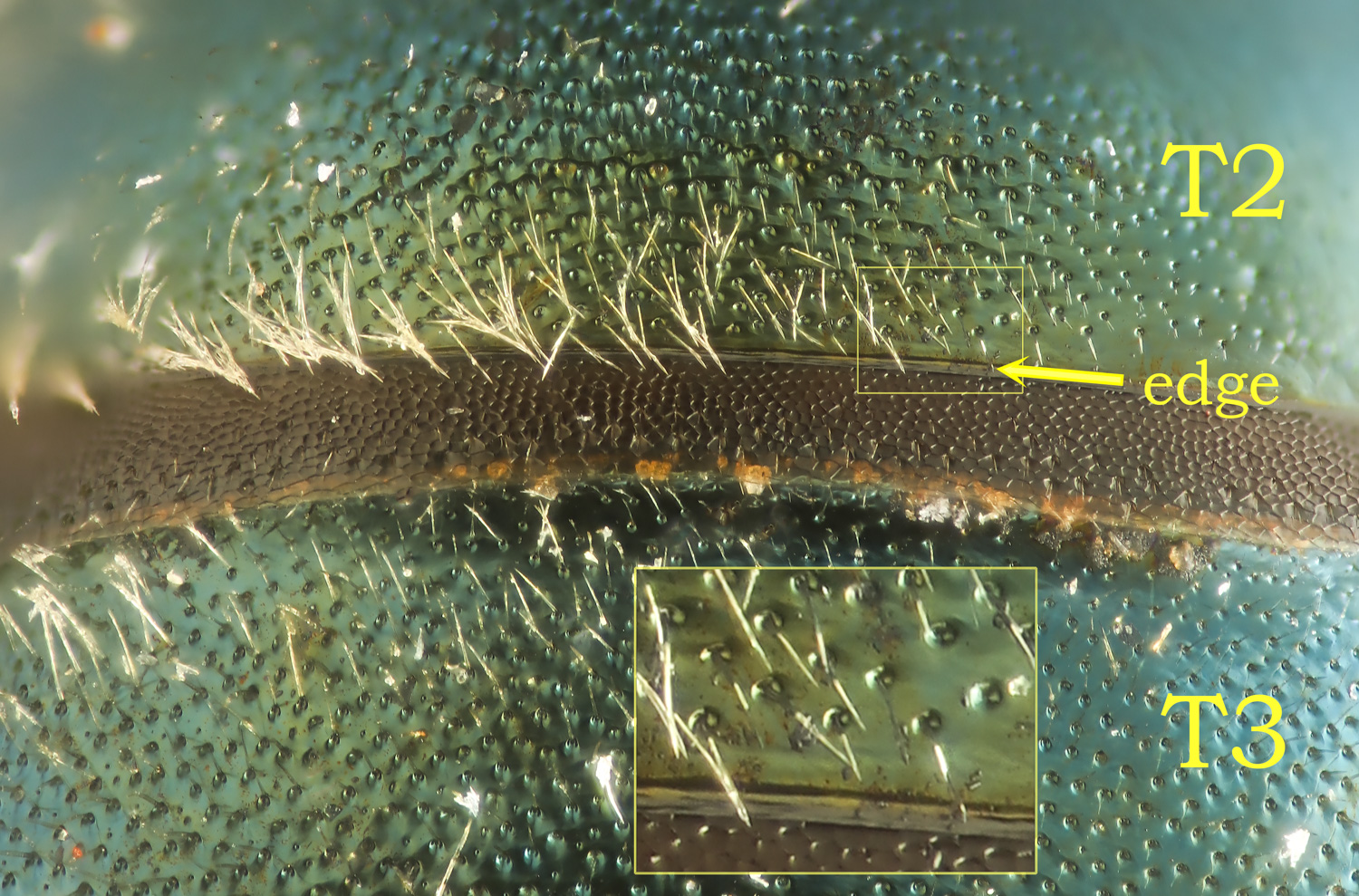
Definite hair bands. Pits to edge of T2, T3.
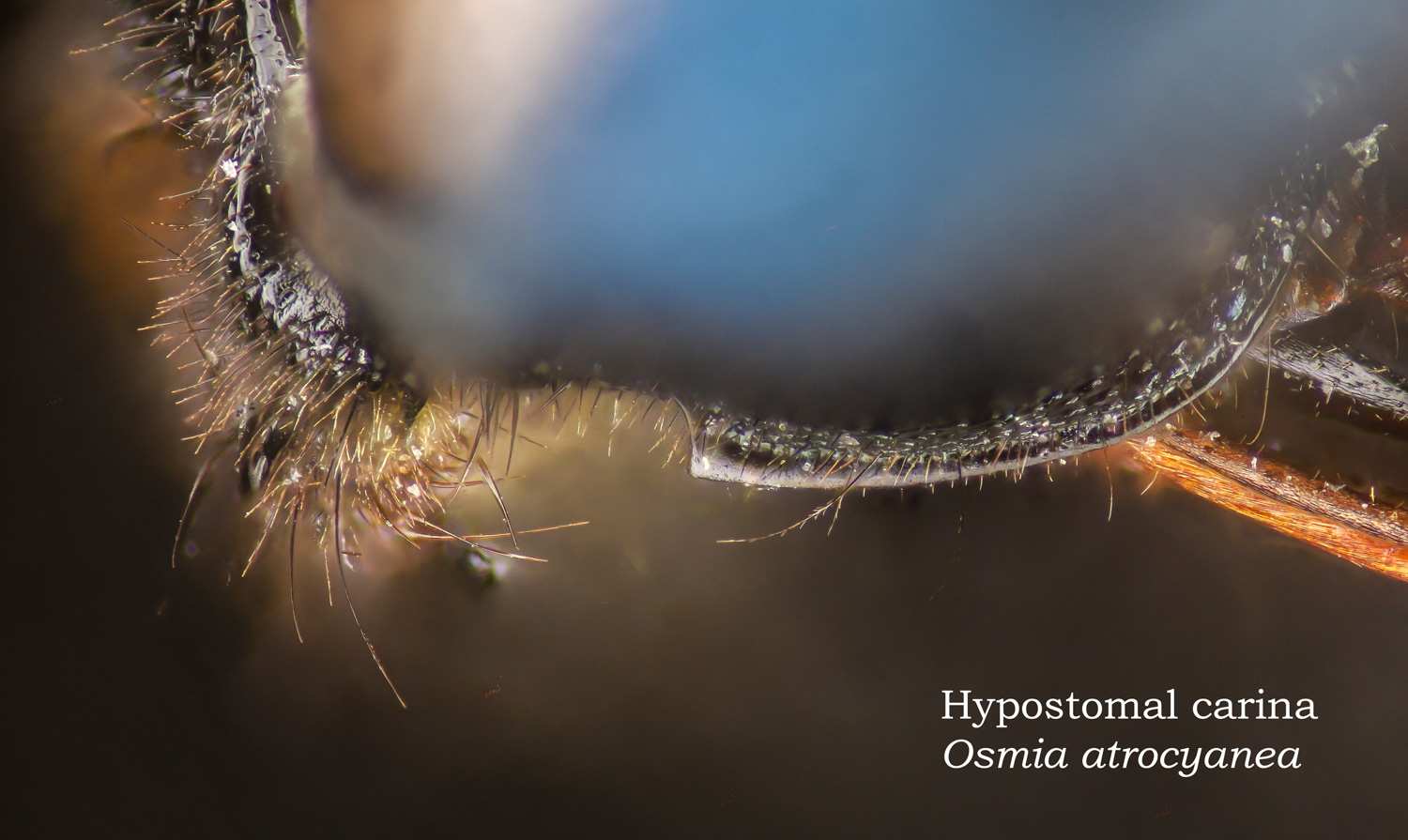
Above - hypostoma, Below - lateral view of hypostomal carina (mandible left).
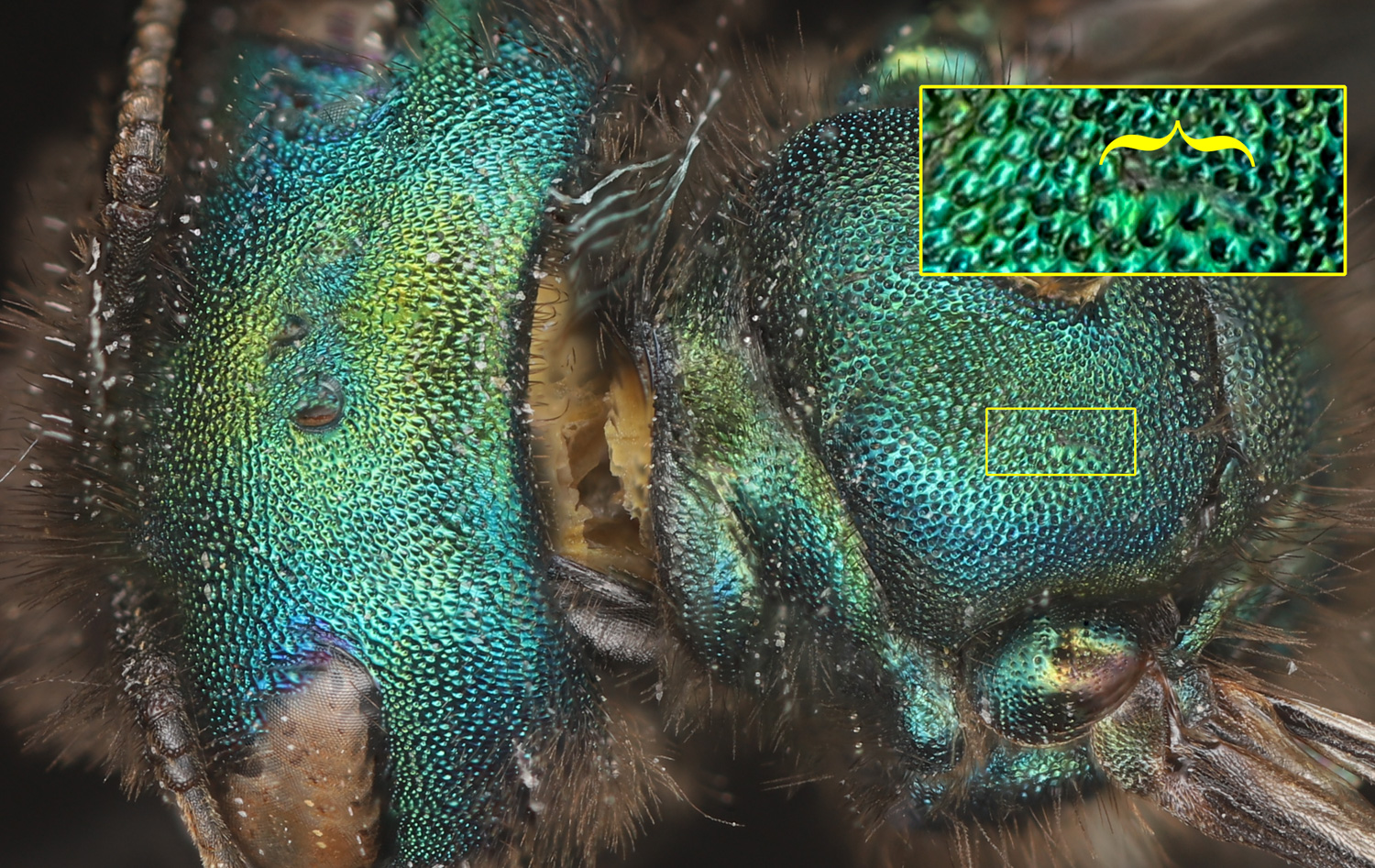
Mesepisternum
|
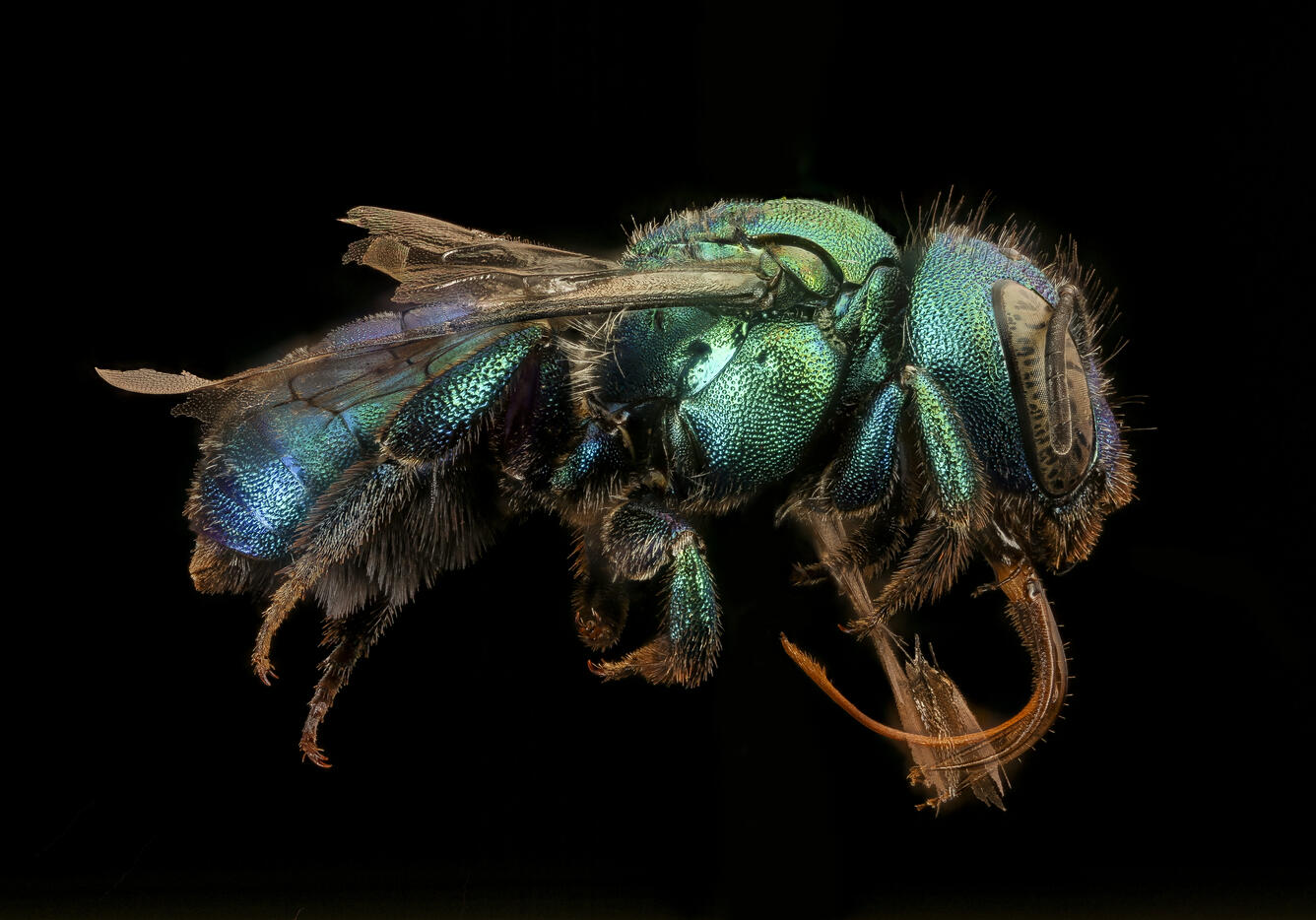
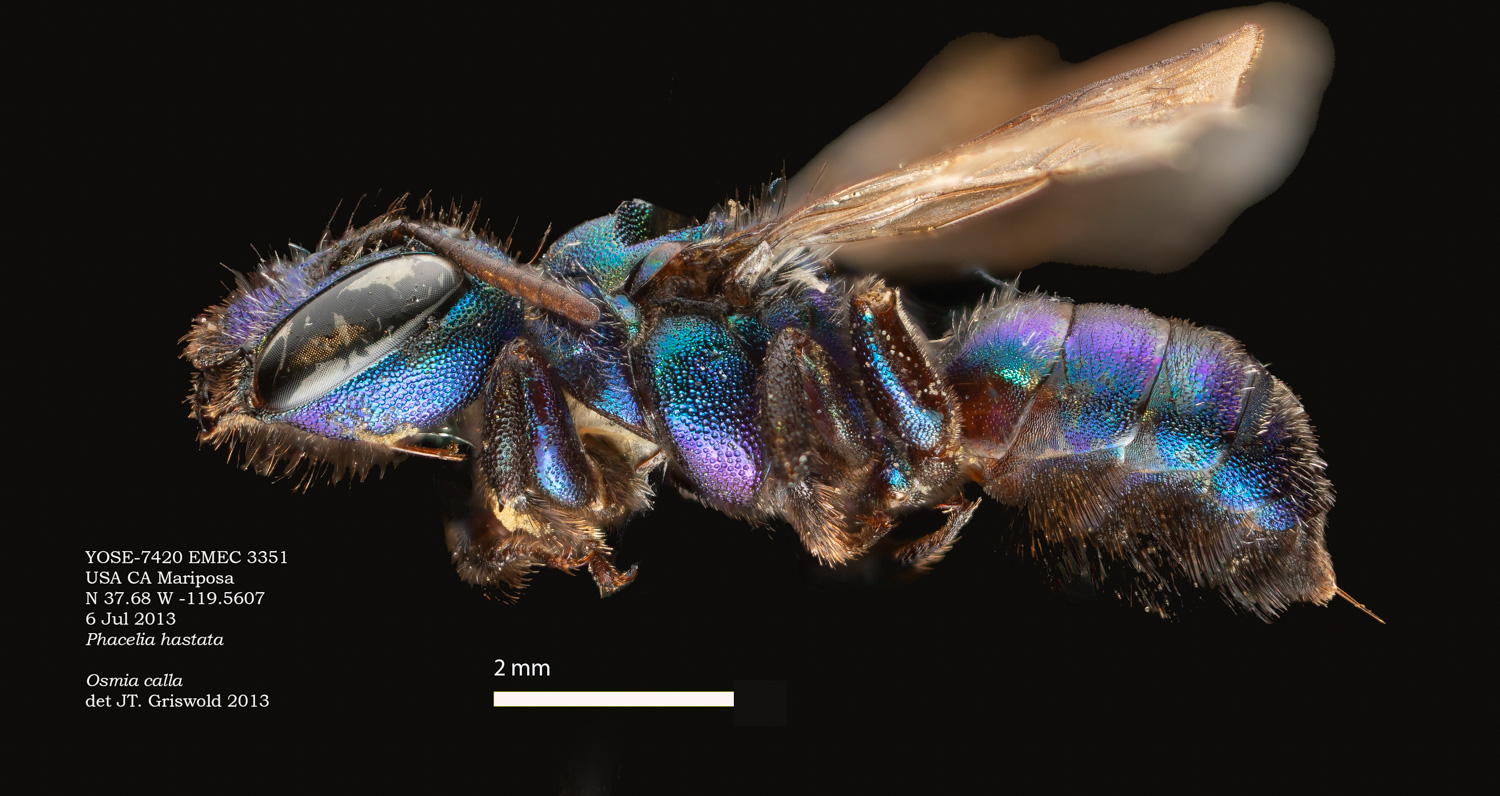
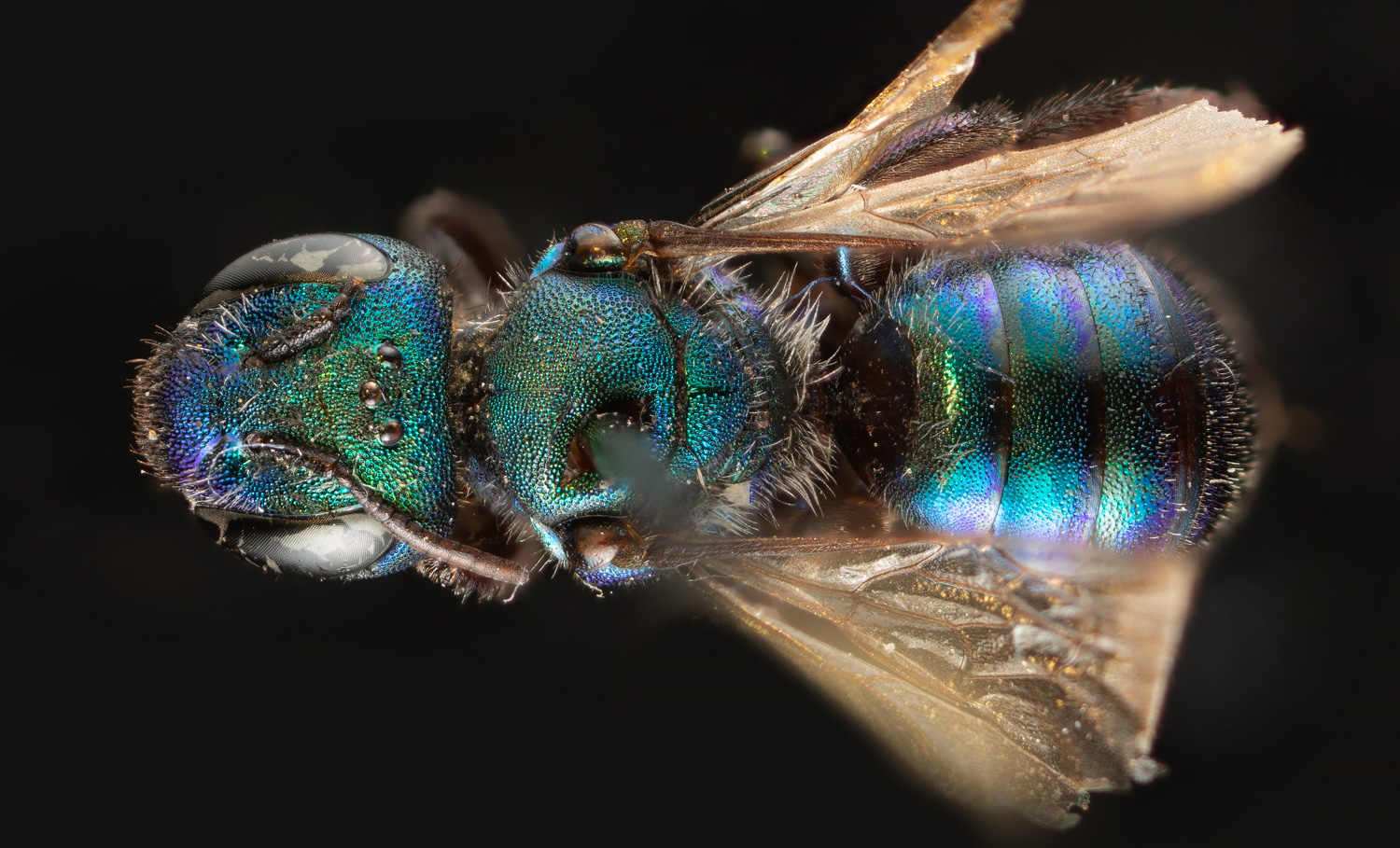
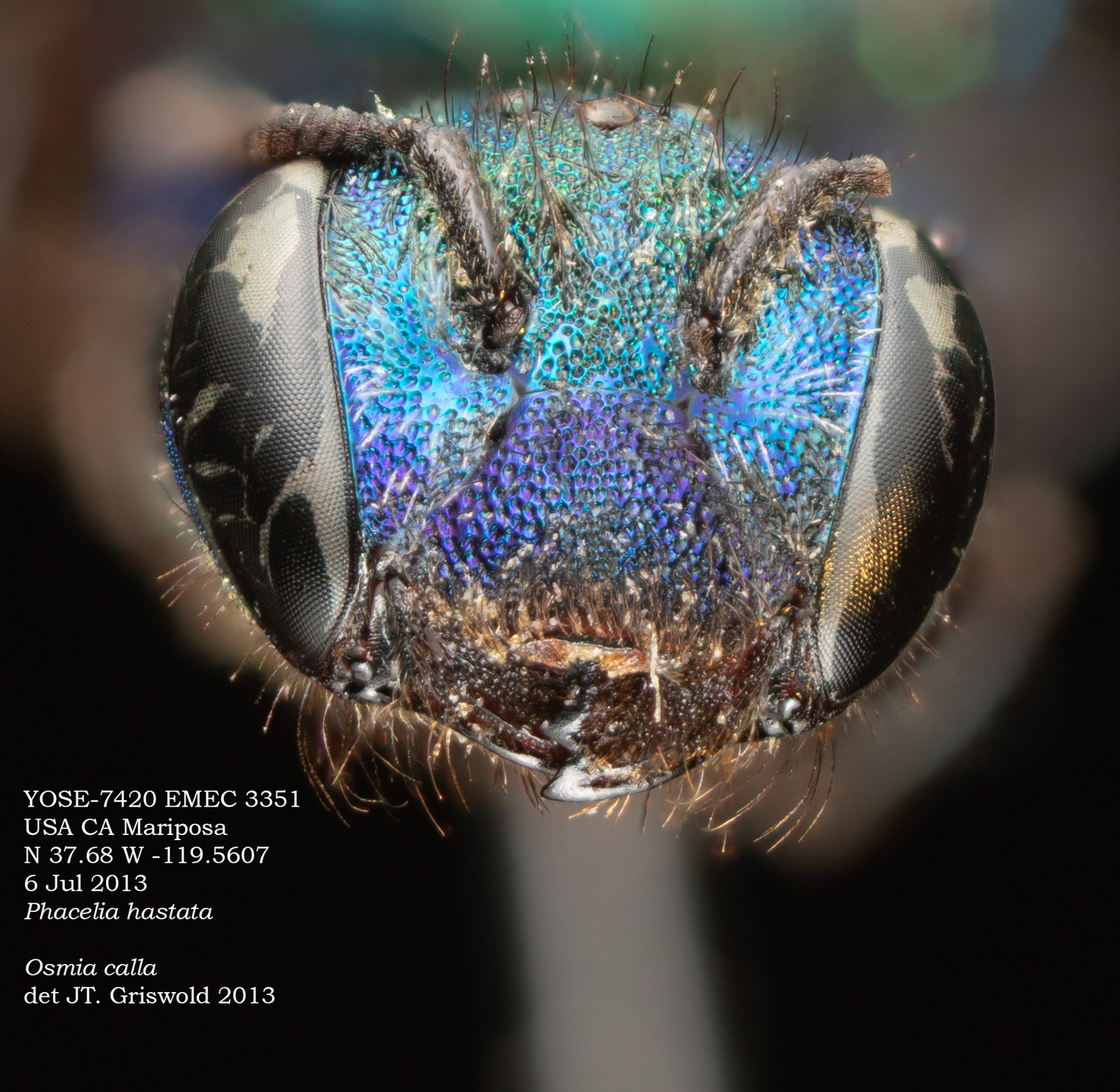
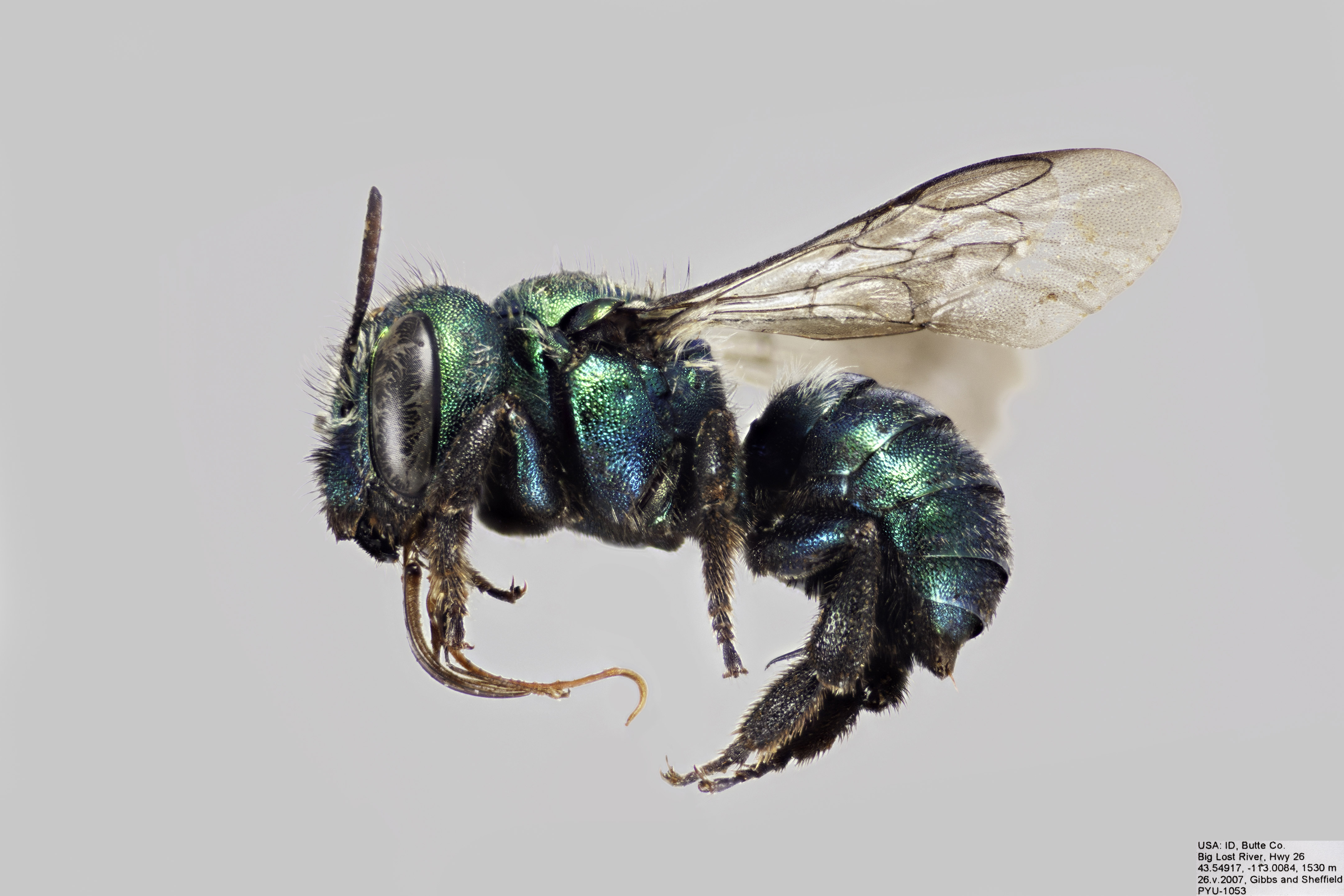
| Another Ponisio lab specimen for which I have only photos. I assume that this IS O. calla, given the T. Griswold ID. The outstanding feature here is the brilliantly metallic and violaceous coloration. Other traits I can give DL enter into DL:
|
California specimen, Griswold determination.
|
|
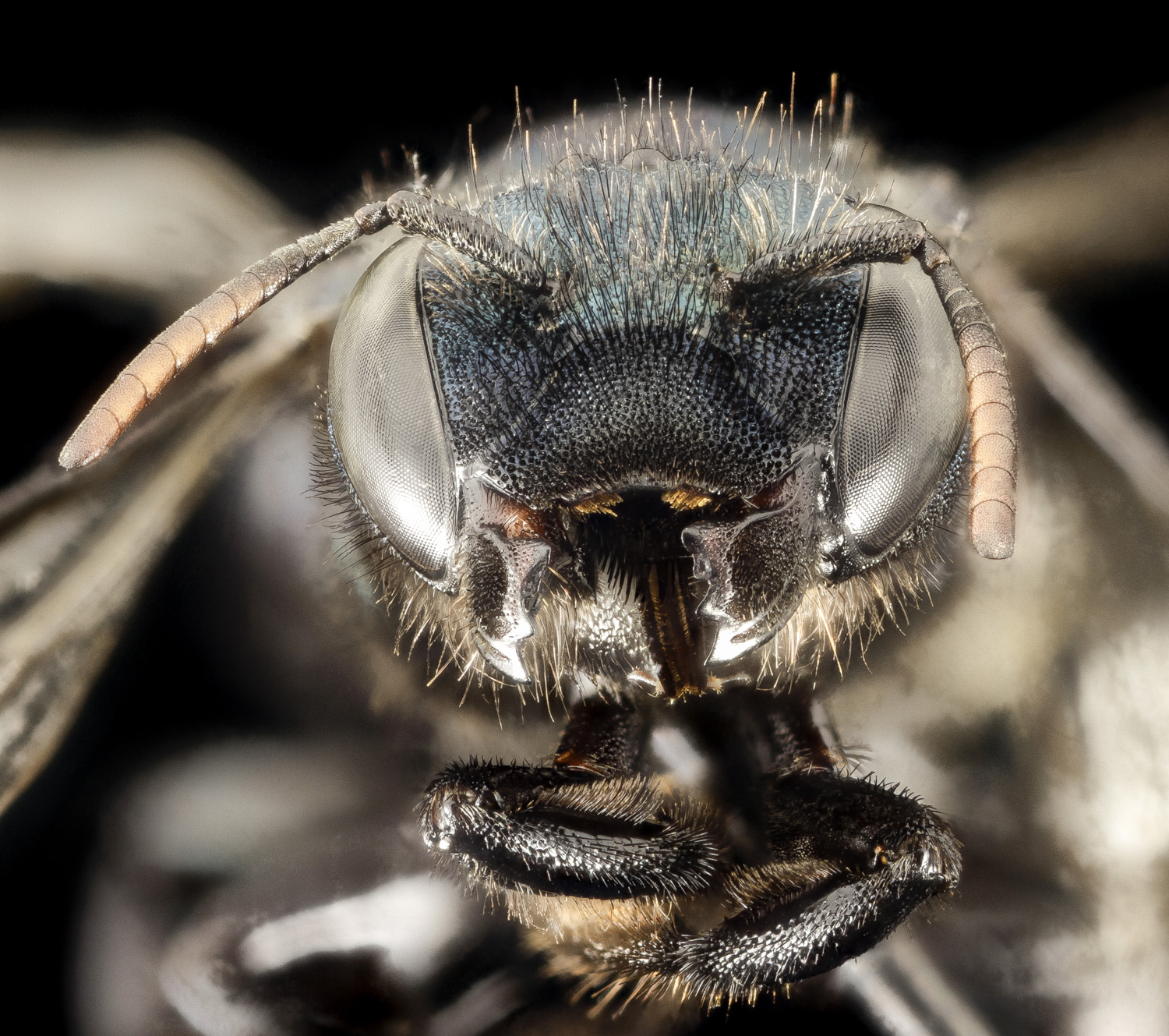
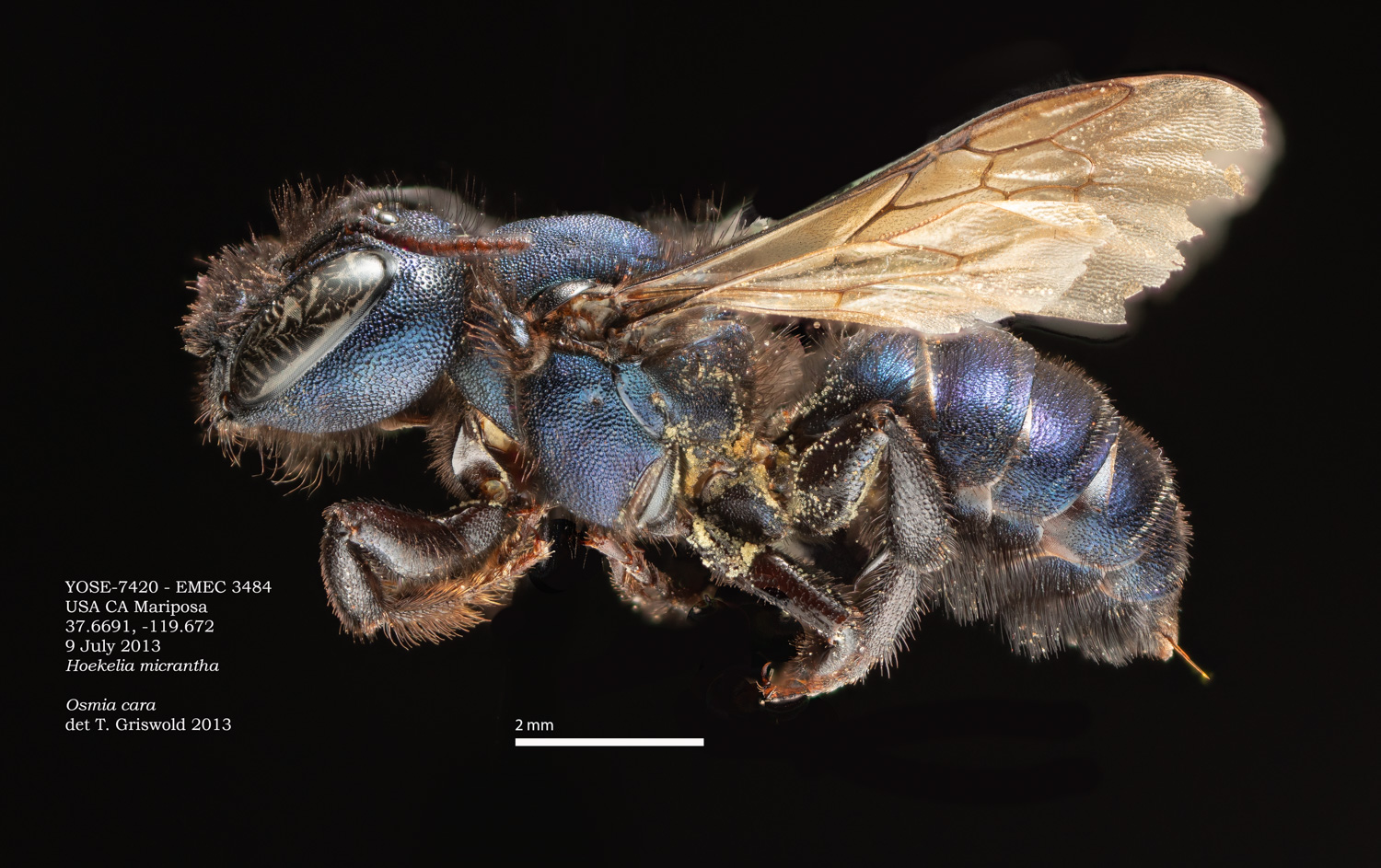
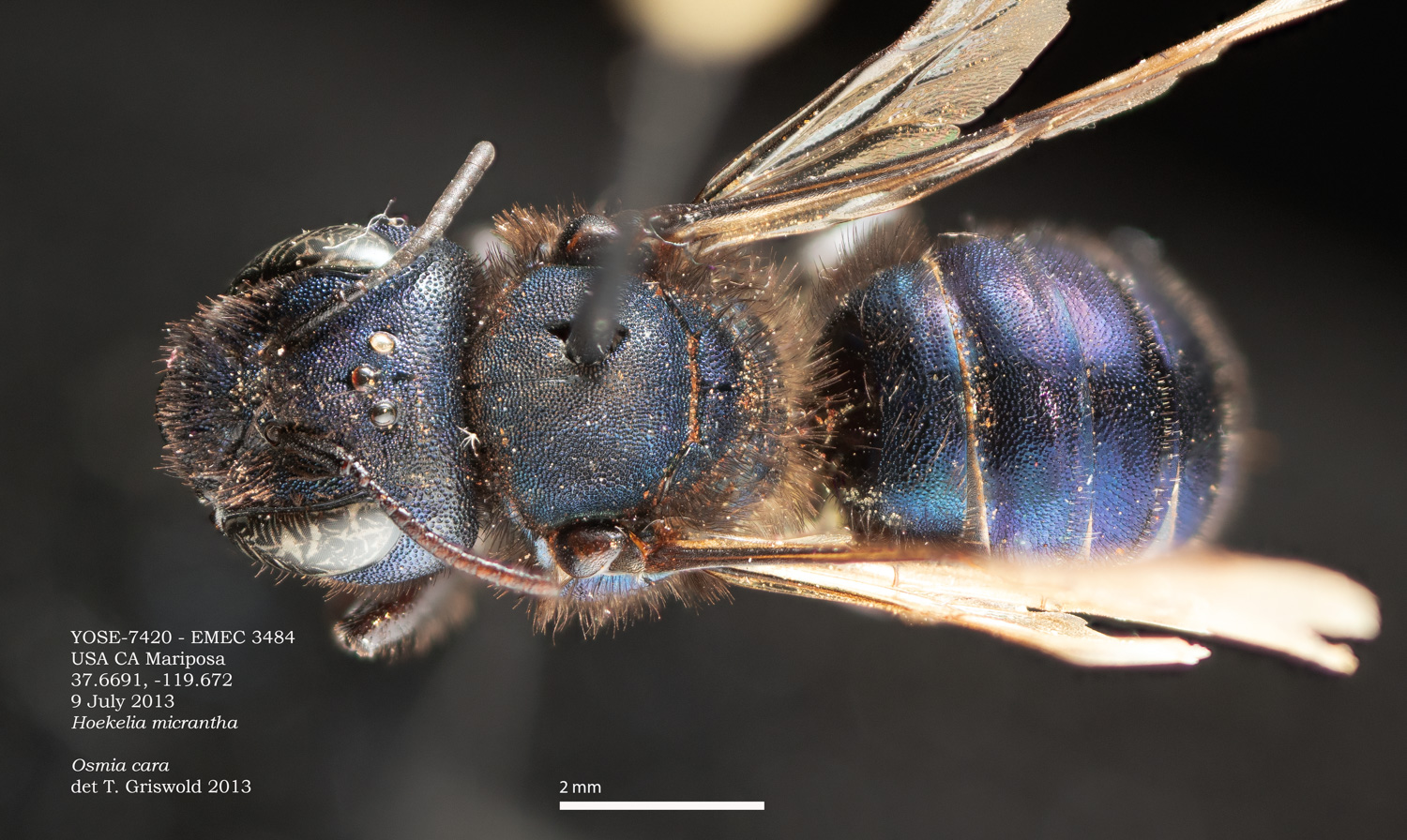
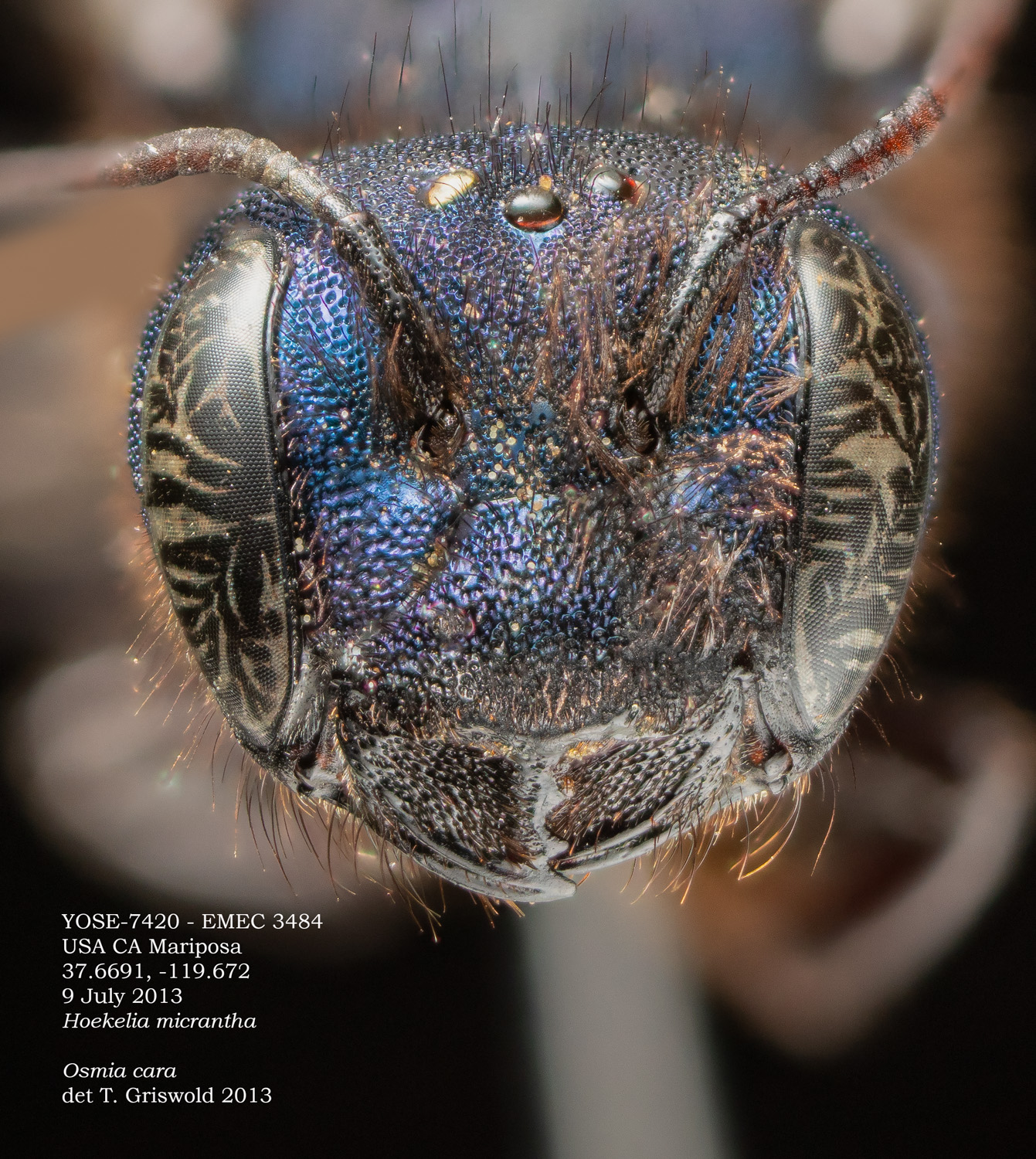
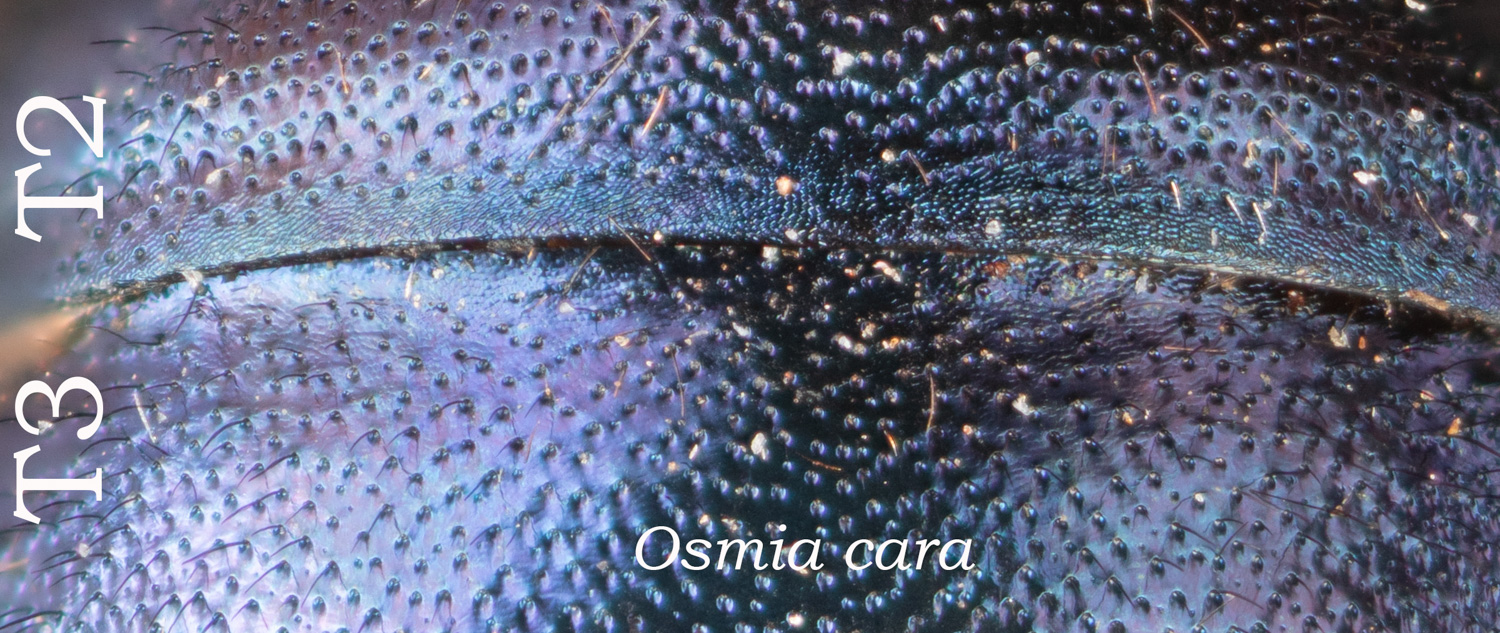
| I don't possess the specimen in these photos (another one in Lauren Ponisio's lab at University of Oregon), so I can't examine enough traits to make a diagnosis. However I assume that this IS O. cara, given the T. Griswold ID. What I can see with some certainty, and enter into DL:
|
California specimen, Griswold determination.
|
"Clypeus rim extremely swollen, similar to that of O. bucephala." I don't see this.
"T2 integument near posterior rim very dull, covered with tiny shallow pits." Not exactly how I would describe this, but a row of smaller shallow pits is evident.
|
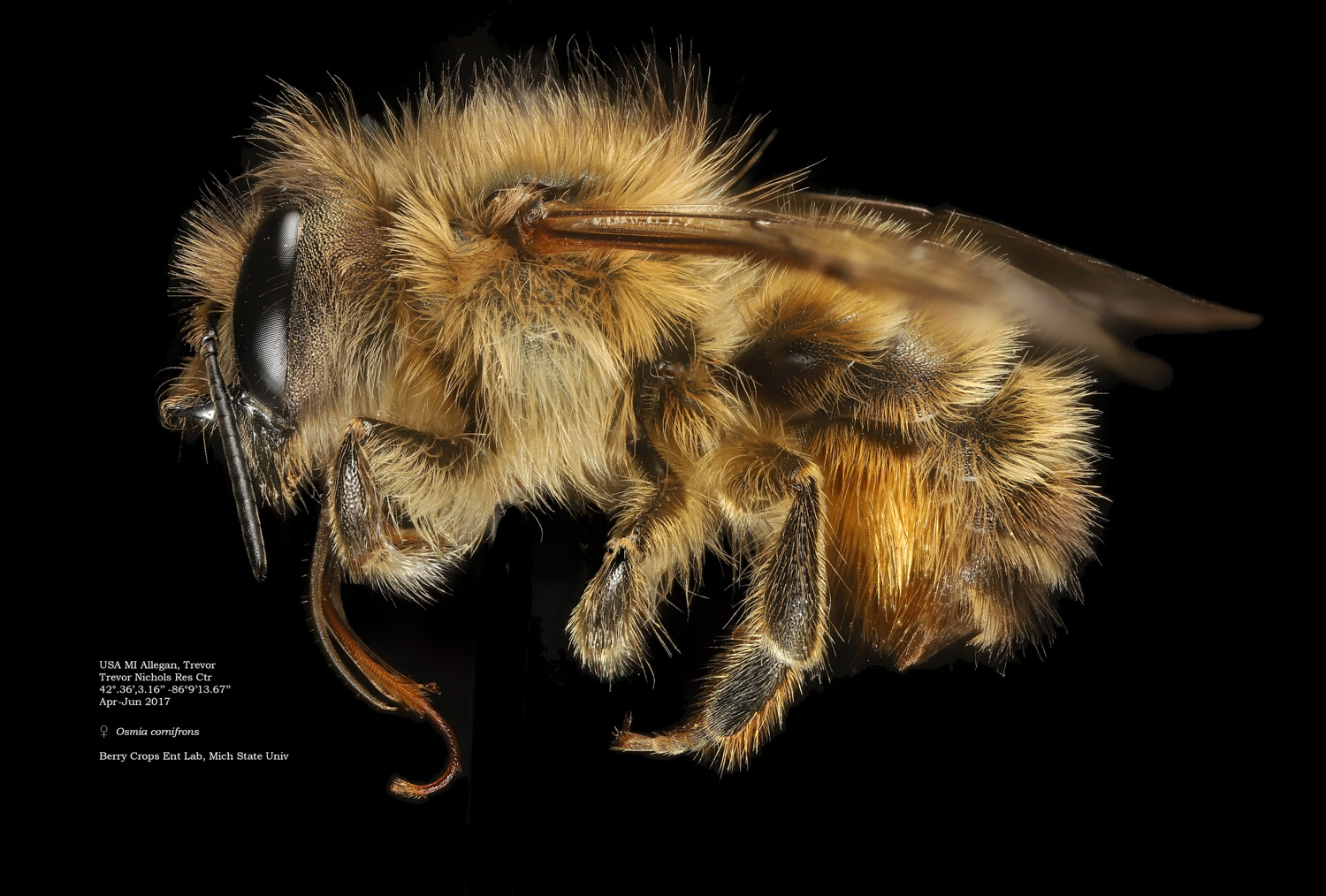
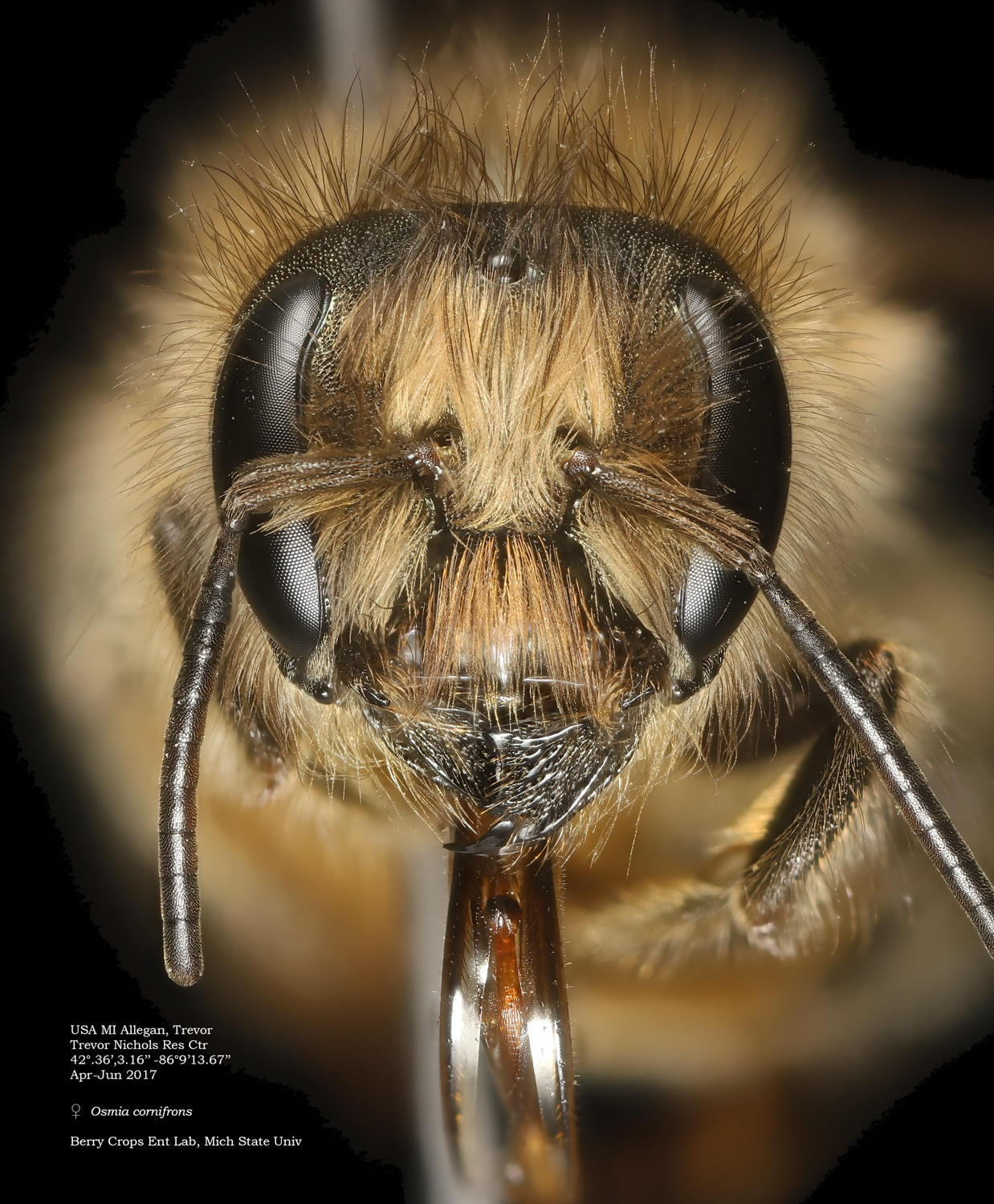
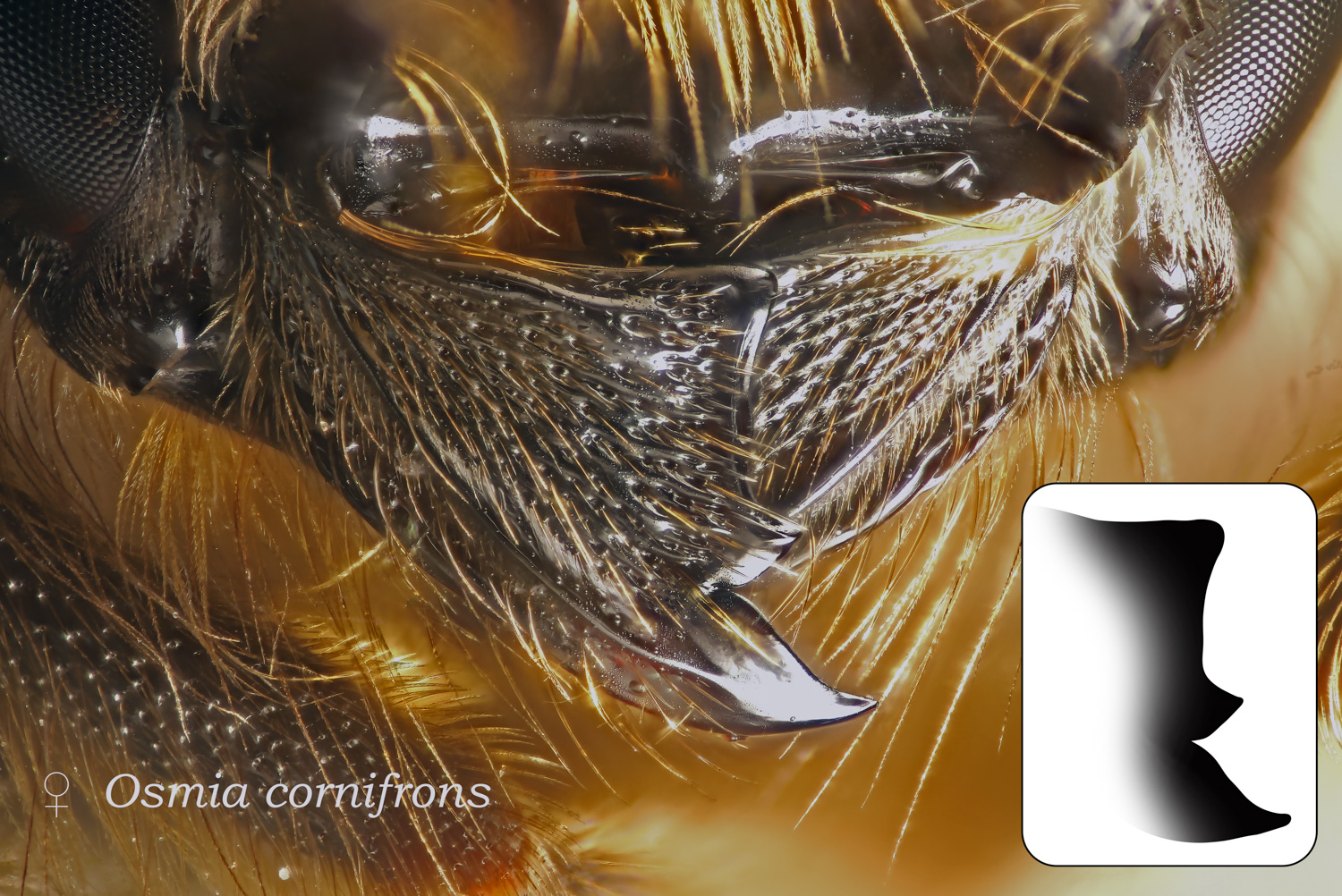
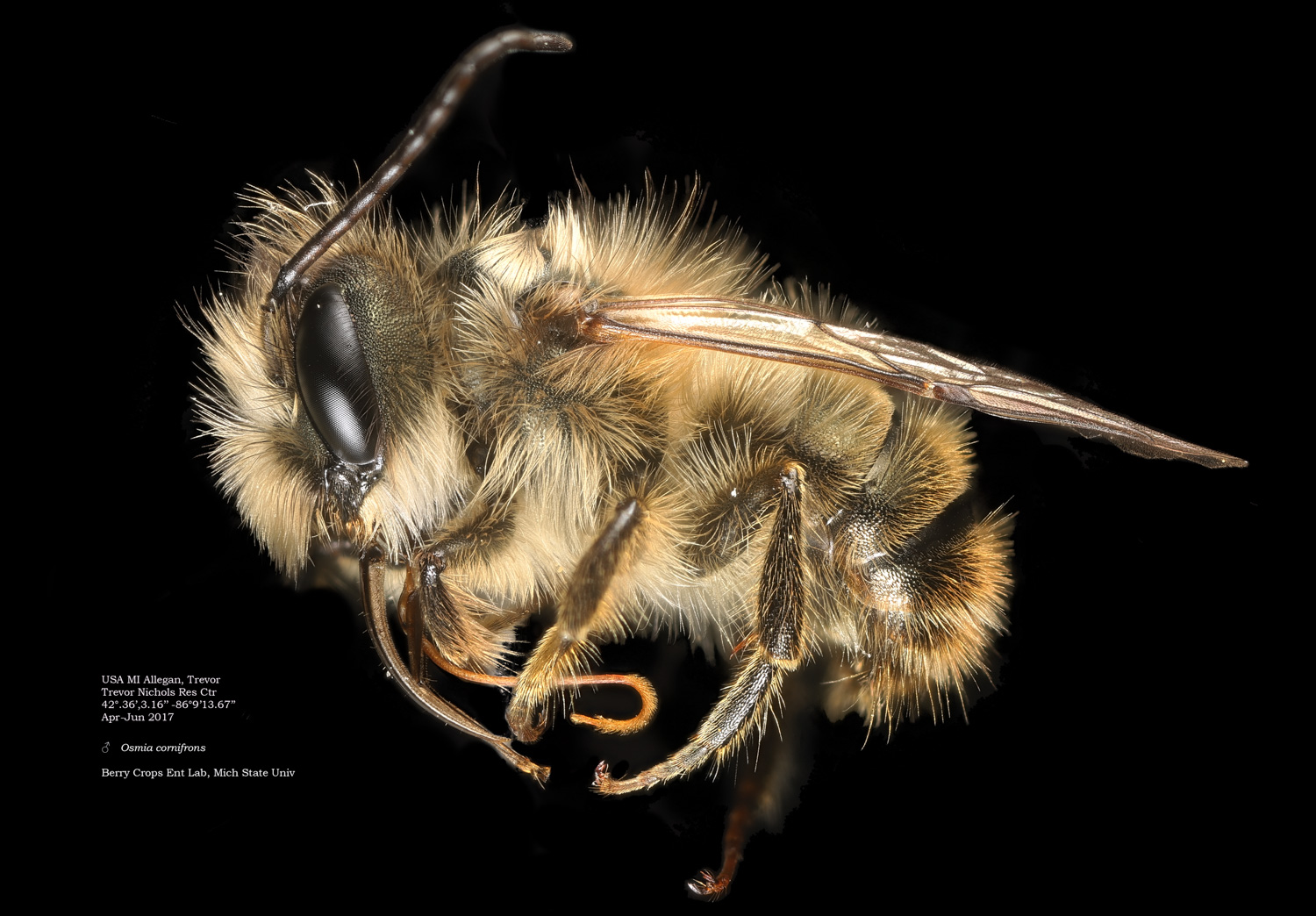
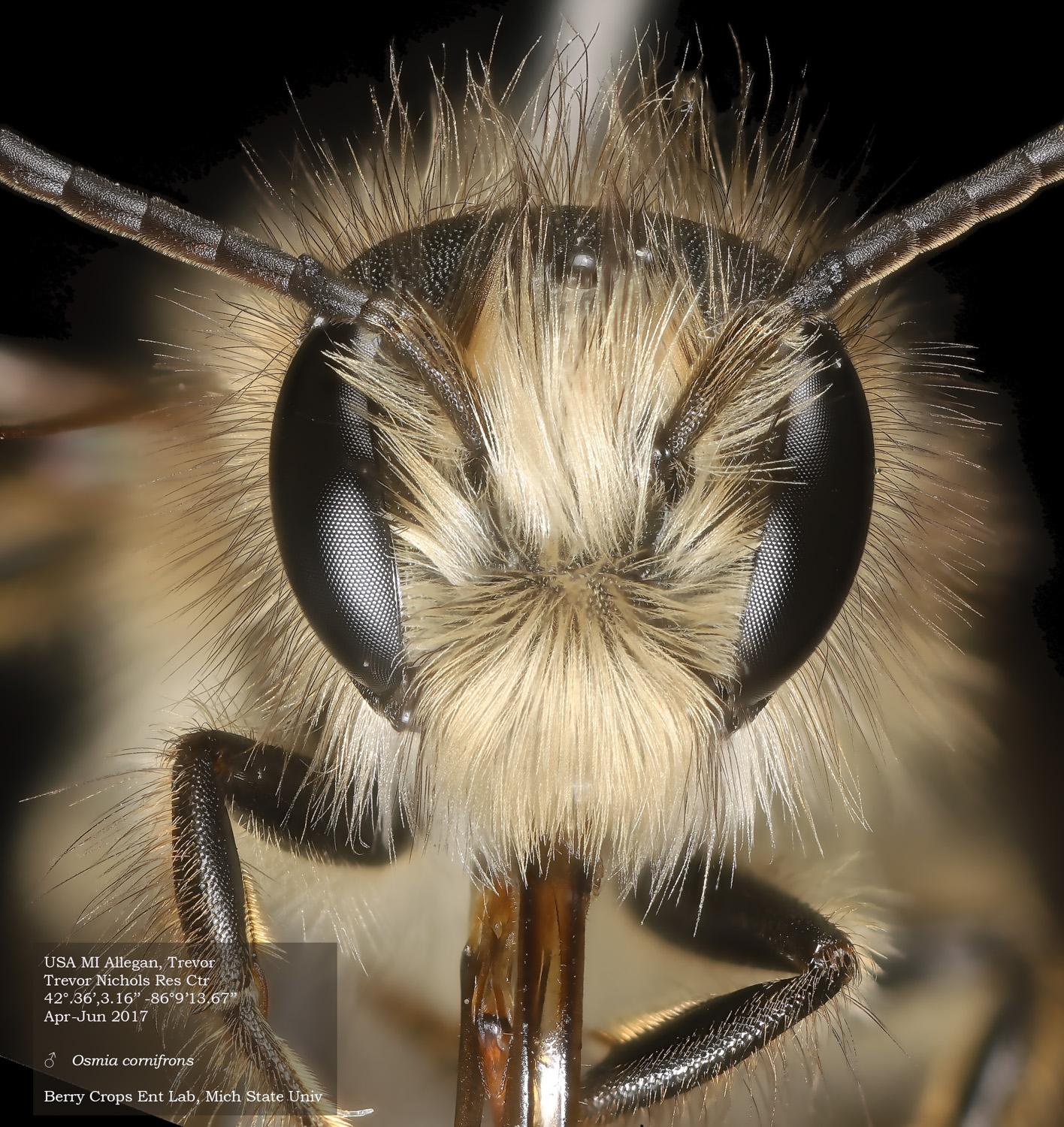
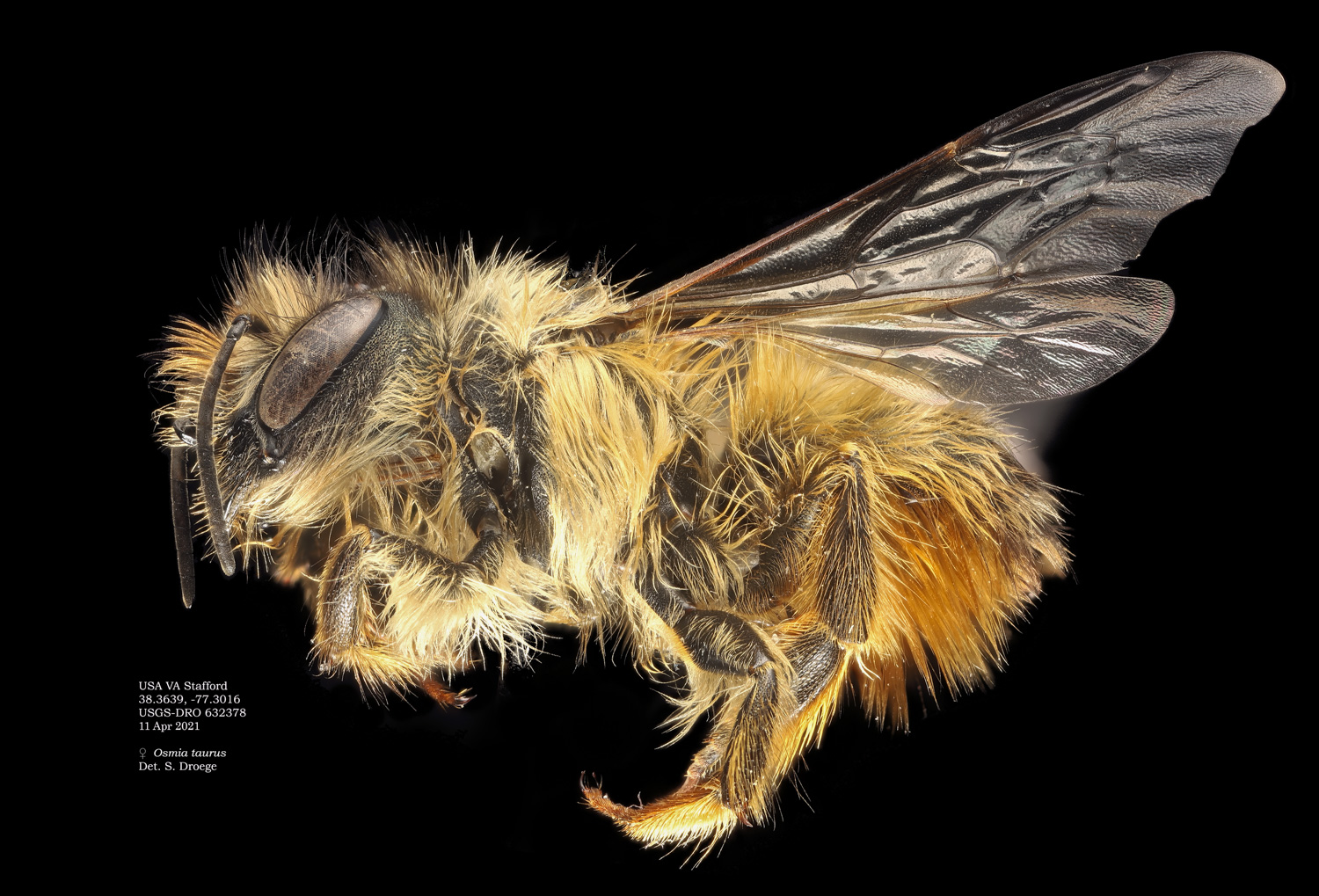
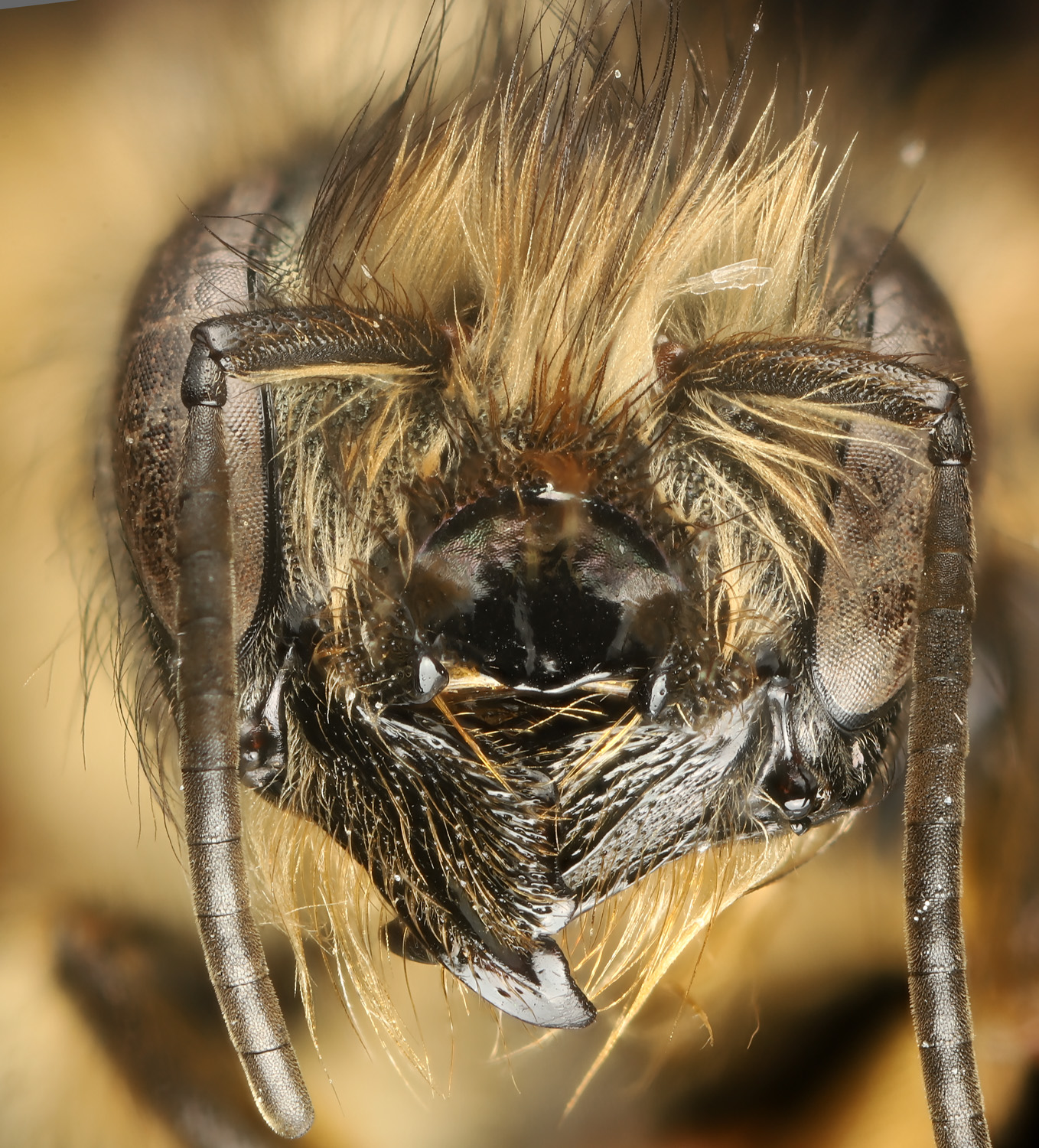
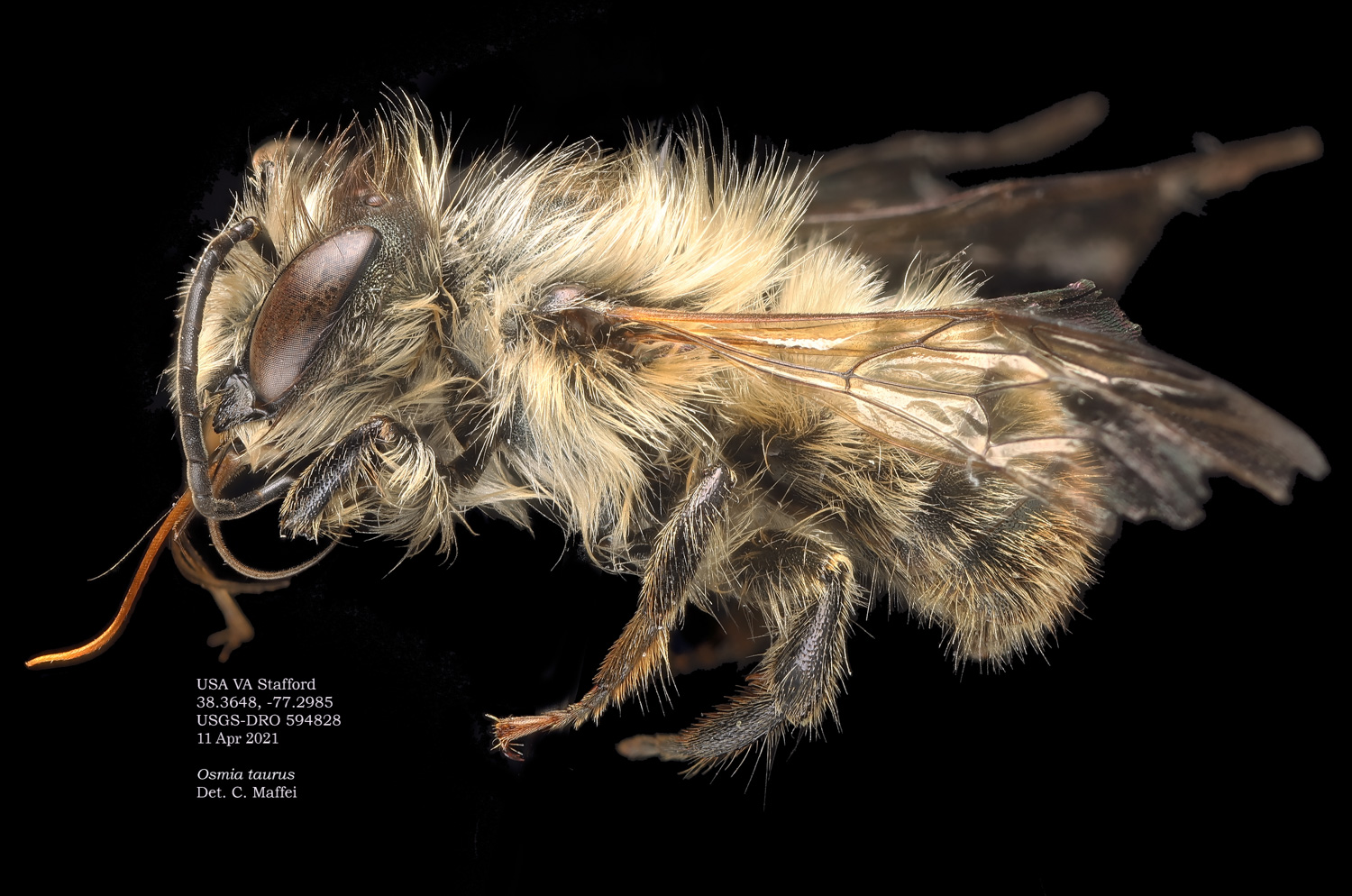
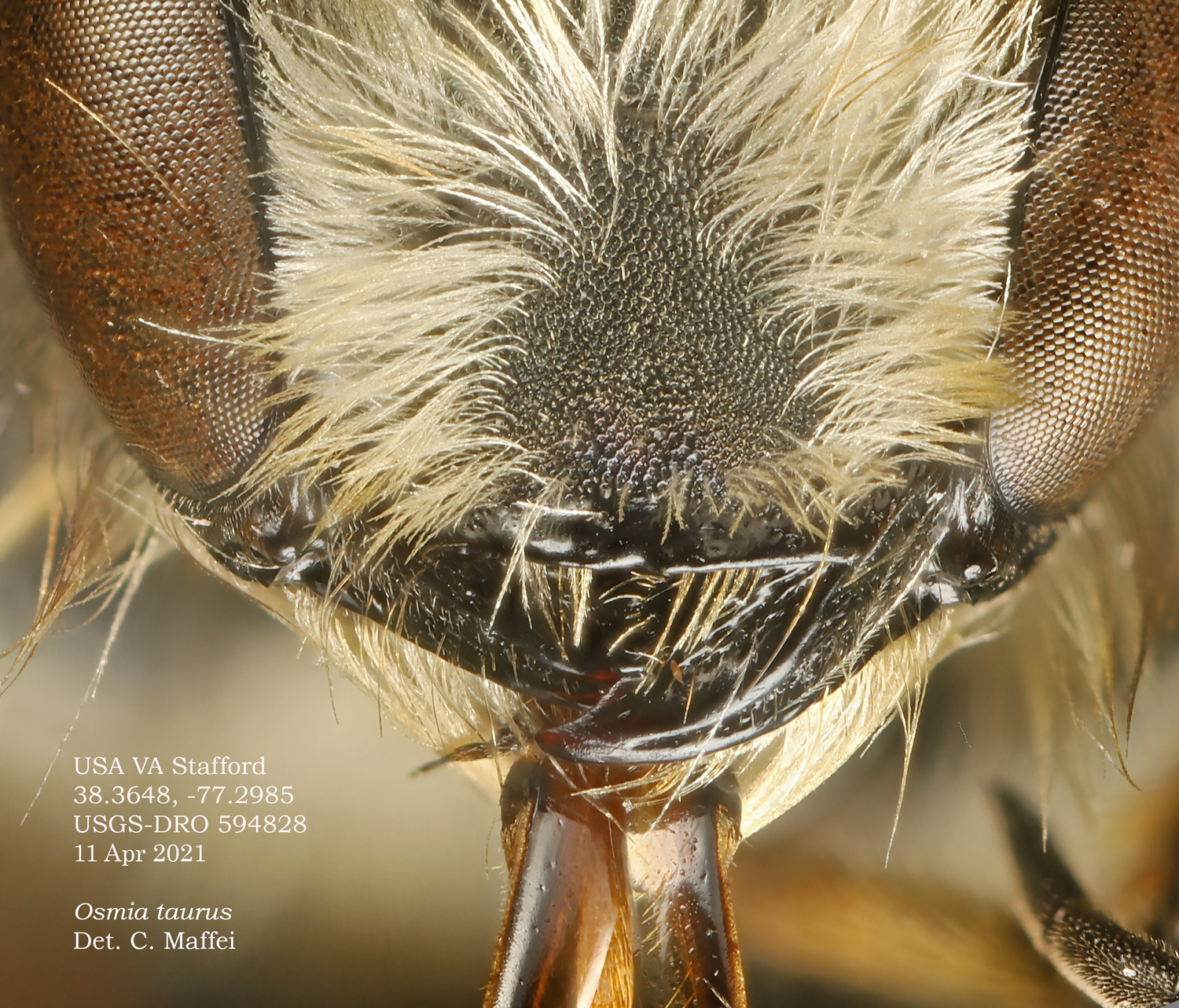
The female is unmistakeable: yellowish hairs, and 2 extremely large, obvious horns projecting at right angles to the plane of the clypeus at the outside edge. O. cornifrons bears a medial clypeal projections, unlike the similar O. taurus (DiscoverLife). The clypeal edge separates O. cornifrons from O. tauraus - not evident in the photos here. The male specimen here has dark integument and elongate middle flagellar segments. In DL, the choices are O. taurus and O. cornifrons. O. taurus would have more pronounced orange hair color.
|
|
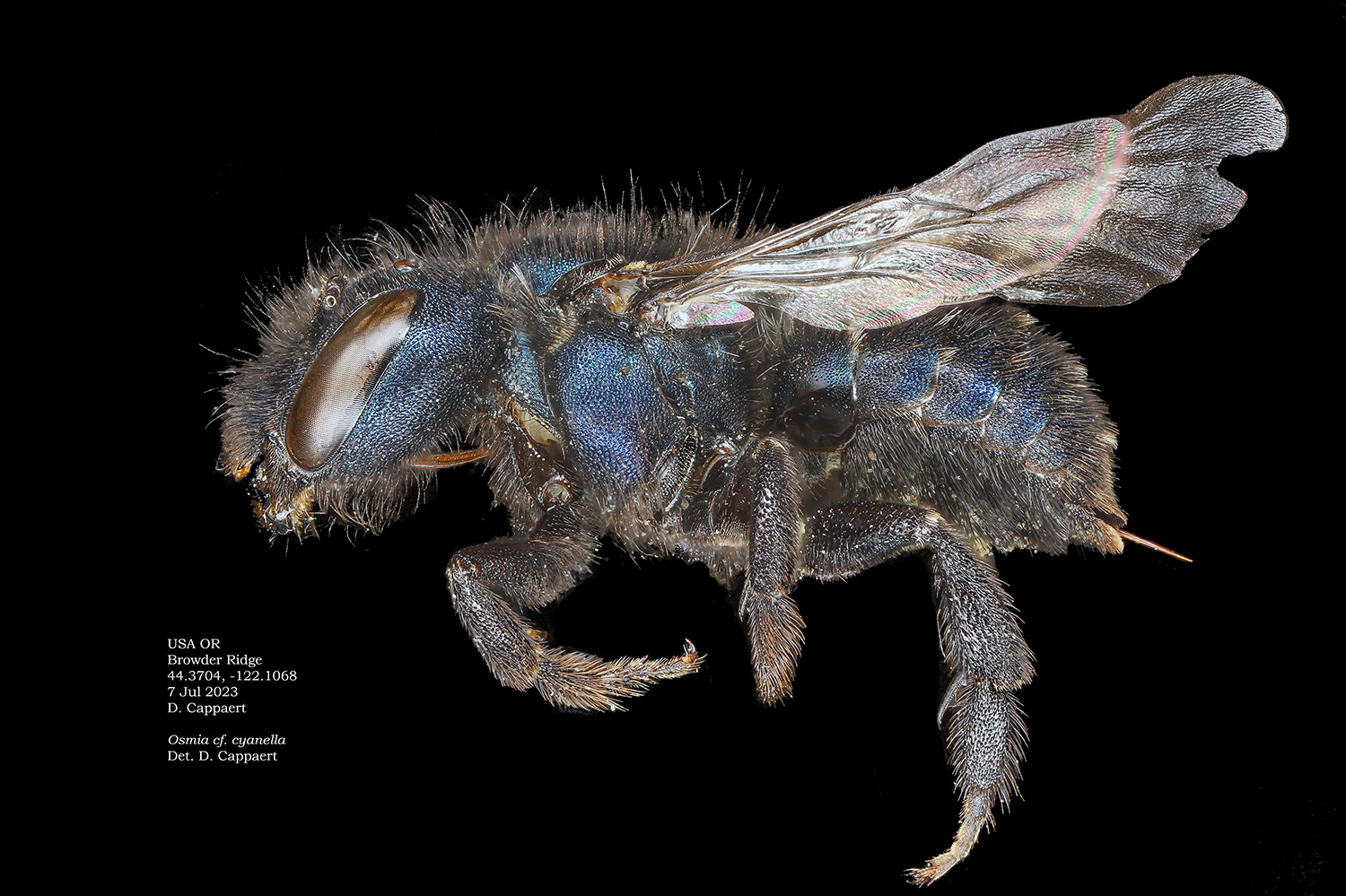
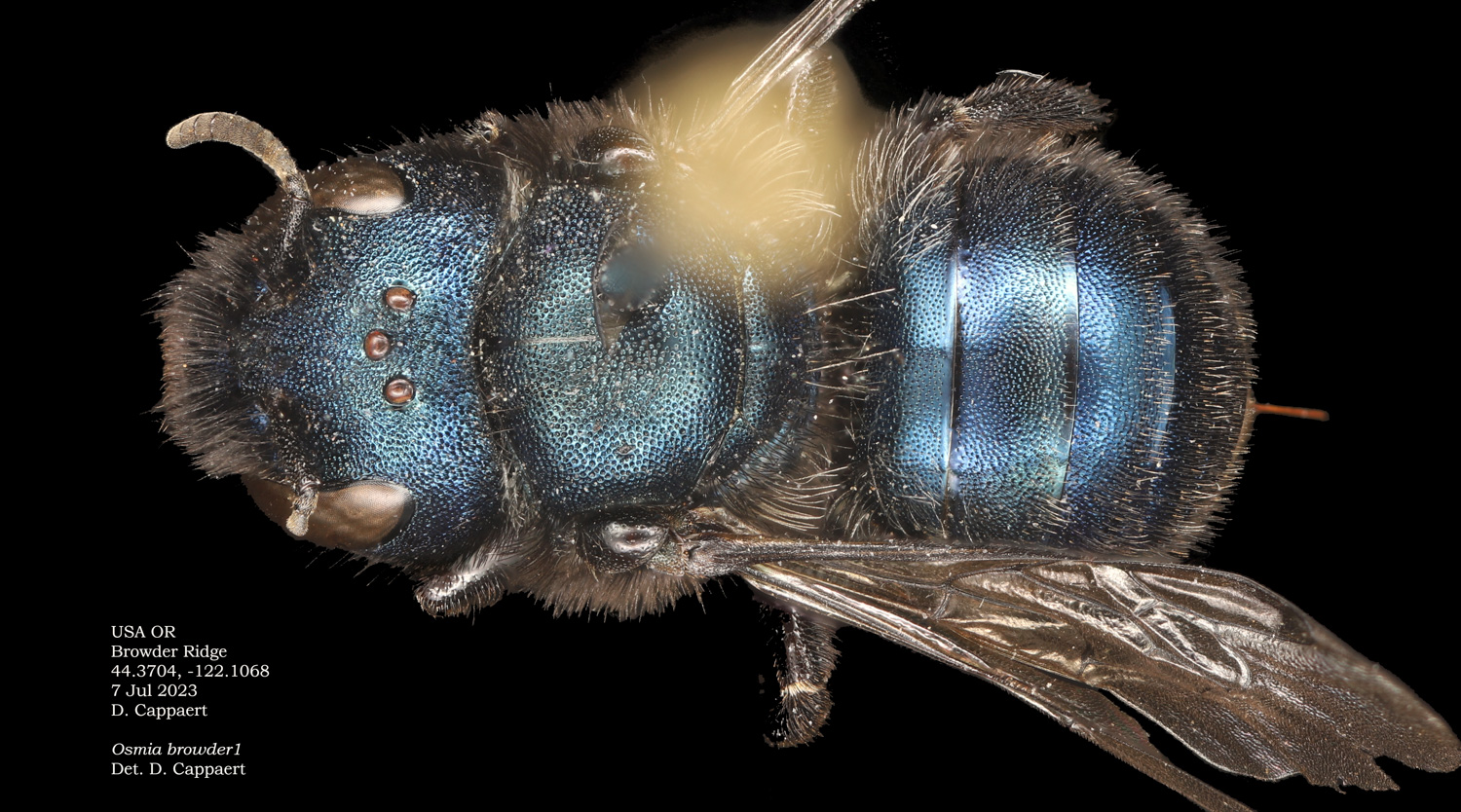
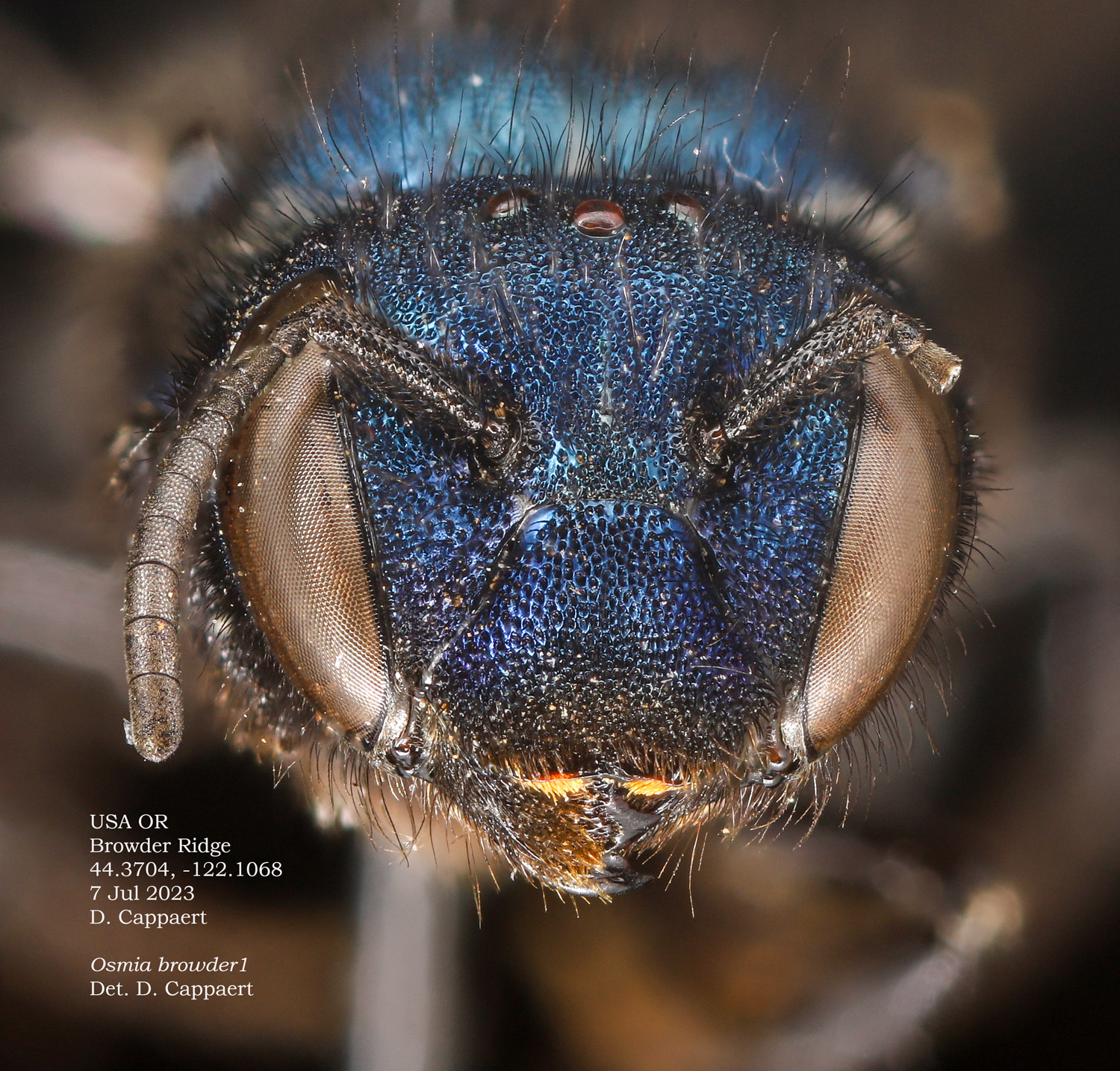
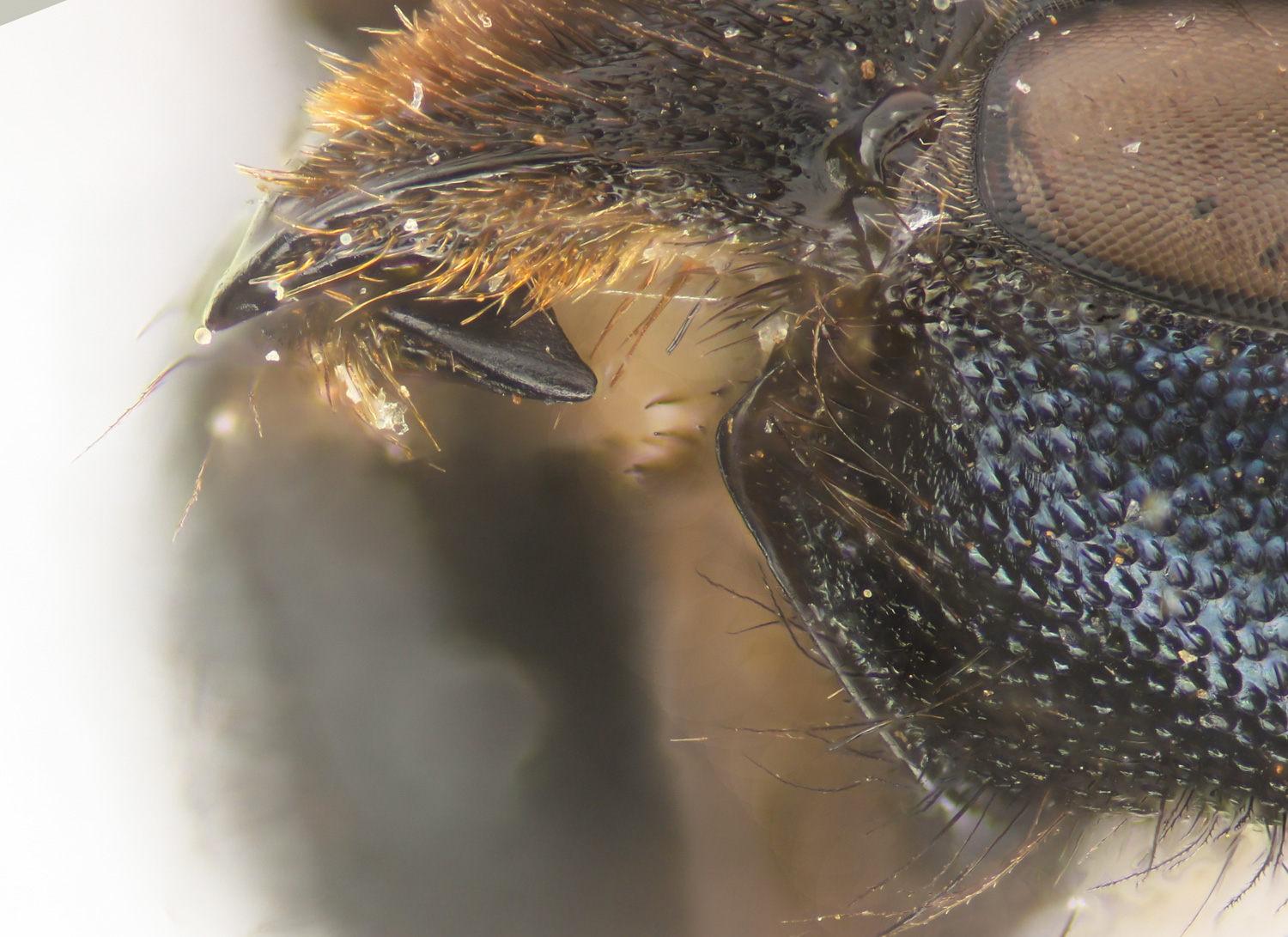
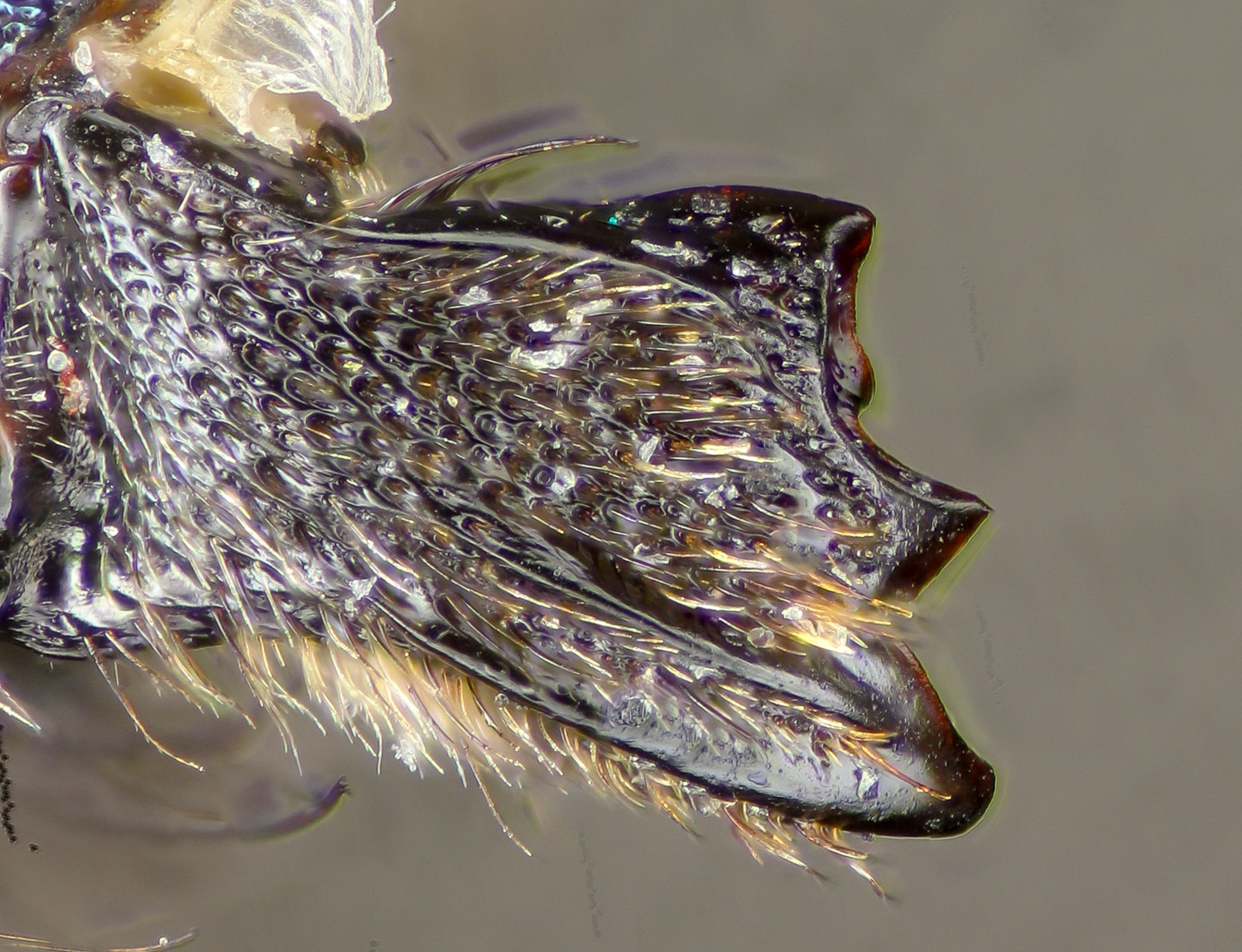
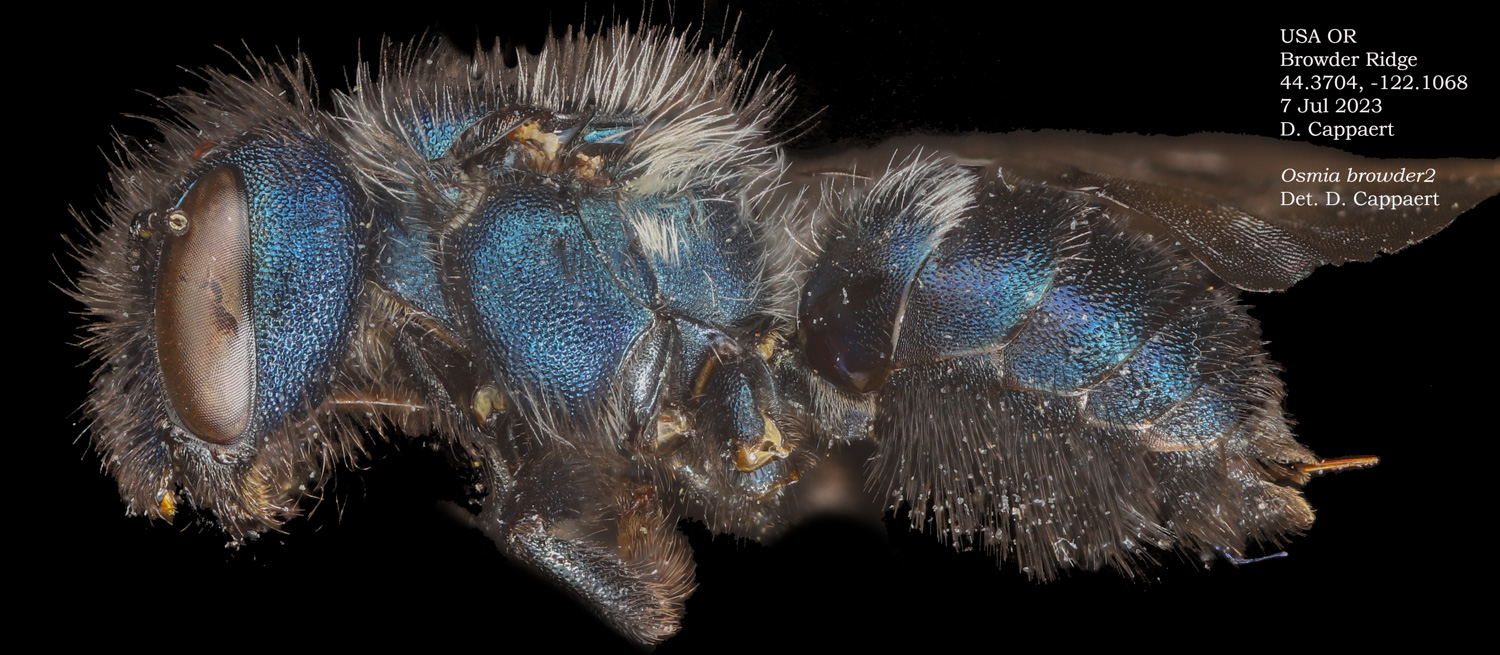
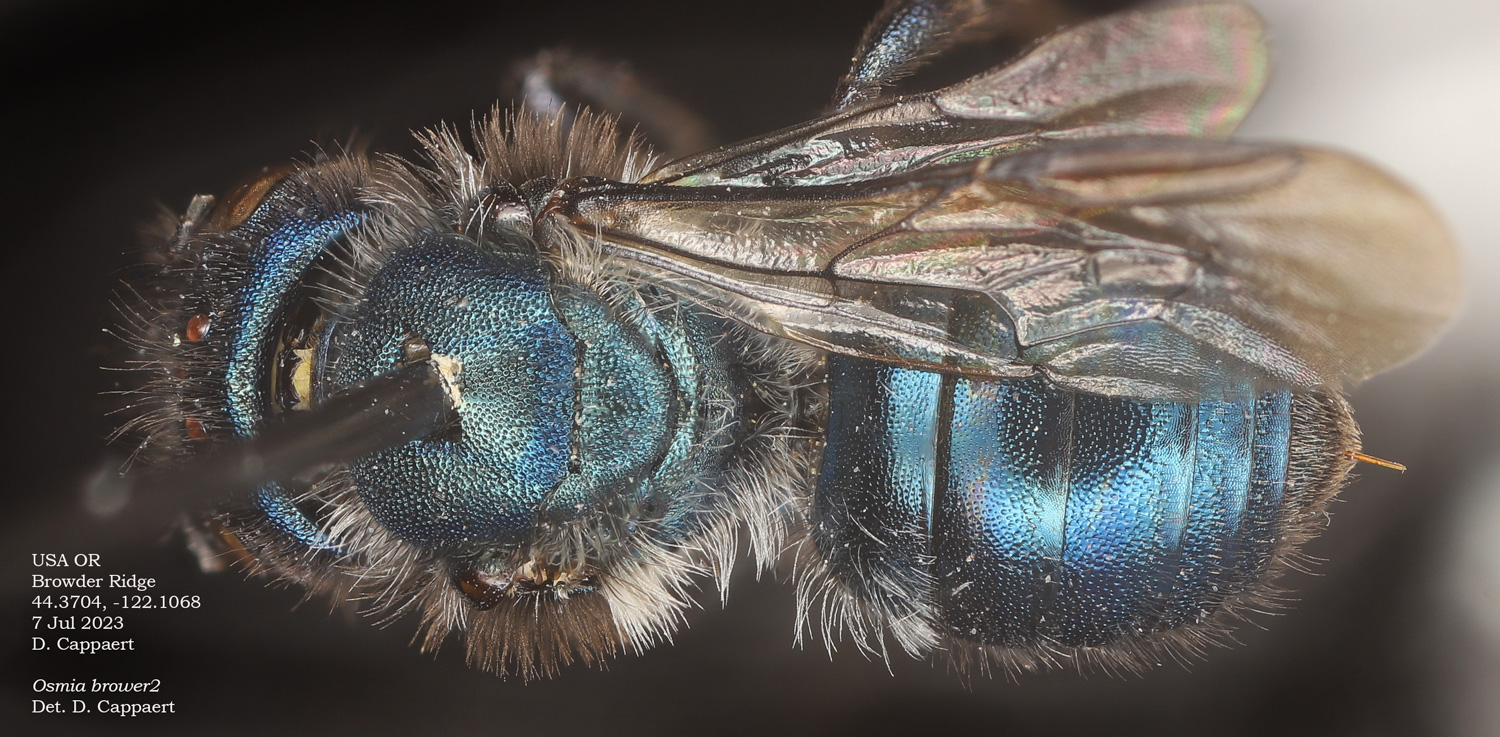
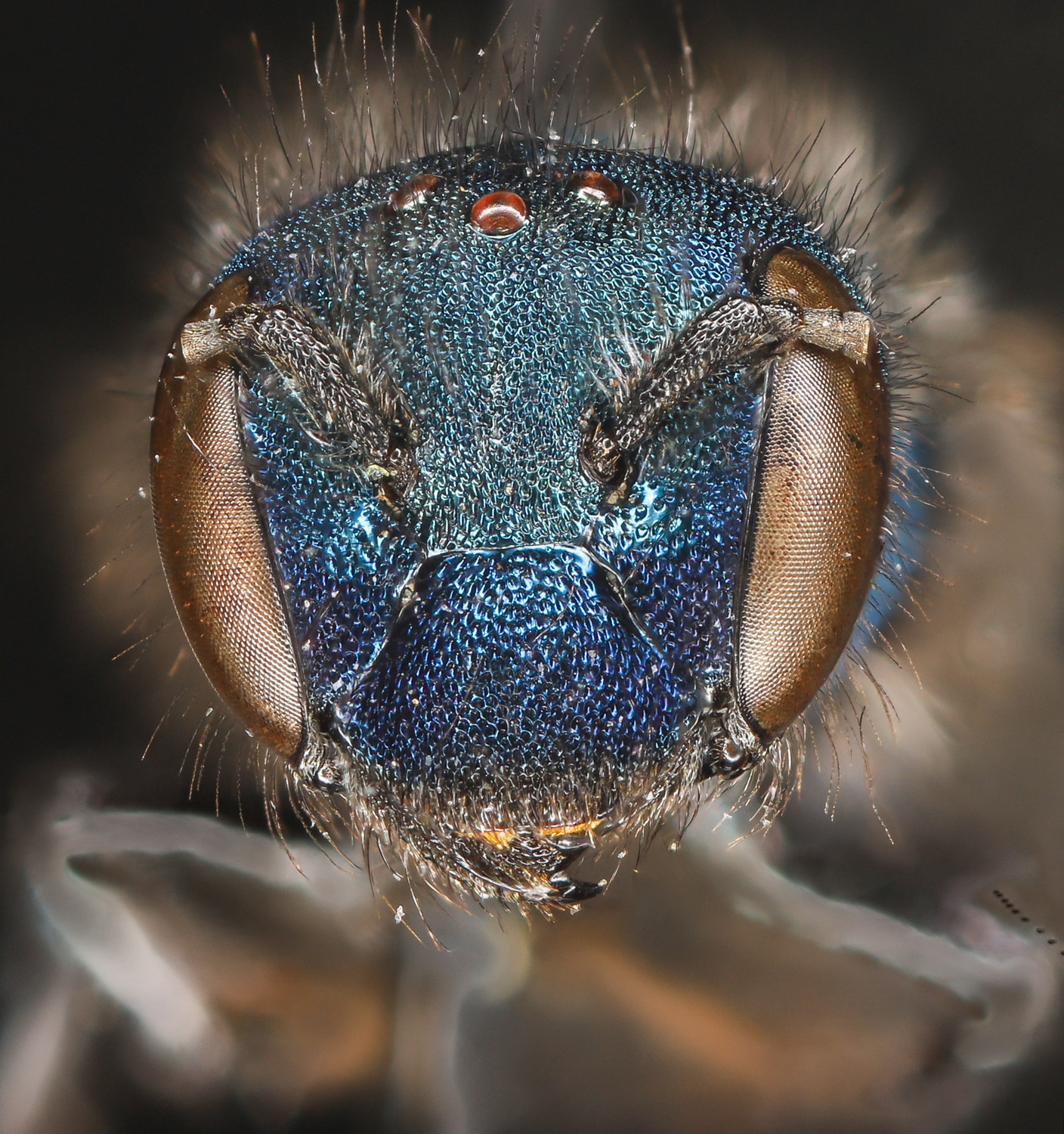
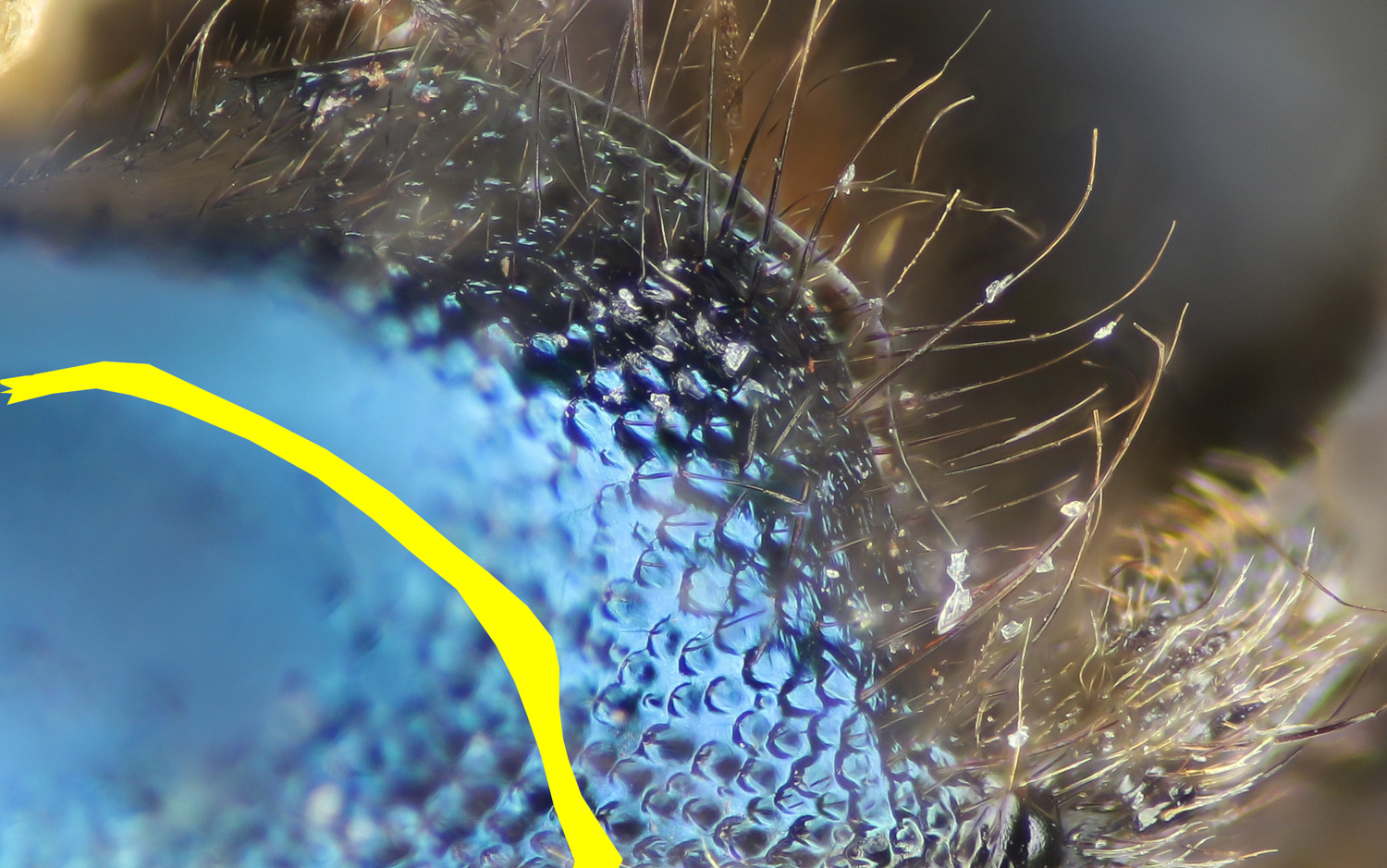
| This specimen is from the Browder Ridge in the Oregon Cascades. For traits noted in photo captions, the list in DL:
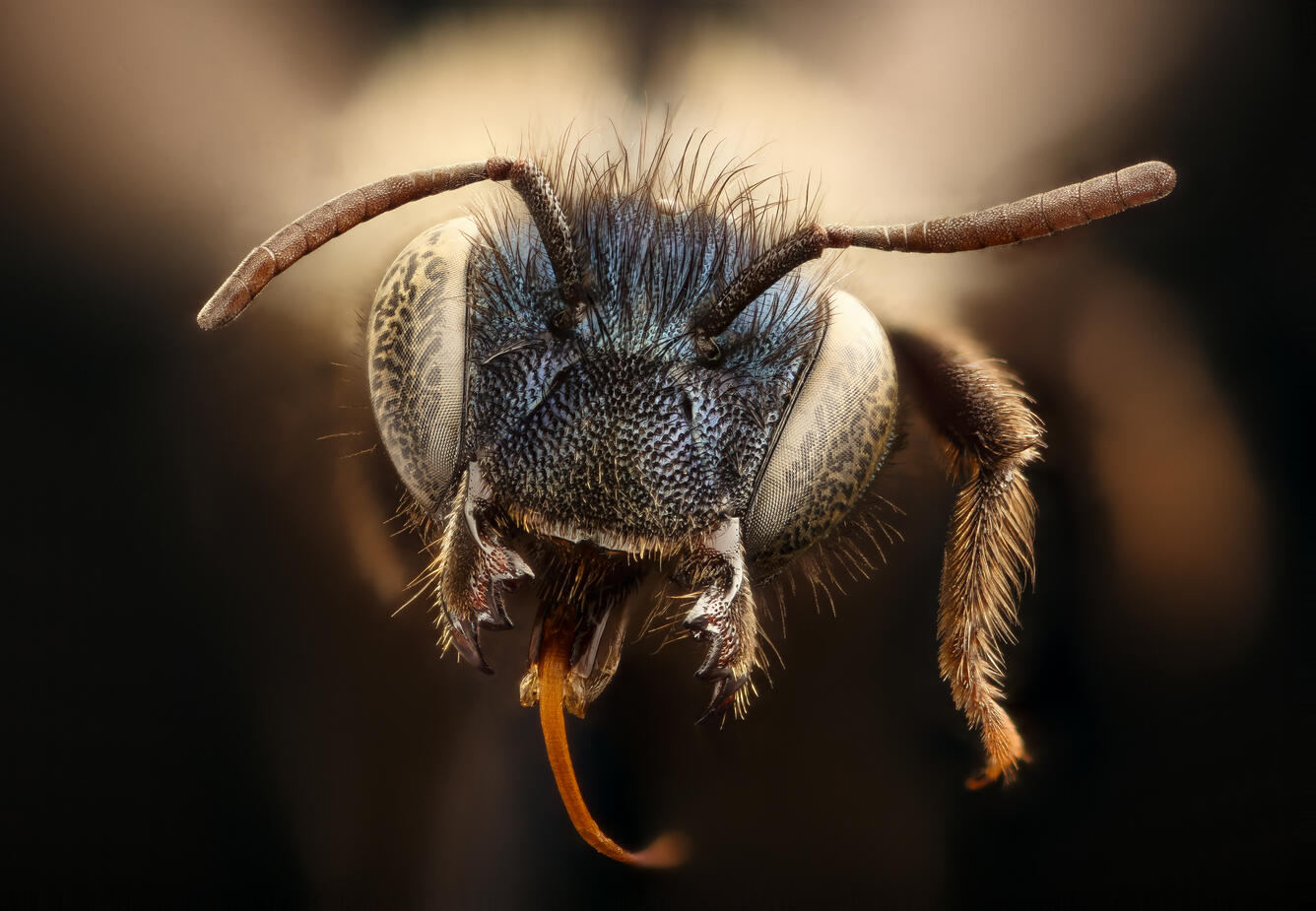
Image above: O. cyanella, from Bees of Canada, Packer Lab.
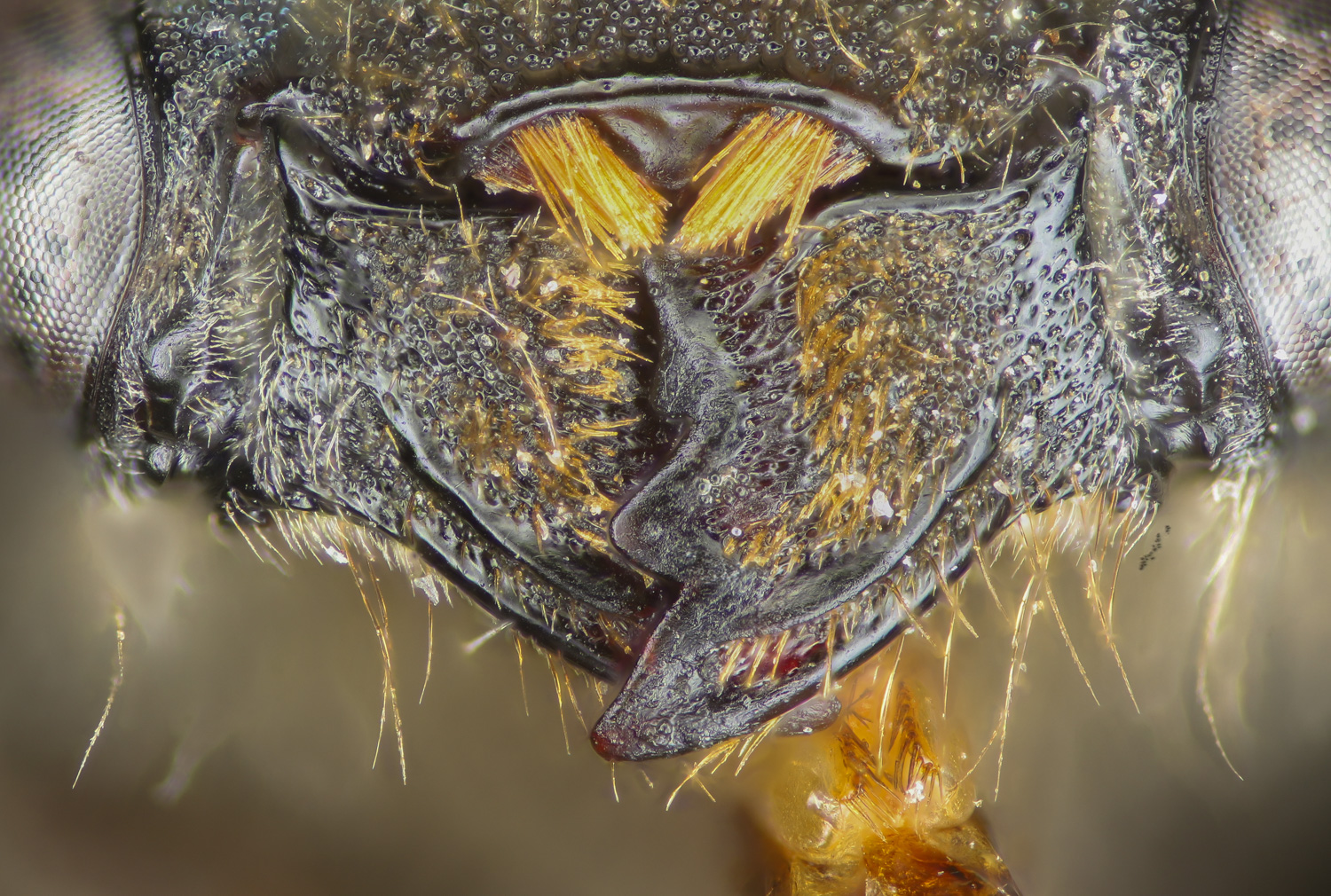
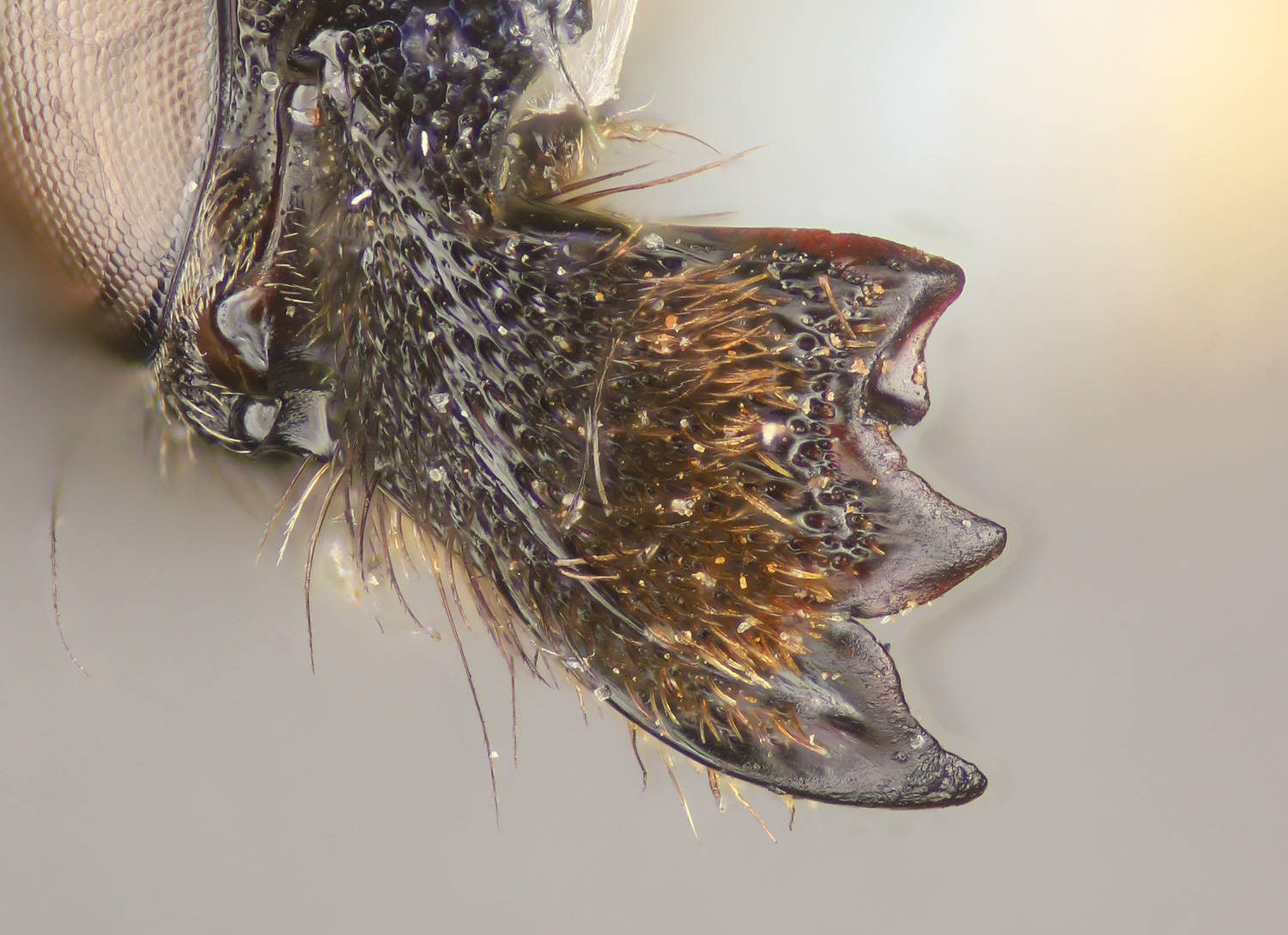
Mandible of specimen at right. Polygonal; Apex 1.5X wider than narrowest width; Carinae thin and parallel; middle tooth equidistant from 1st and 4th; cutting edge short, recessed; upper margin of 1st tooth 1.3X lower margin of 2nd.
|
Gena 1.3X eye width;
Vertex=2.6 od; T2 pits ~2 diameters from edge; scopa, scutum, episternum hairs dark.
Could this be O. cyanella? From Sandhouse: "The female can be distinguished from others of similar size and color by its short and wide head with the posterior margin of the vertex strongly concave." The head of this specimen is indeed short and wide; the vertex might be concave from a slightly different angle, but I'll never know, having sacrificed the specimen to obtain the mandible. |
The hypostomal carina is difficult to photograph, and to interpret. In Sandhouse, O. cyanella has the carina "highest at the angle."
|
| This specimen is from the Oregon Cascades, collected from the same site, same day as the O. cf. cyanella above. It is a visually similar Melanosmia. So it is tempting to assume it is the same species. Is it? Differences: dark scutal hairs dark mixed with light; T2 apical area longer and border less defined; head taller. The mandible is comparable, but differs in a couple of respects: 3rd tooth incomplete, and carina between 2nd and 4th teeth is well defined.
Polygonal; Apex 1.5X wider than narrowest width; Carinae parallel; middle tooth equidistant from 1st and 4th; cutting edge short, recessed; upper margin of 1st tooth 1.6X lower margin of 2nd. |
Impunctate T2 apex long, with stray pits.
|
A taller head, and vertex convex.
Ventral and lateral view of hypostoma.
|
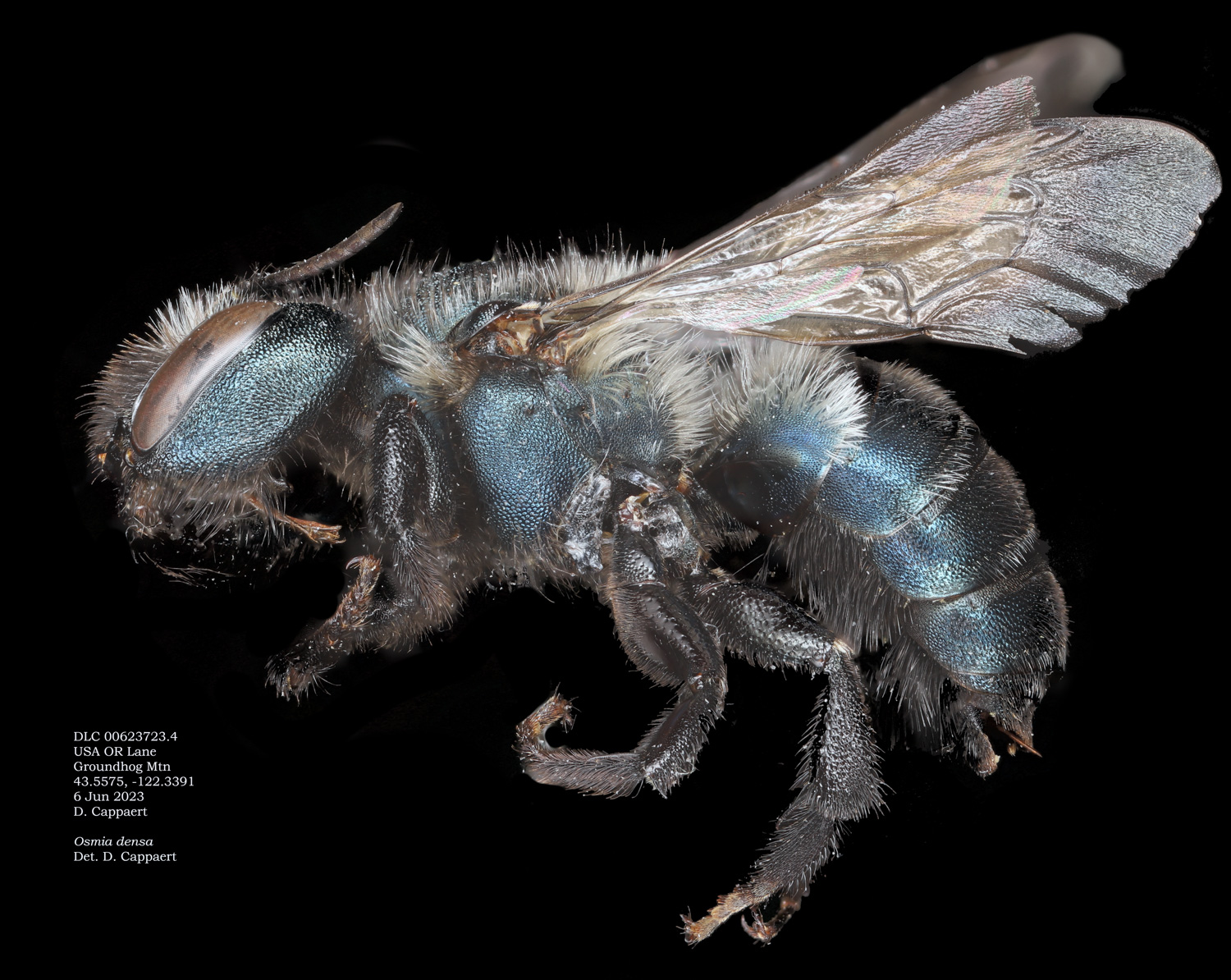
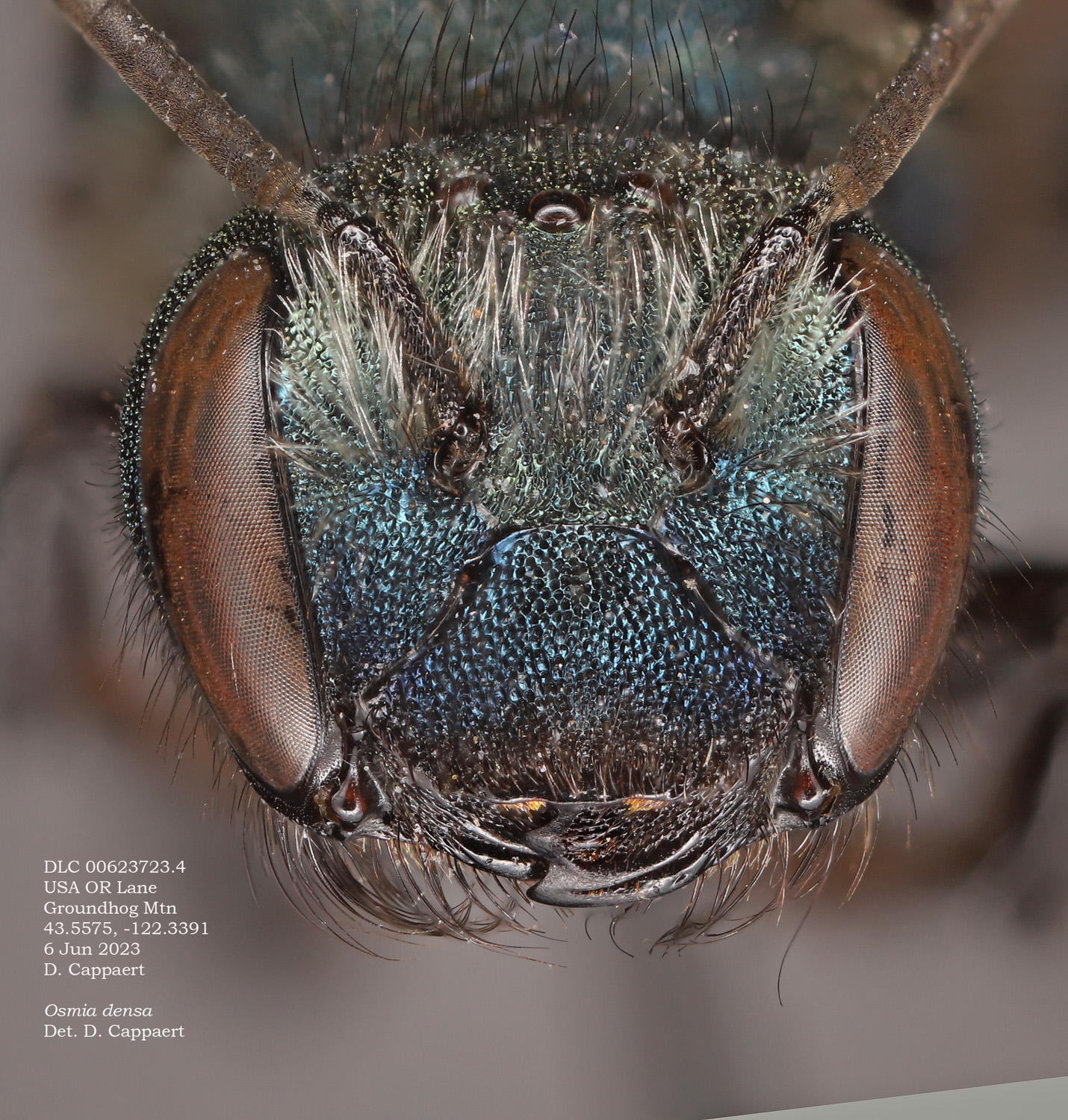
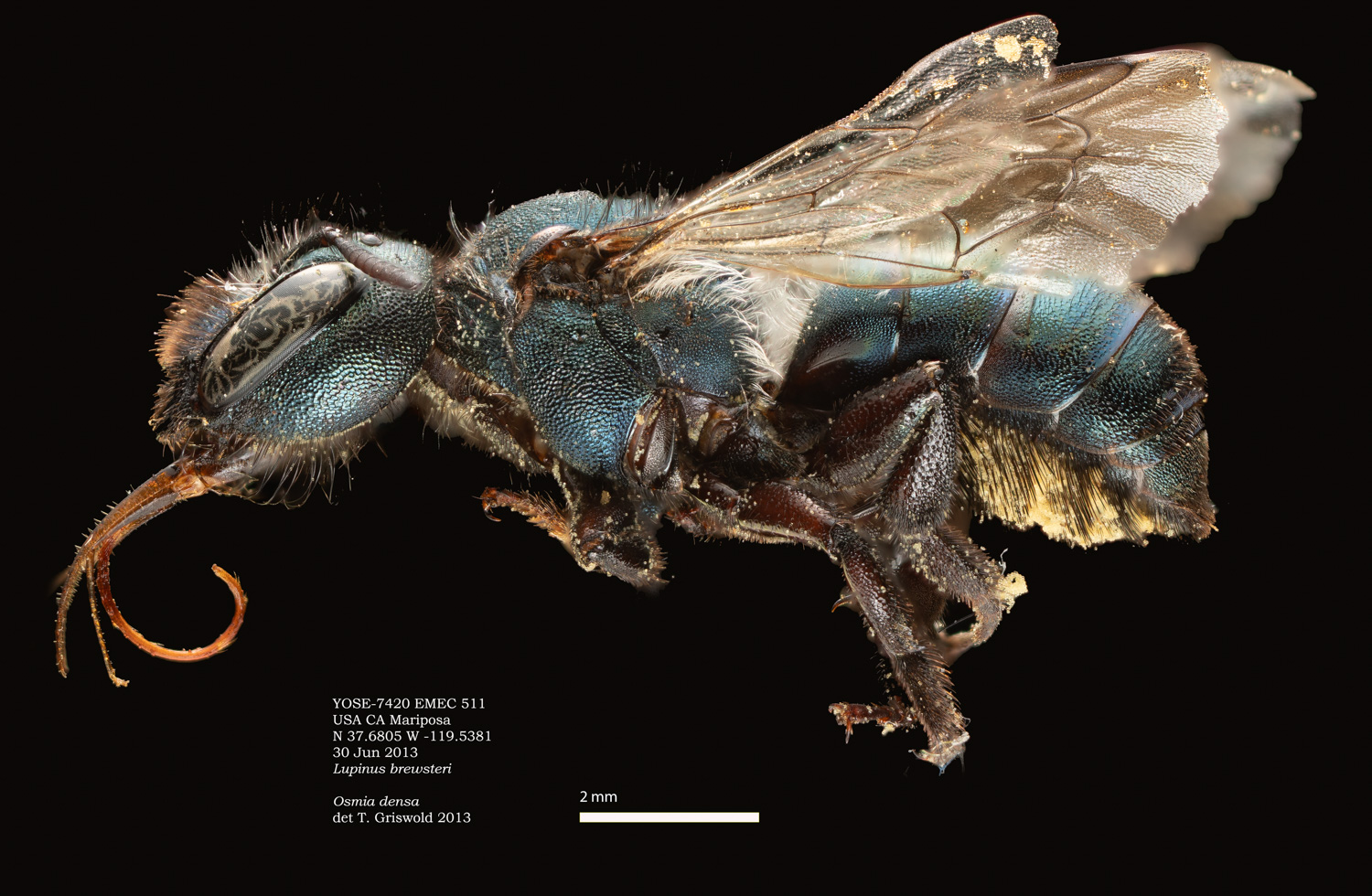
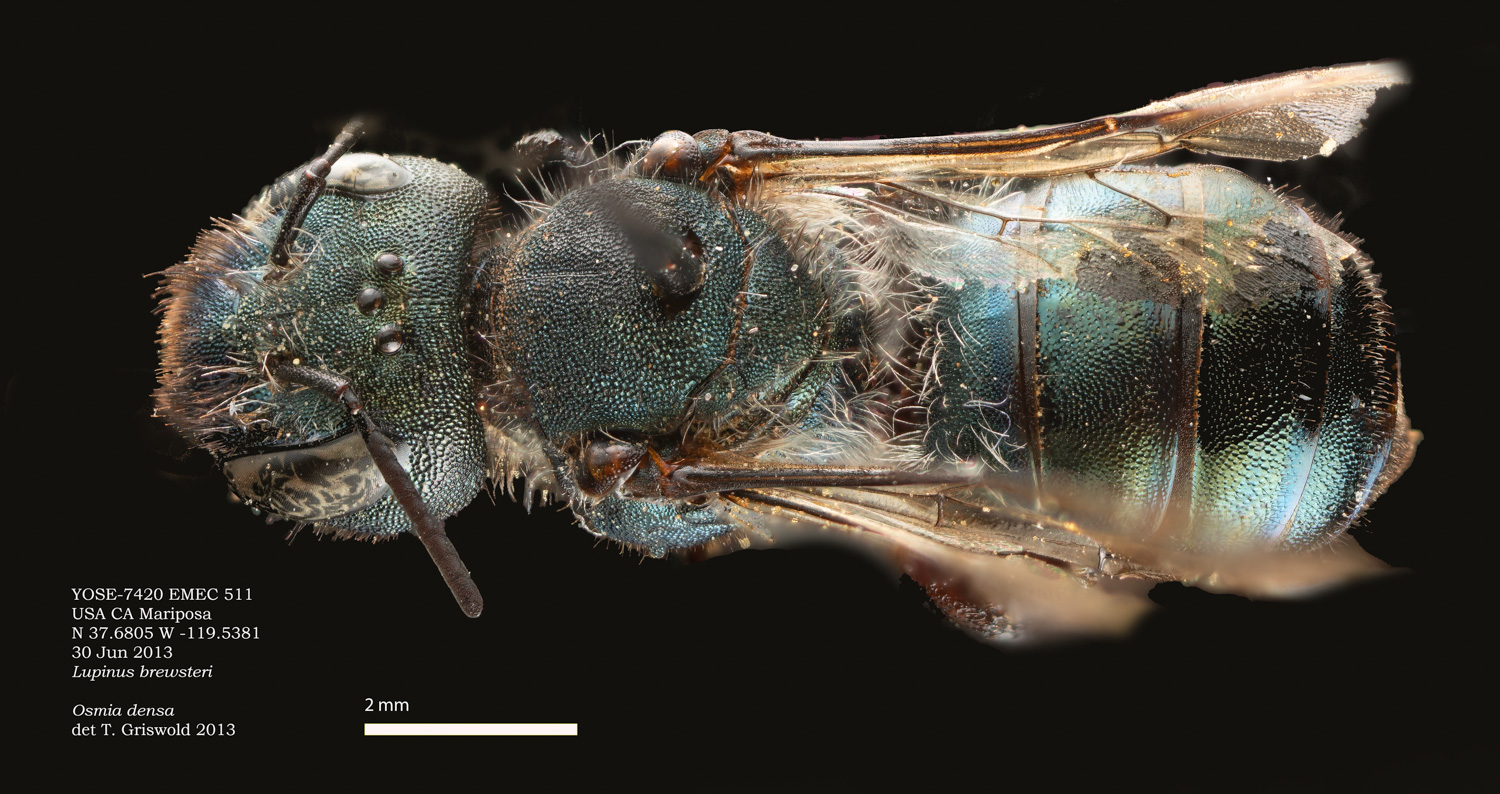
| The distinctive feature here: inwardly curving hypostomal hairs. In the DL Guide, this narrows choices to O. densa and O. glauca. The basket-like hypostomal hairs of the 2 species is given as an example of parallelism between the sugenera Melanosmia (densa) and Euthosmia (glauca). The latter has all pale clypeal hairs, and the Euthosmia condition of white scopa; the specimens pictured here have dark/light clypeal hairs and dark scopa. Incidentally ... I find no diagnosis for O. glauca. The best evidence I have is the CA specimen, with a determination by Terry Griswold, who would know. My own specimen is a match, though I can't directly compare to the CA specimen, which is in Loren Ponisio's lab at U of OR. |
Specimen from Groundhog Mtn, Oregon Cascades.
|
|
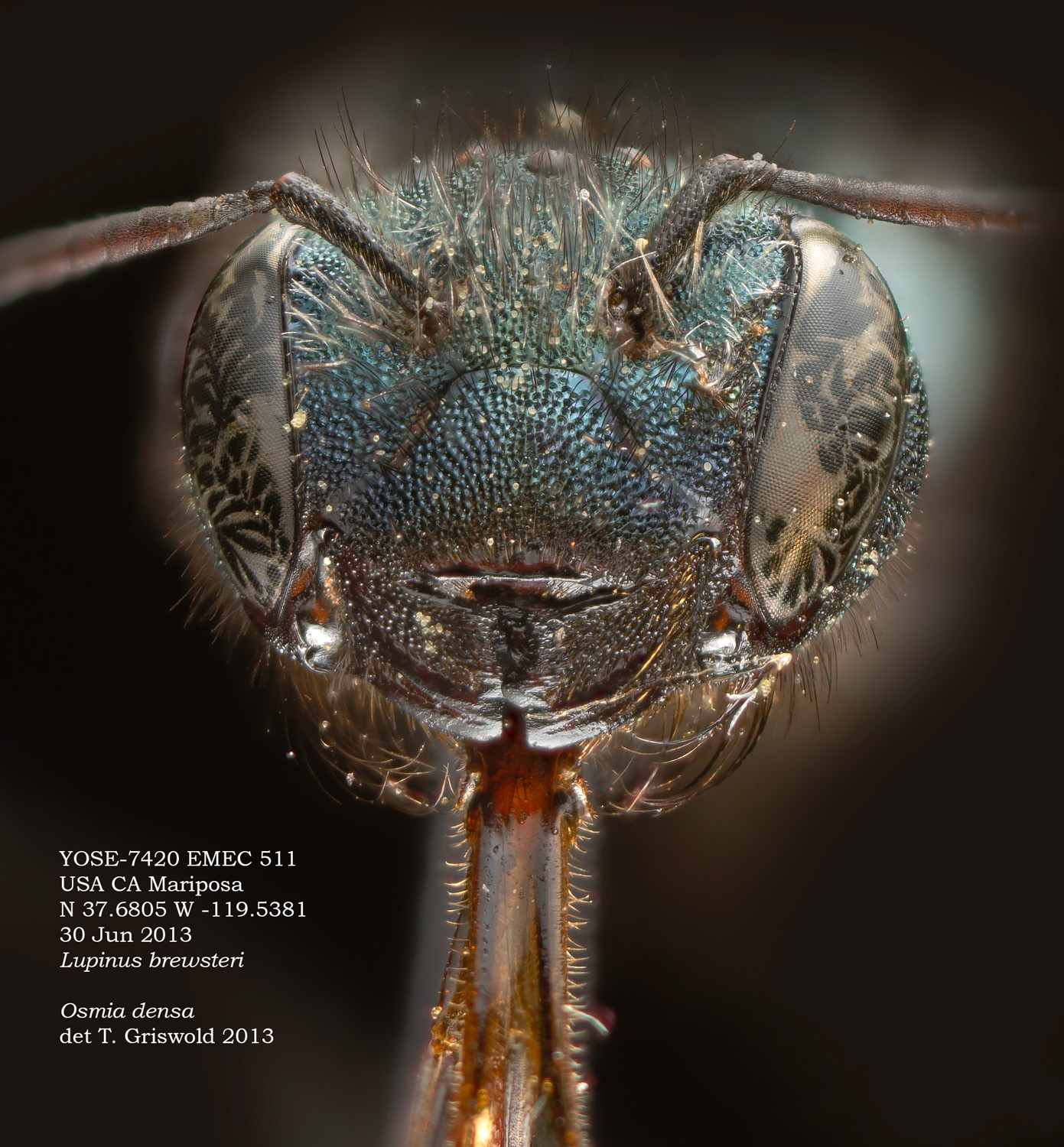
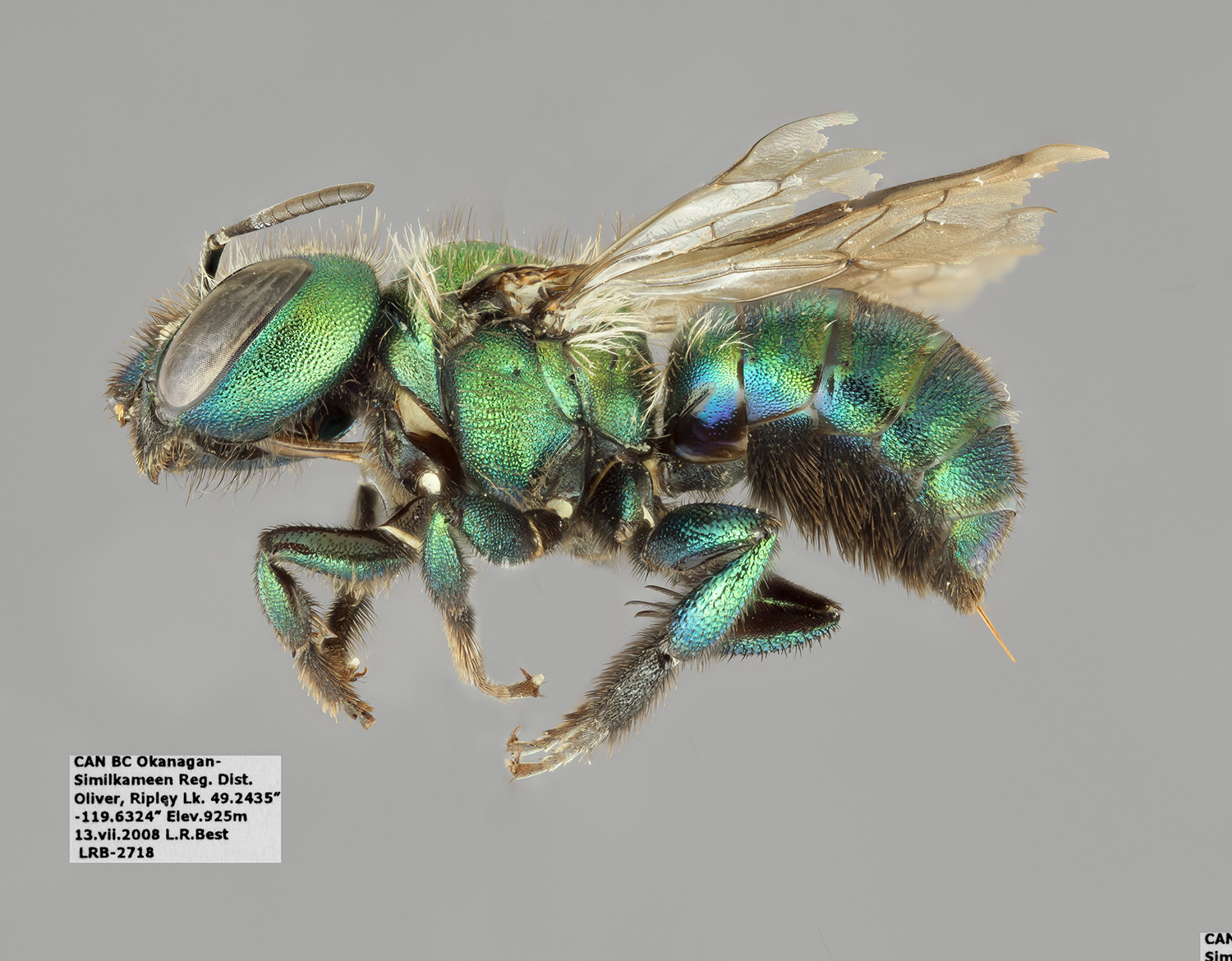
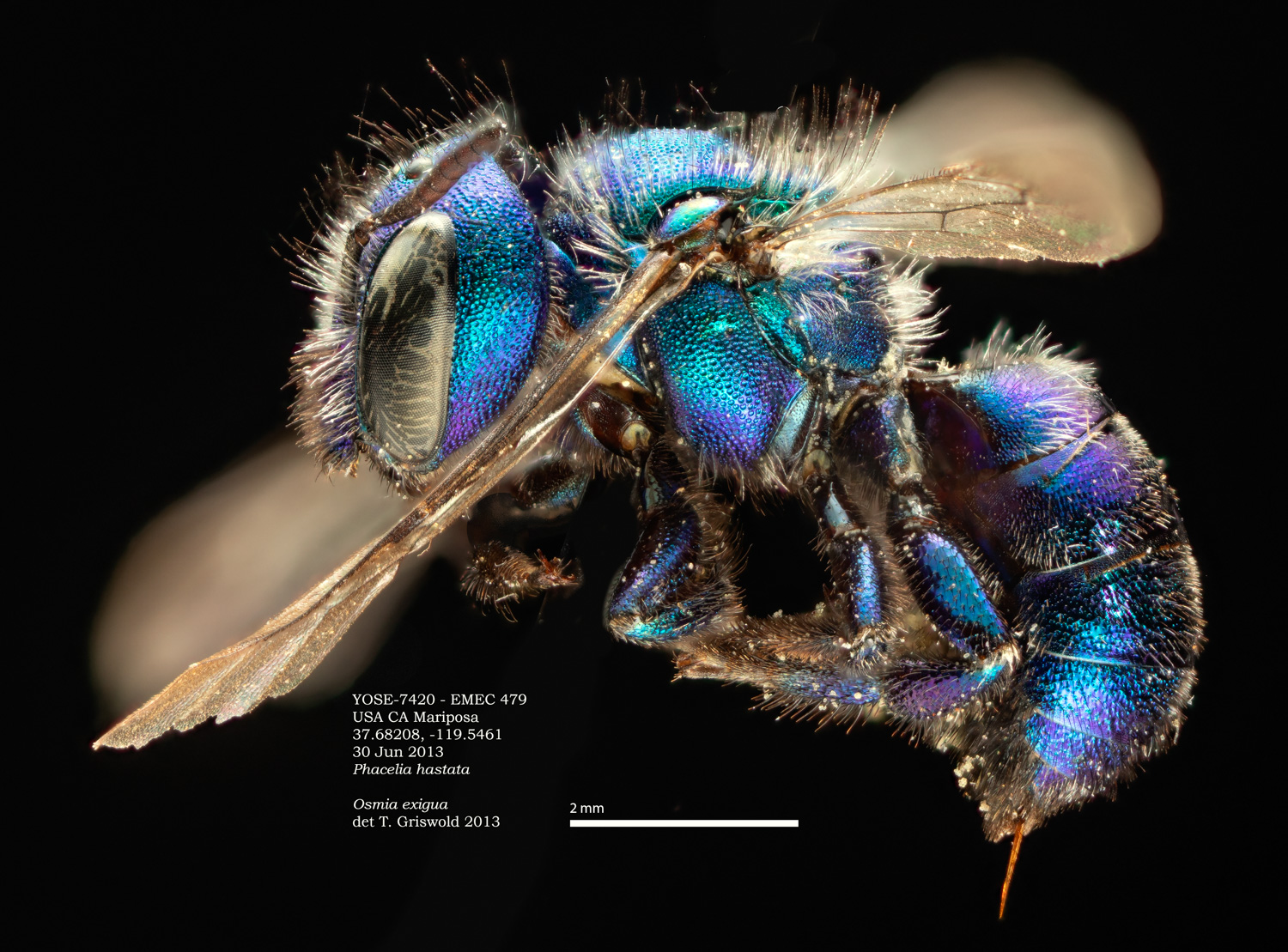
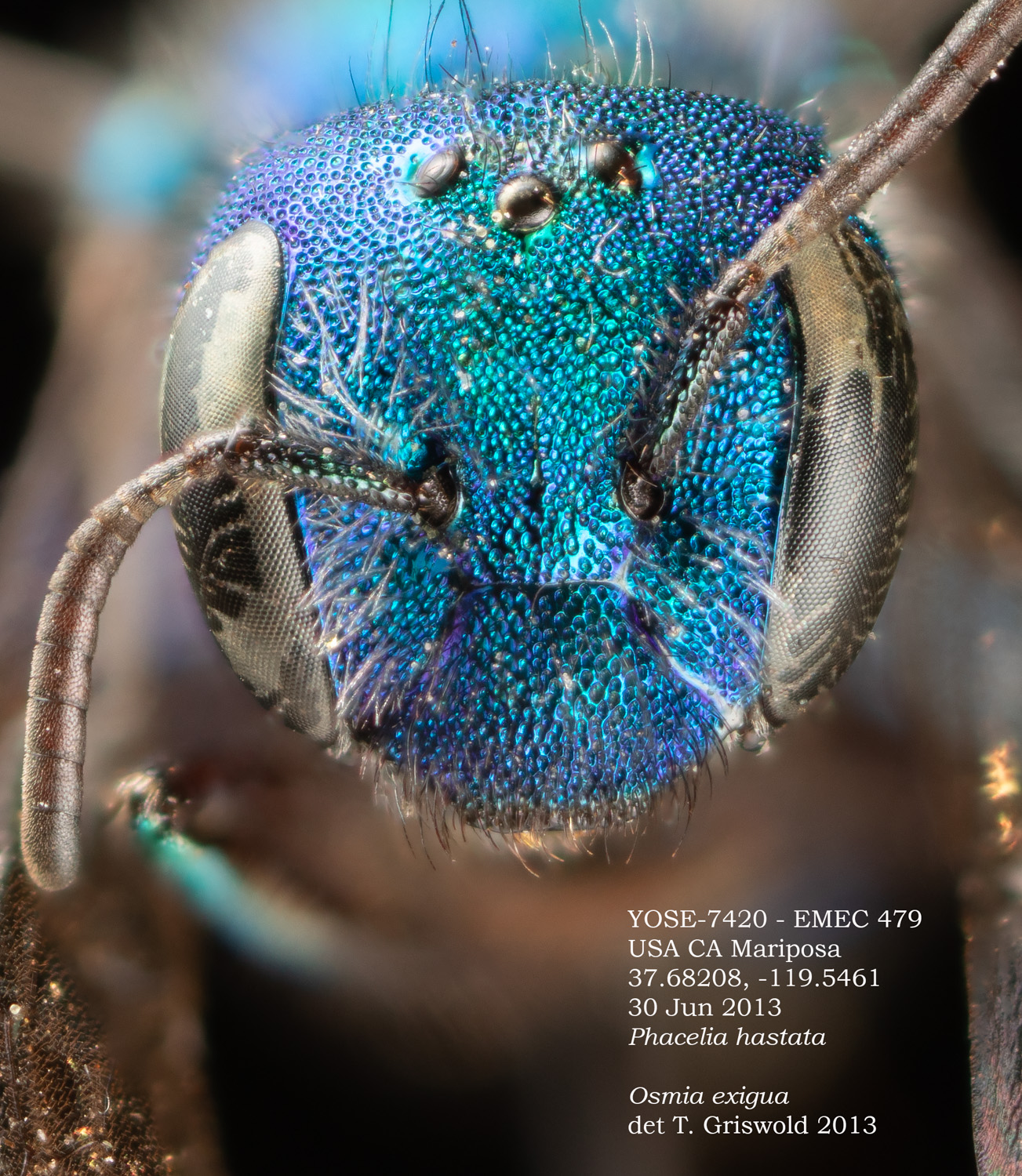
I only have images, photographed in Loren Ponisio's lab at University of Oregon. There is not enough info here to diagnose, but the ID by T. Griswold is authoritative. Image below: O. exigua, from Bees of Canada, Packer Lab. ![]() |
|
|
|
|
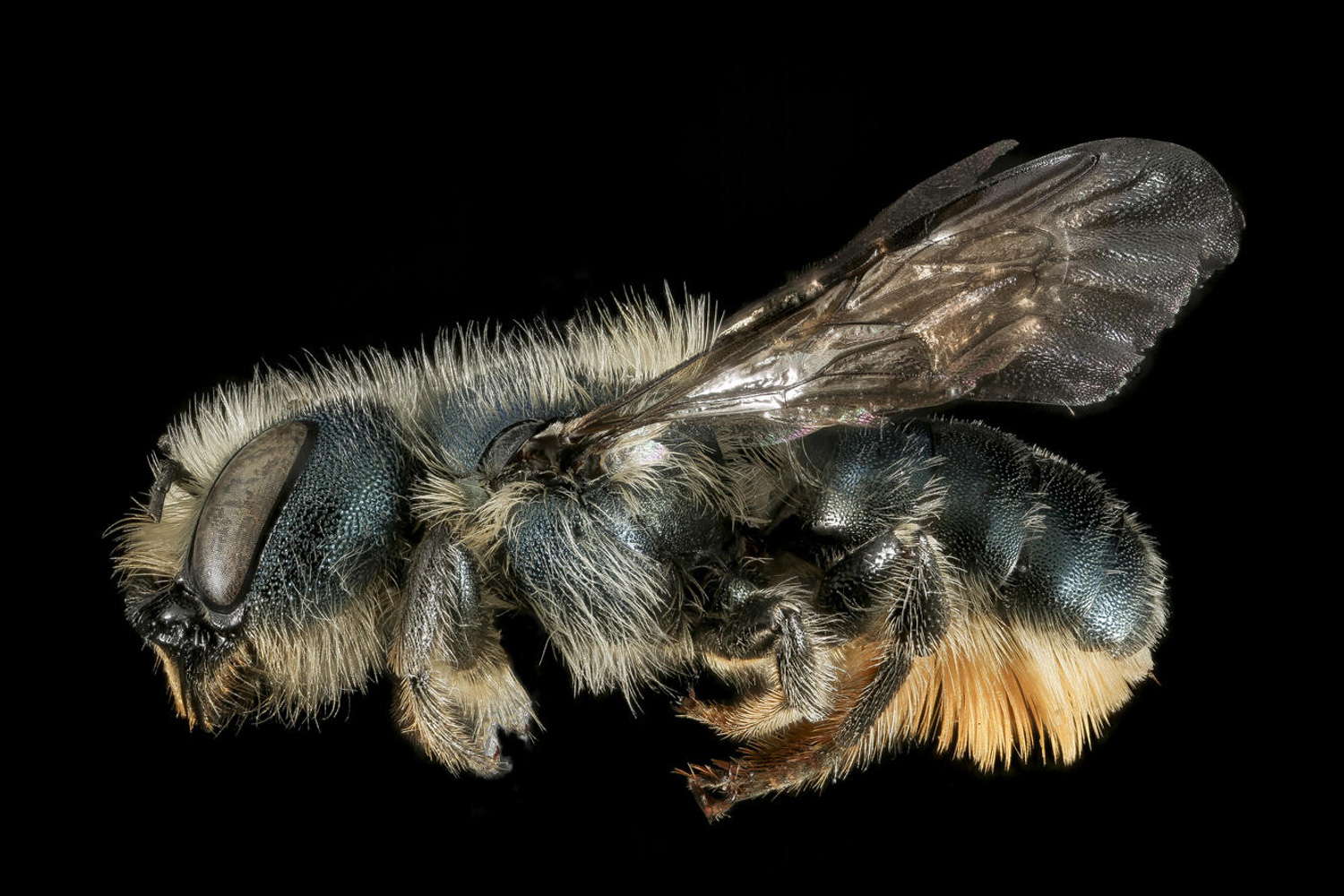
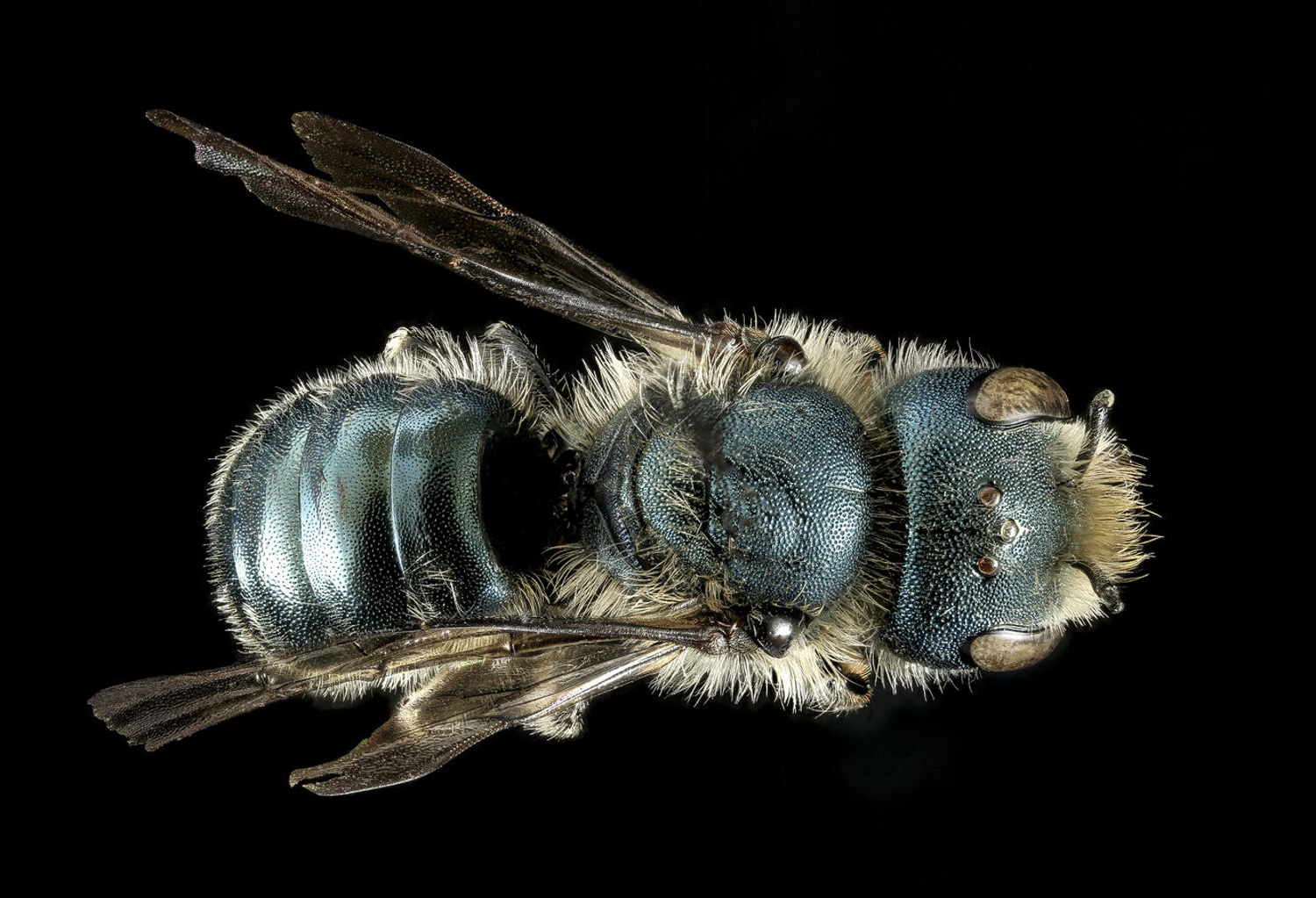
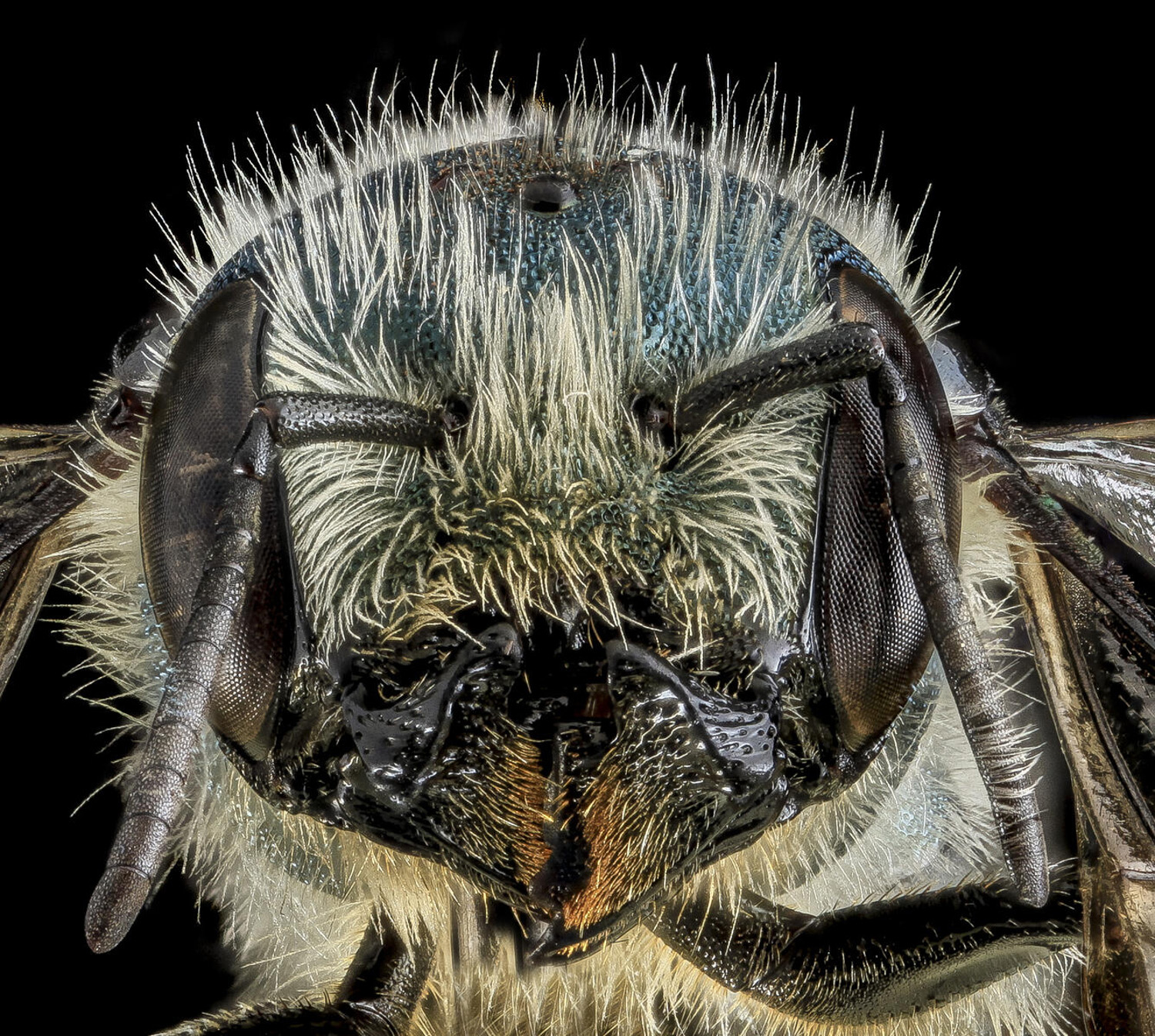
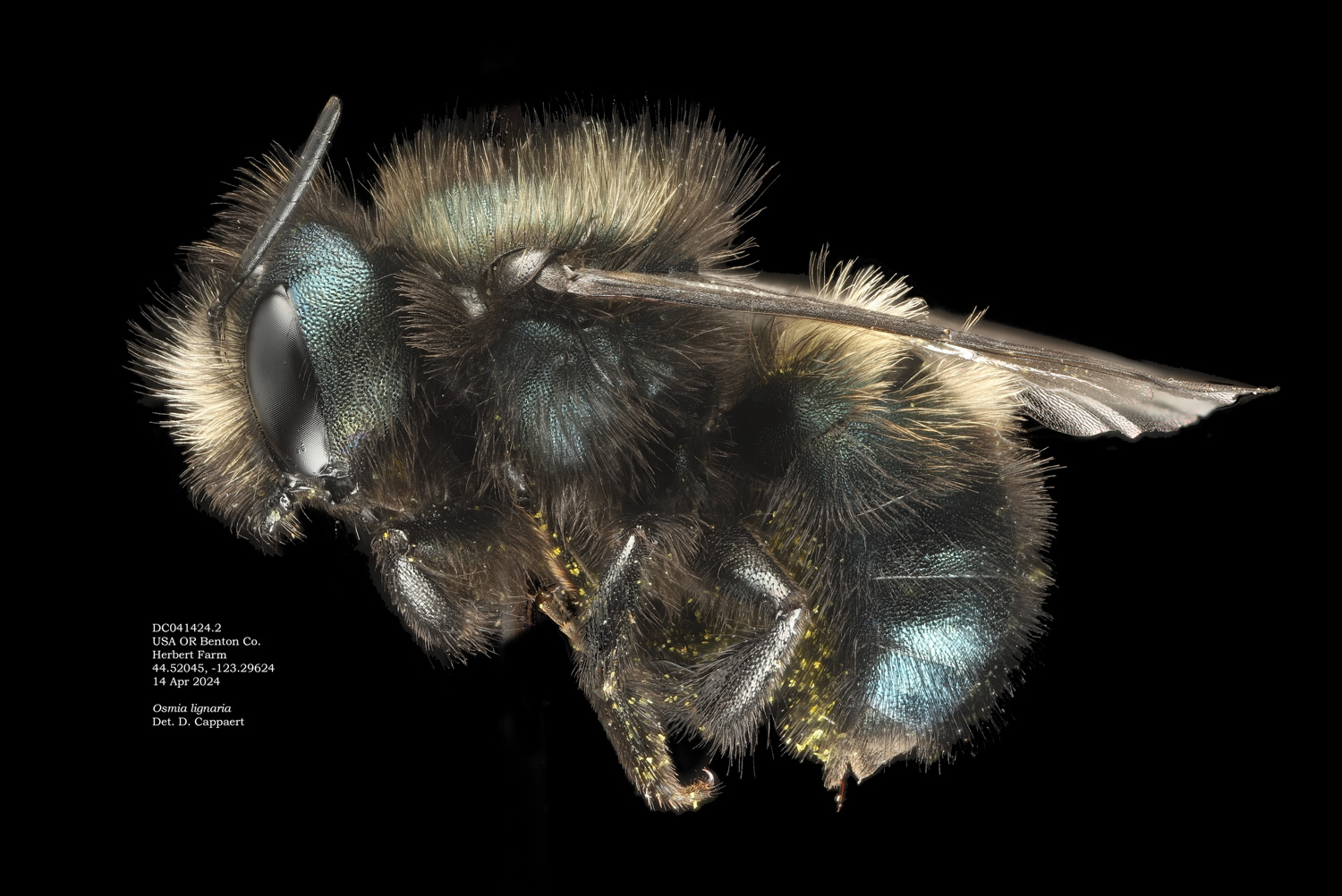
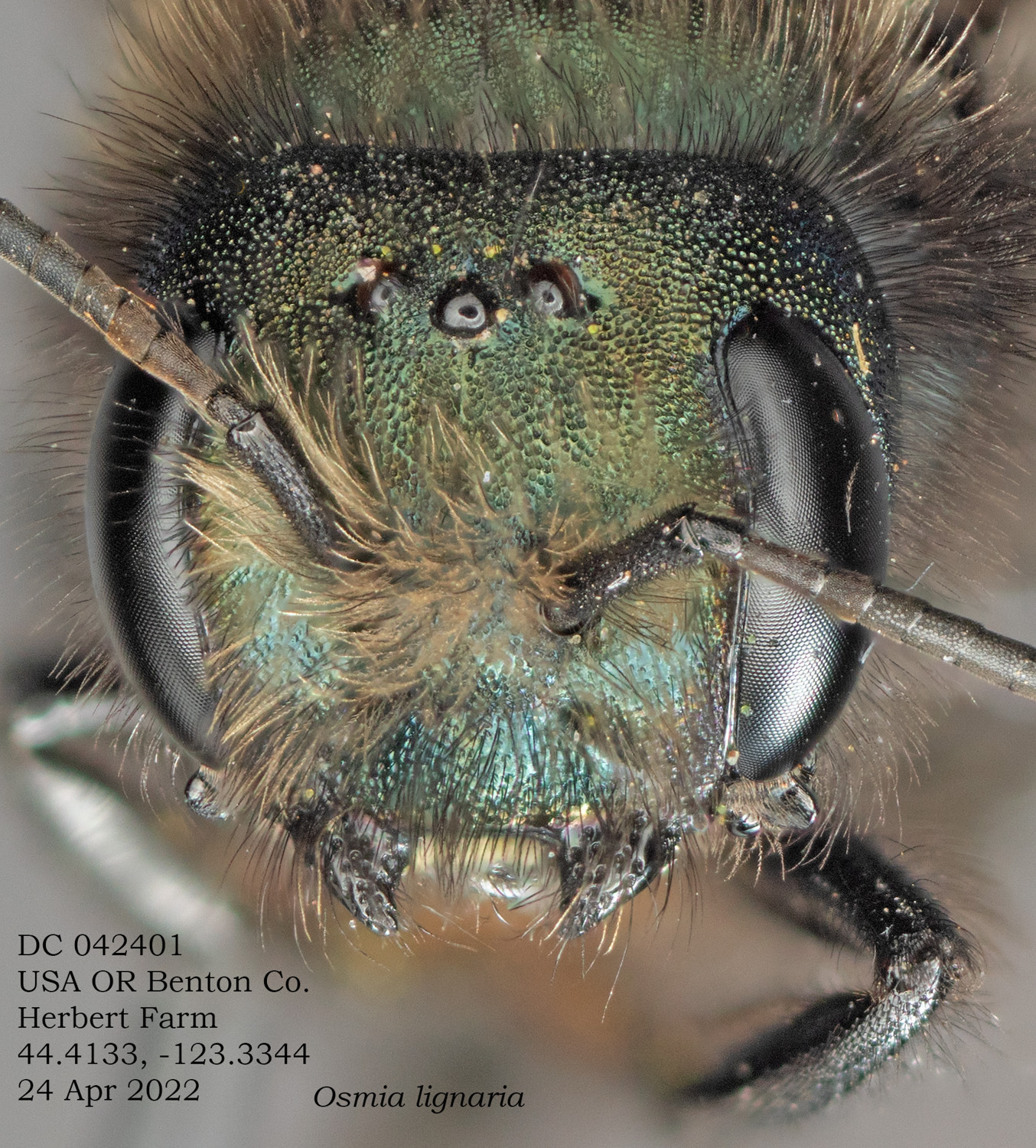
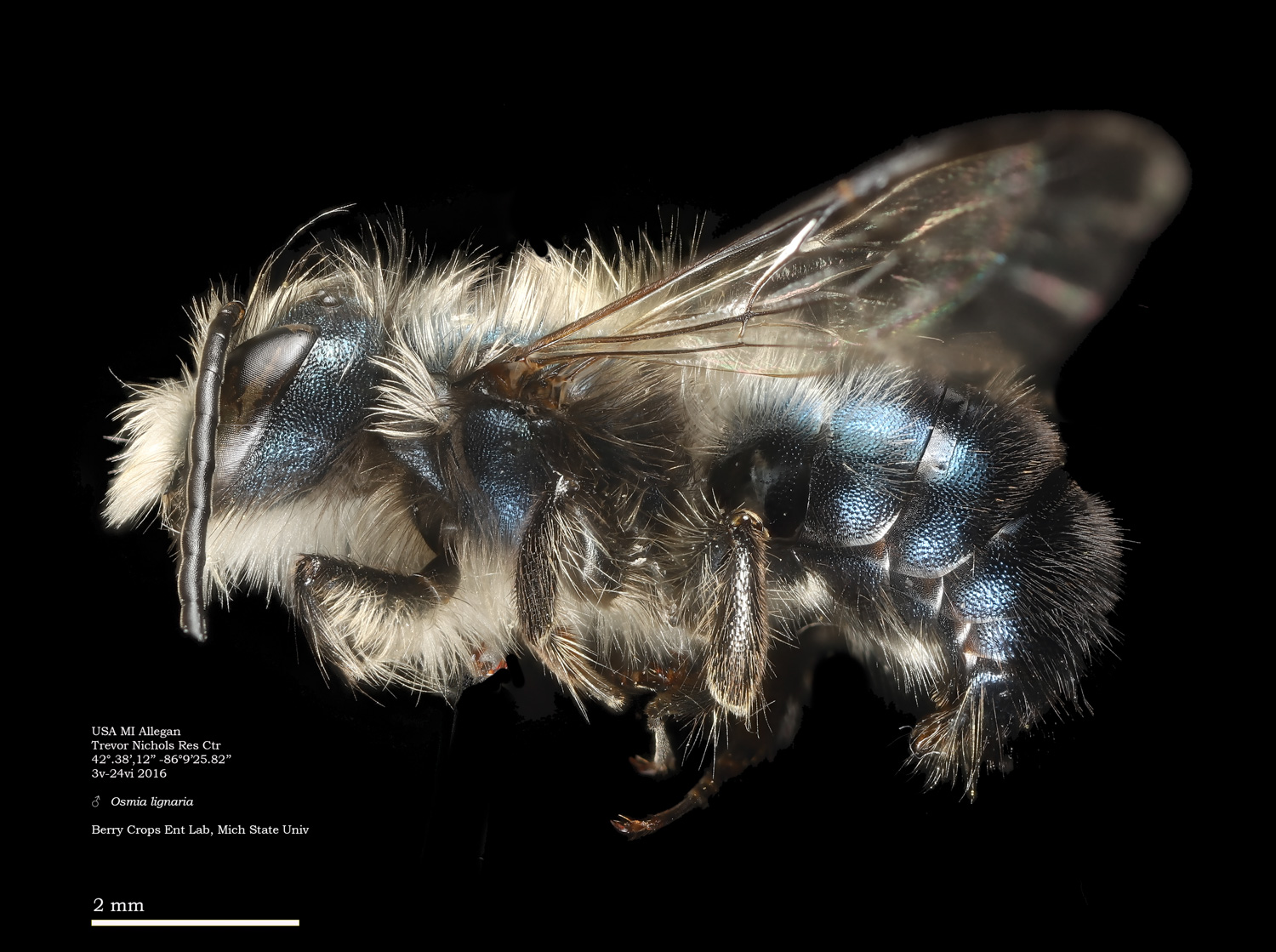
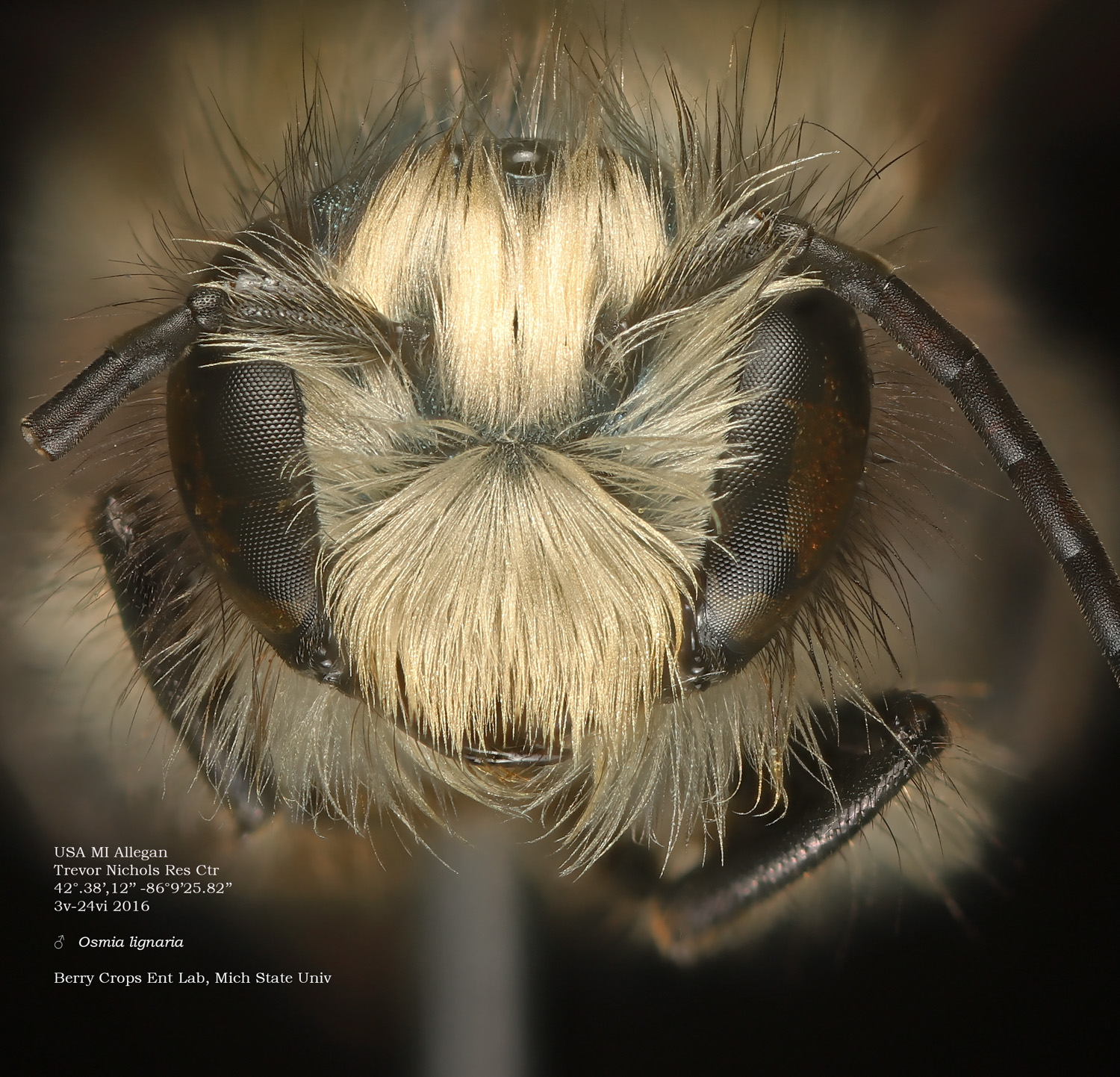
Females: in Discoverlife, only 3 species match: "2 extremely large, obvious horns projecting at right angles to the plane of the clypeus at the outside edge." Add one more trait - "mesepisternal hairs dark," and you have O. lignaria.
Female O. lignaria, Willanette Valley, OR
|
Male O. lignaria, MI
|
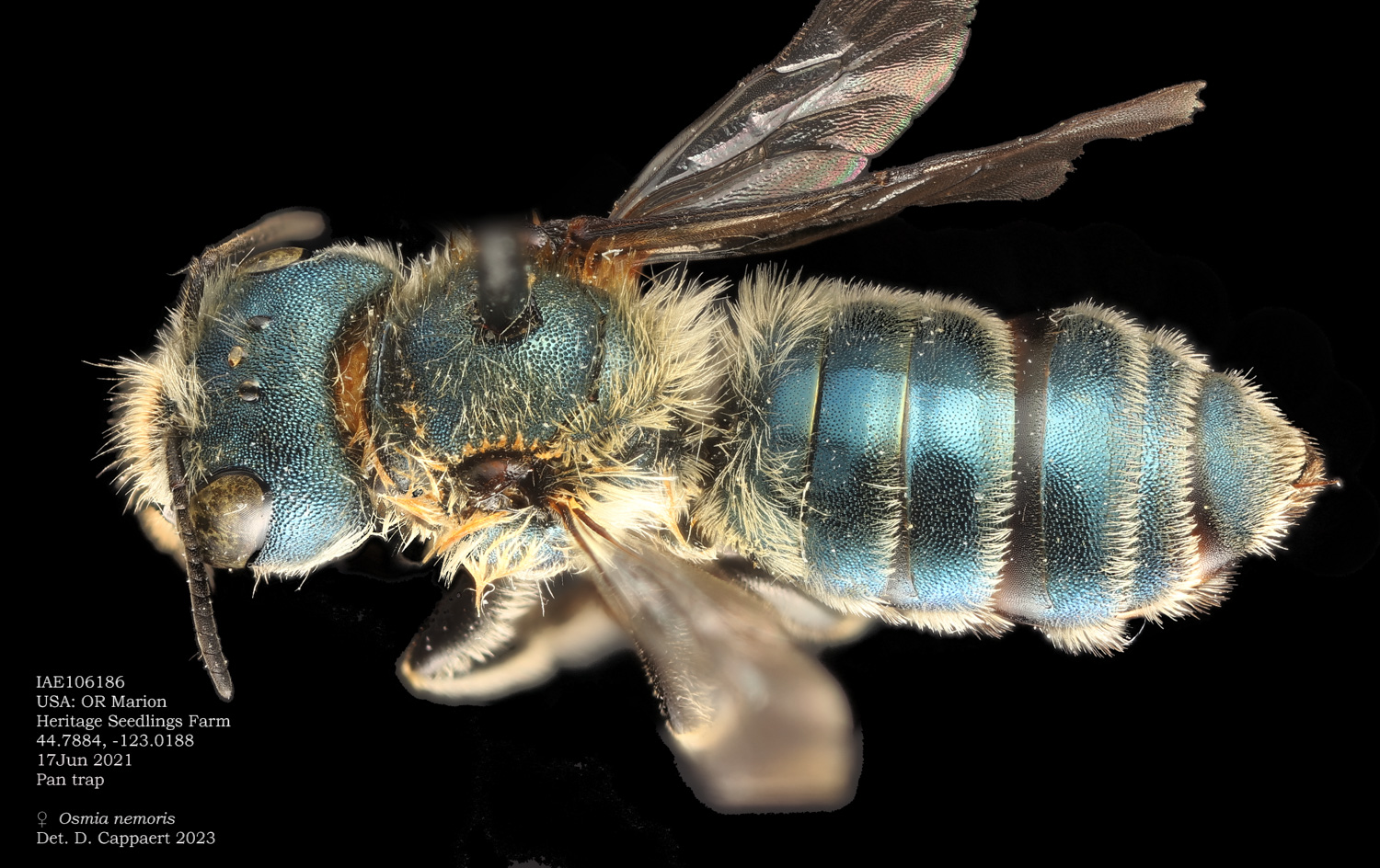
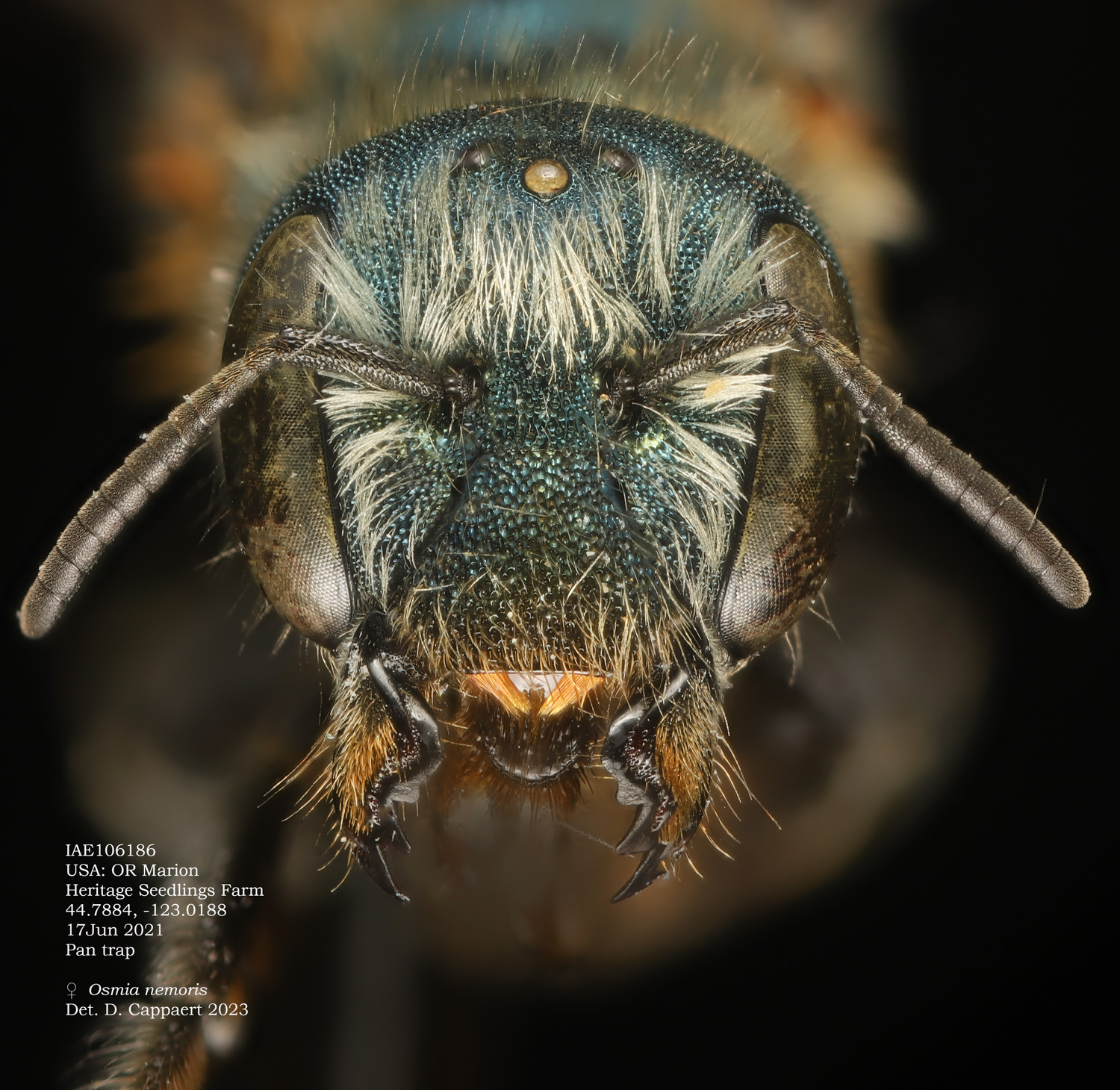
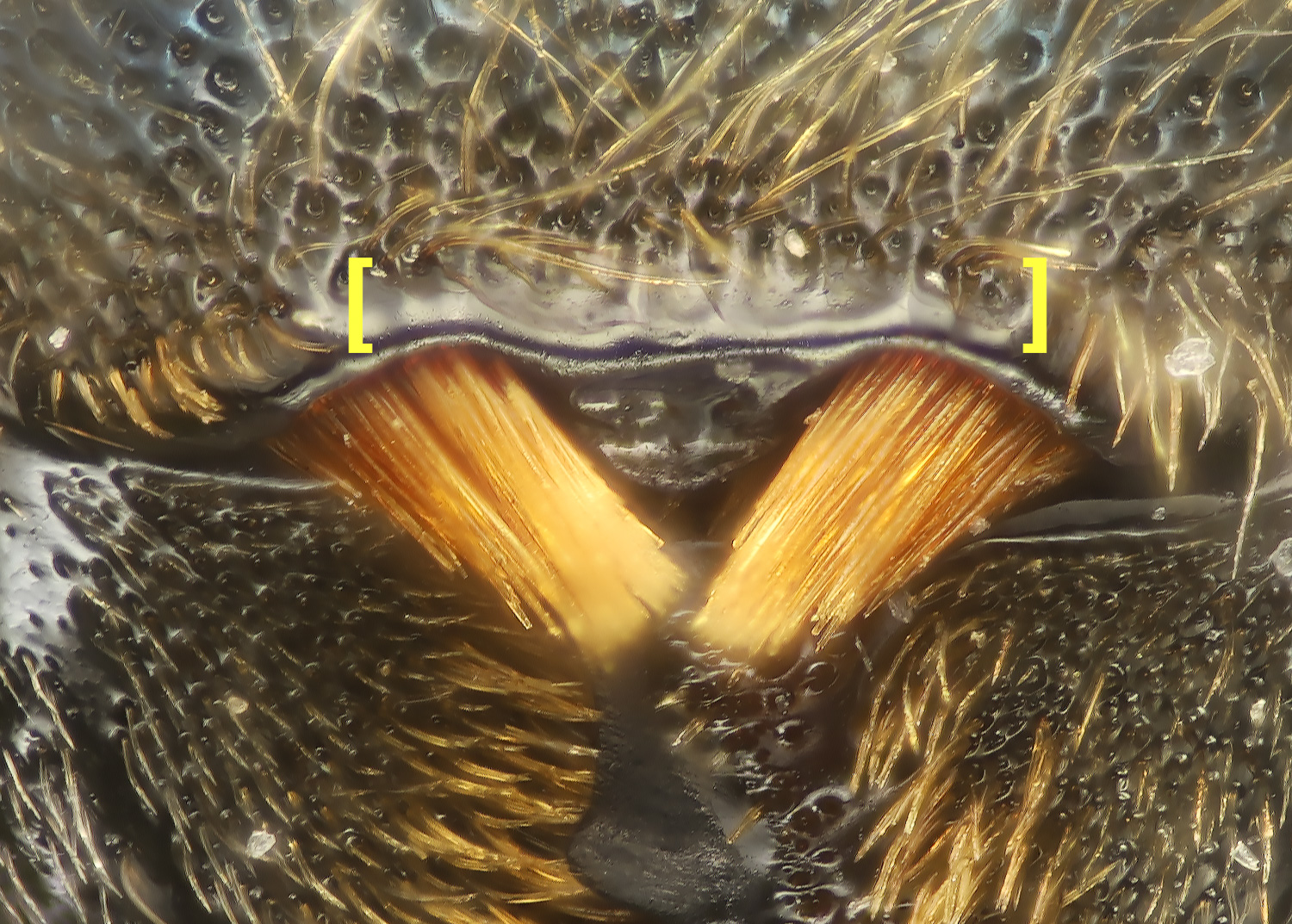
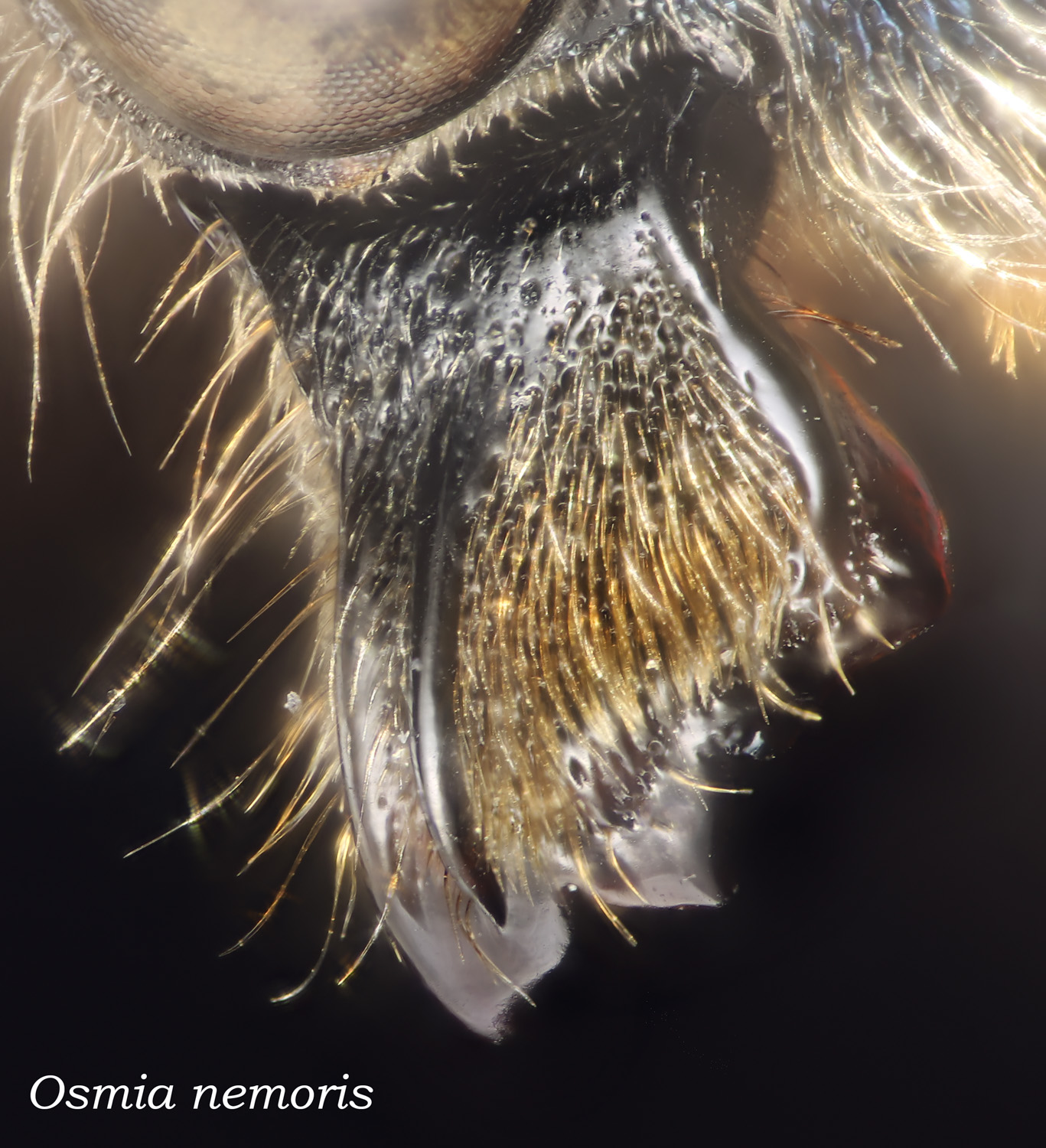
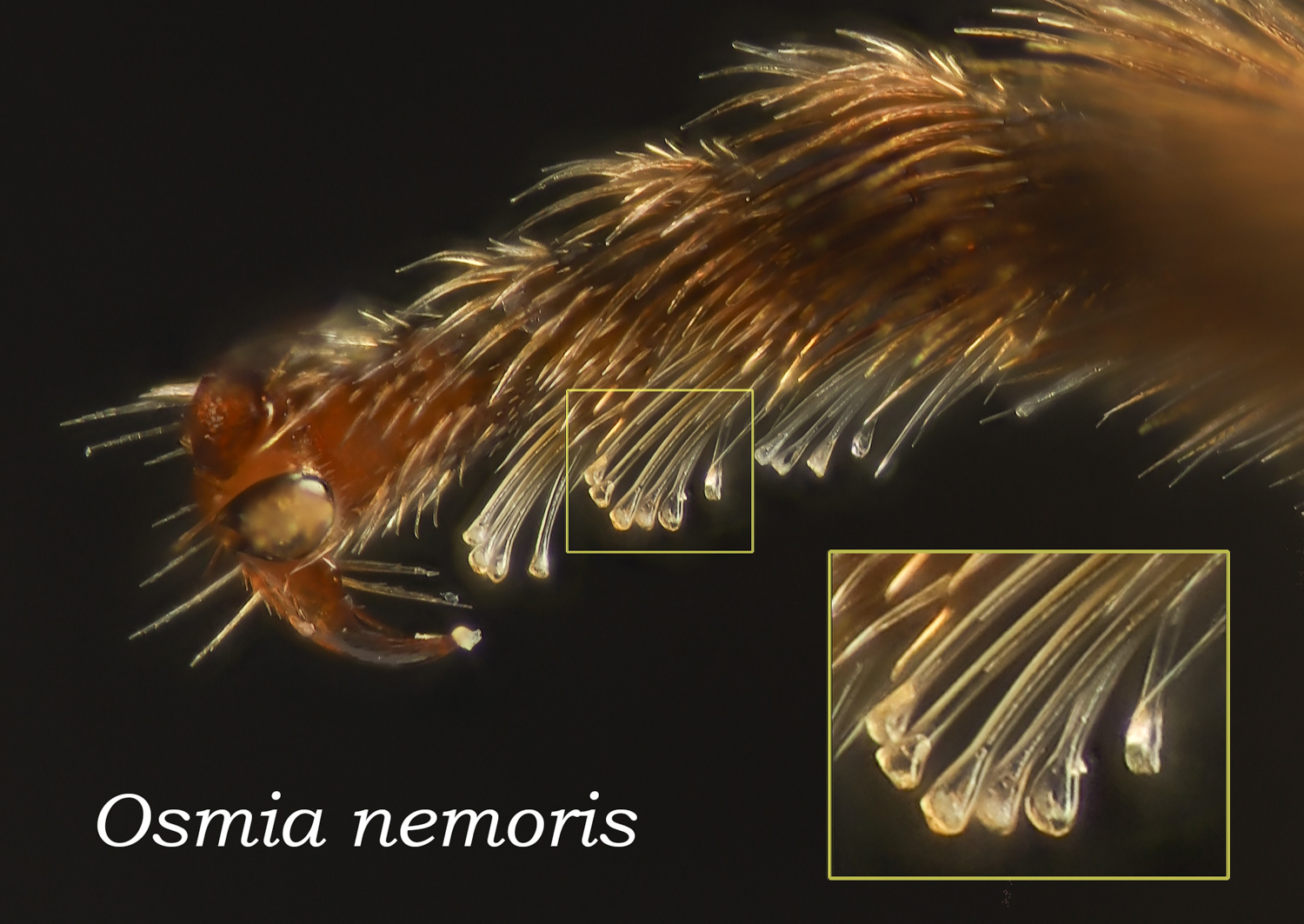
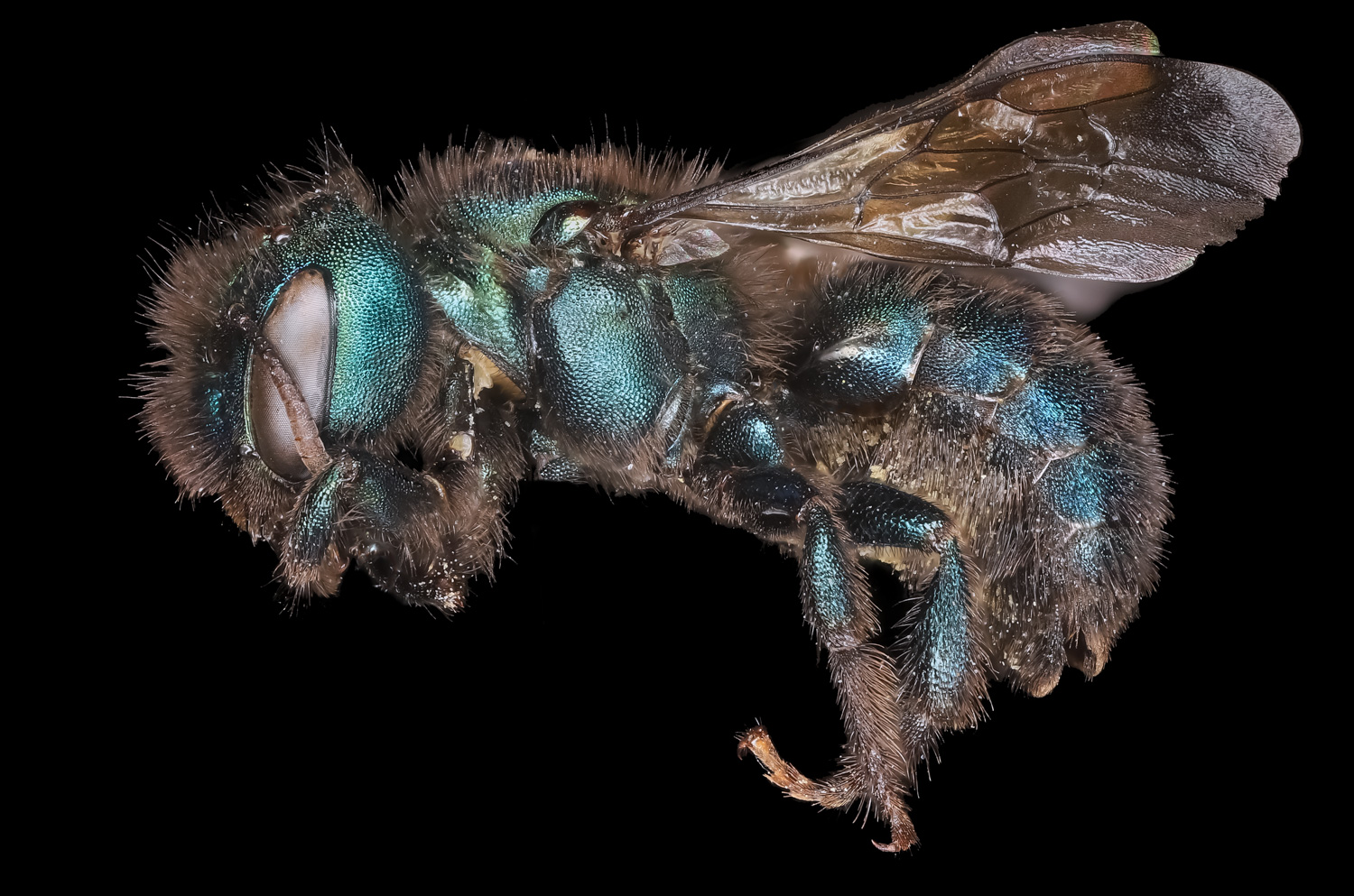
There is a story for this species - see Osmia out of nowhere. Linc Best of Oregon Bee Atlas ID'd the specimens imaged here. To my knowledge, O. nemoris is unique in having the posterior lobes of smaller tarsal segments expanded into spatulate lobes (DiscoverLife) (photo lower right).
|
|
|
| The specimen certainly looked like Osmia. I could have attempted to key it out, but luckily noted the linear parapsidal line. So, a metallic Hoplitis, not Osmia. |
Specimen from Browder Ridge in the Oregon Cascades.
|
Linear parapsidal line.
|
Easy calls:
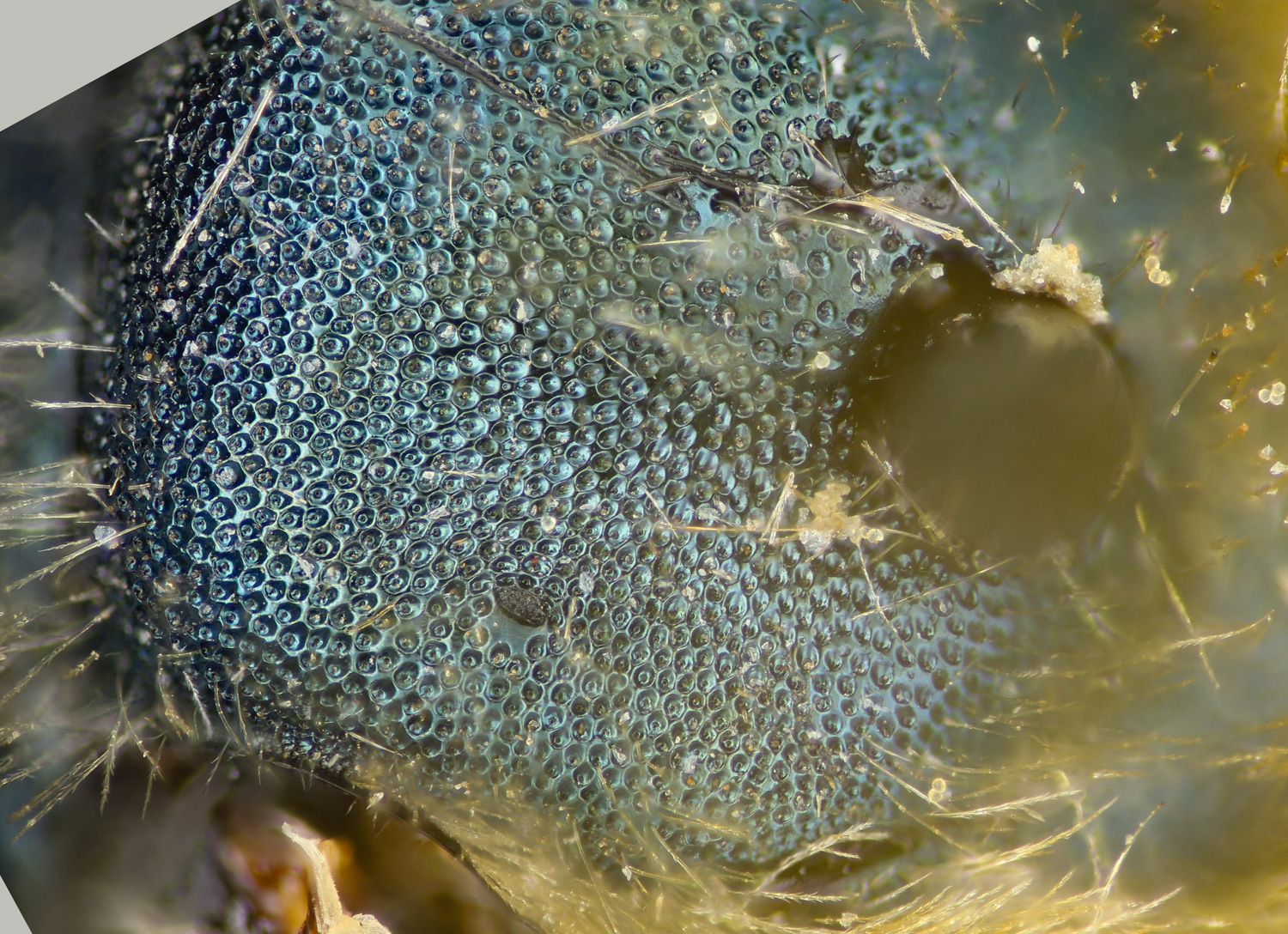
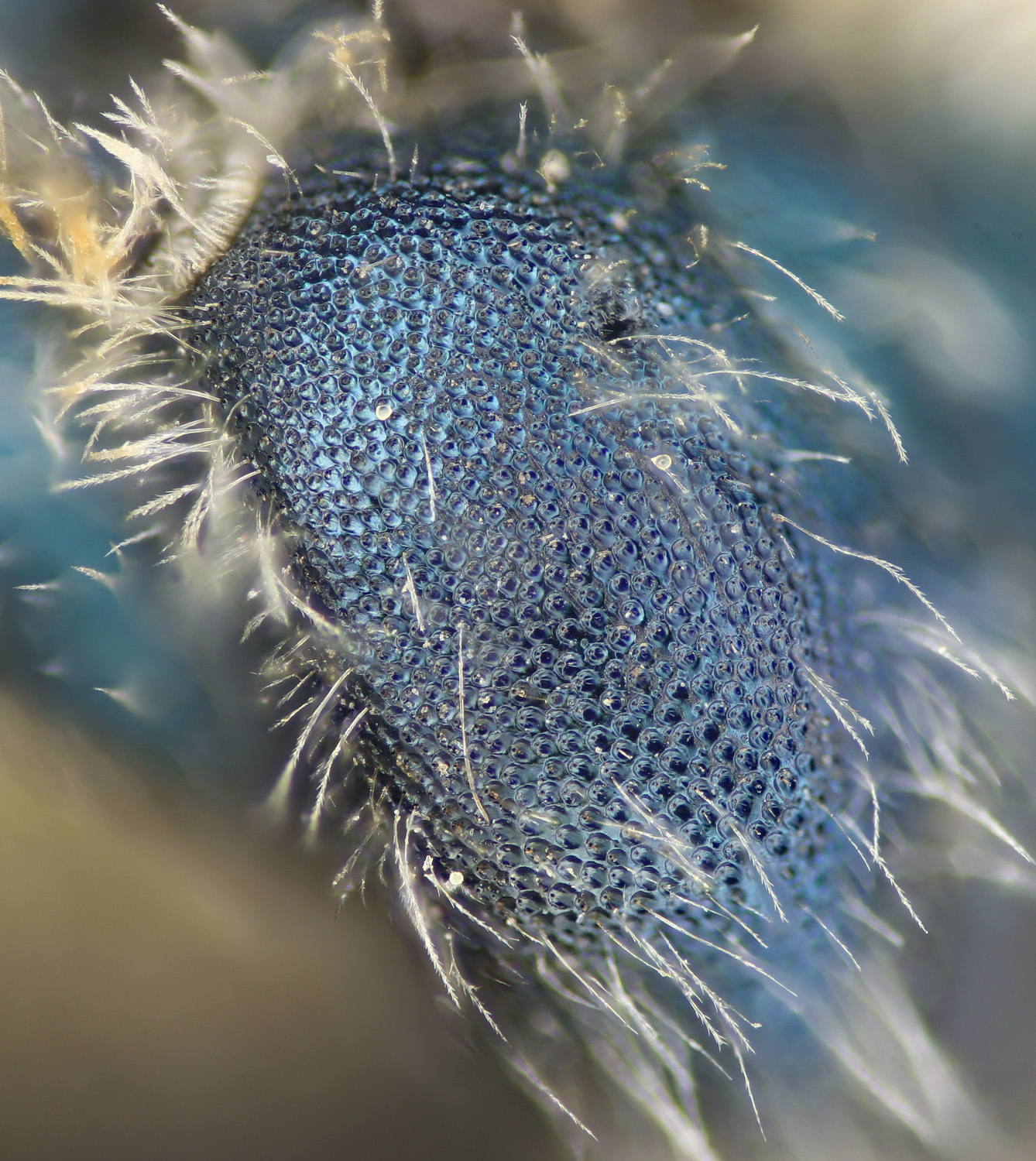
See mesepisternum photo, far right. DL, and Molly Rightmyer's draft key say: Dorsal mesepisternum with larger punctures well separated, much more sparsely spaced than those on middle and ventral areas of mesepisternum, dorsally with smaller punctures sparsely interspersed between larger punctures. I had to look at many specimens to convince myself that this applies. |
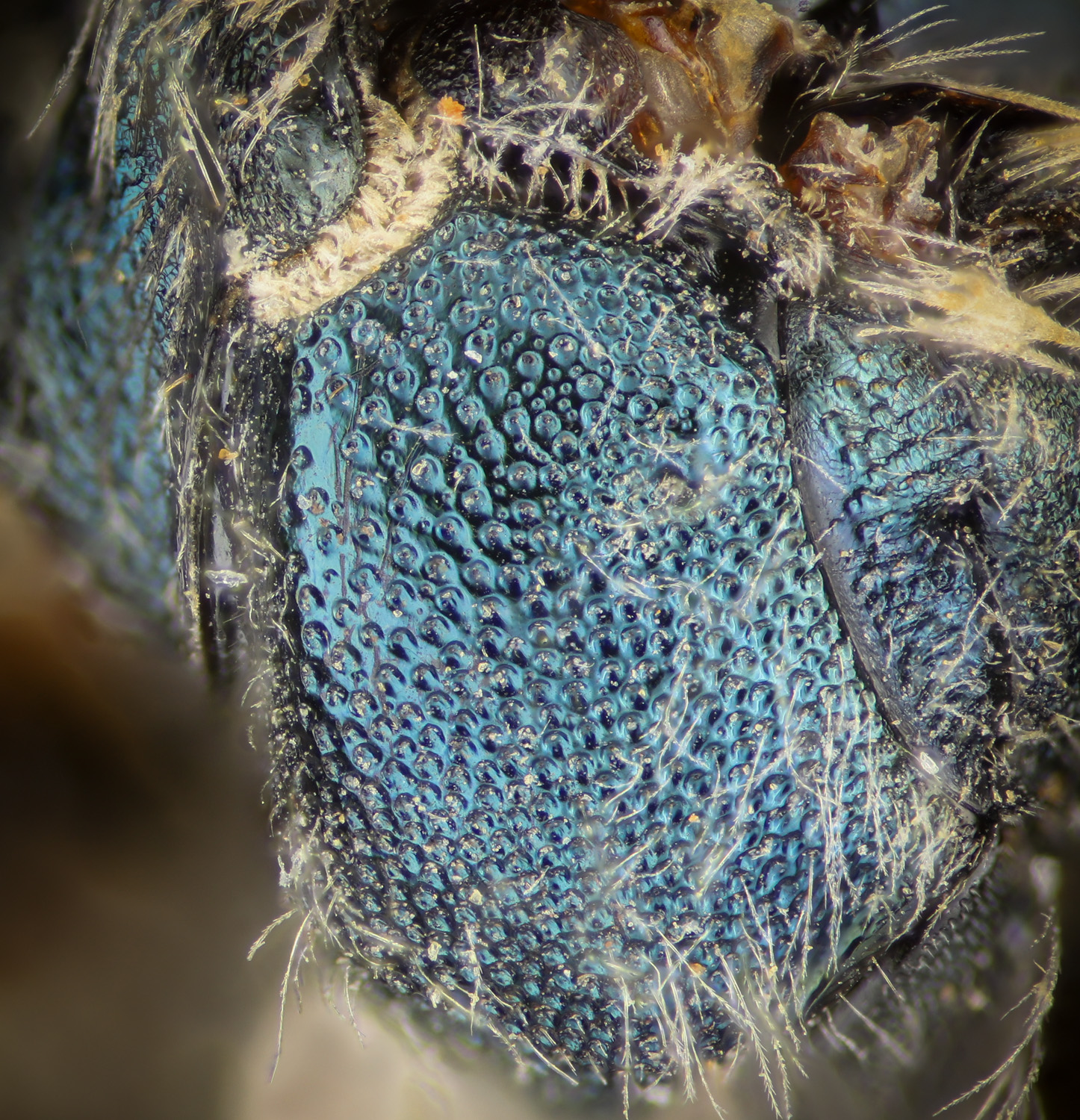
I find the color difference interesting. Across many taxa, the green/blue palette is quite variable.
|
Parallel and subequal mandibular carinae. Recessed cutting edge. Wavy, wide impuncate clypeal margin.
Pitting to posterior edge of T2 and T3.
|
Space between middle and upper teeth GREATER than space between middle and lower teeth. Lower tooth longer.
Dorsally the large pits are interspersed with small pits. THen, if you ignore the smaller pits, the dorsal spacing is indeed greater.
|
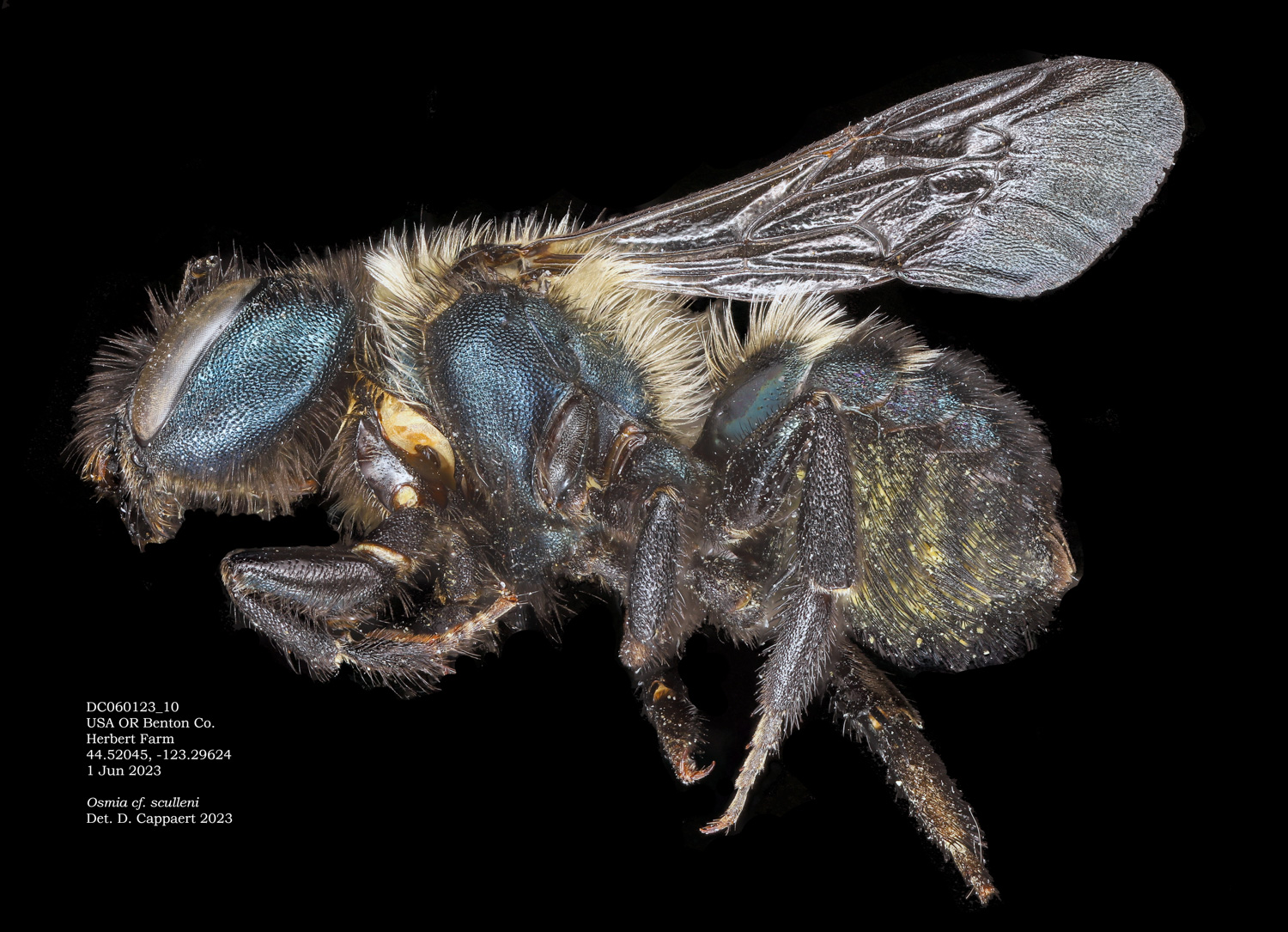
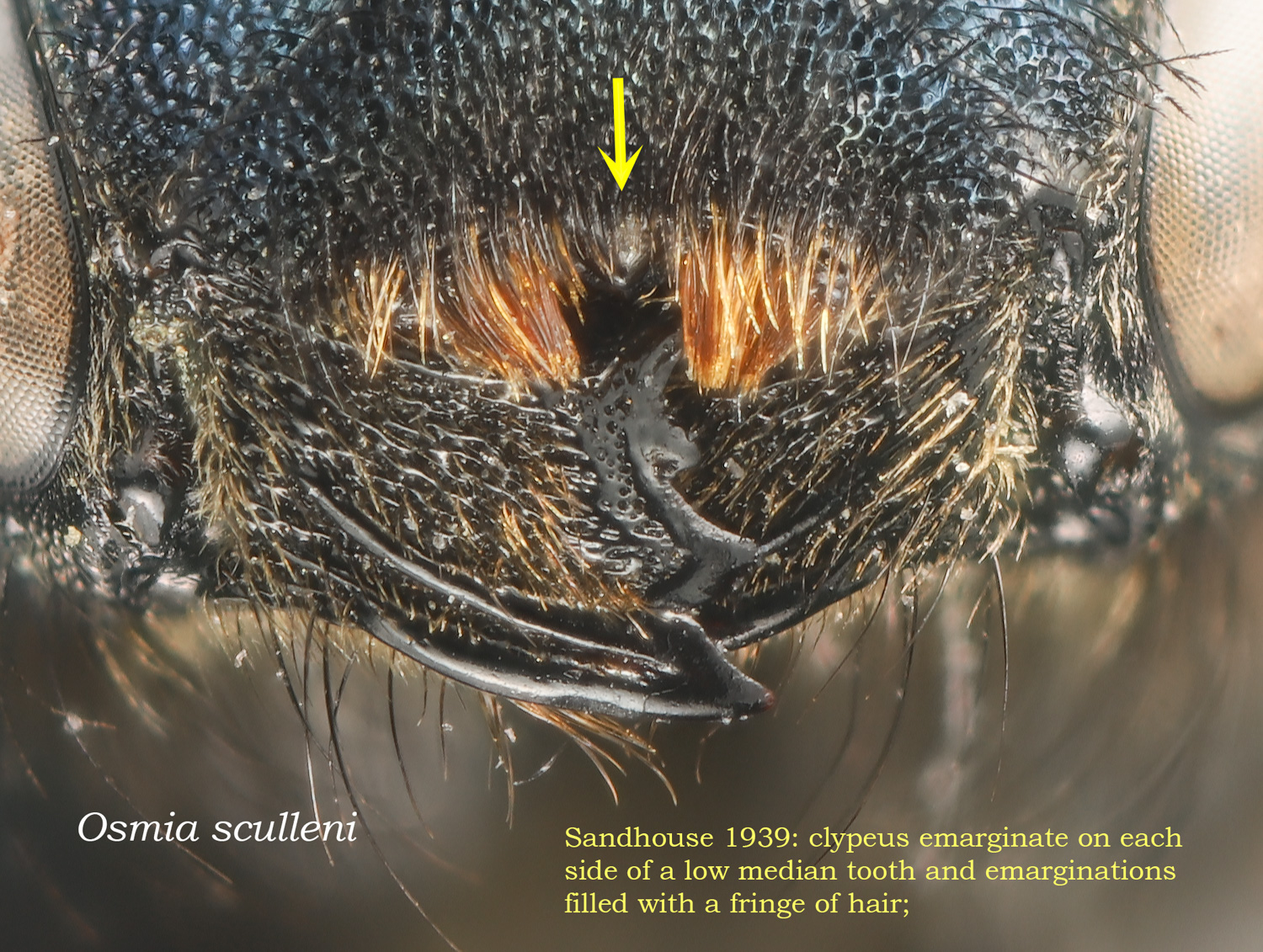
| Sandhouse: The distinctive feature in this specimen is the "Single, narrow tooth at midpoint of clypeus, directed in same plane as clypeus." In Discoverlife, this condition matches only sculleni and O. cornifrons, easily excluded. The key in Sandhouse gets to this feature in the 3rd couplet; the alternative is for O. rostrata, which has a snout-like processs. A couple of O. sculleni features not evident in the photos: very wide T2 impuncate band; Pro- podeal triangle polished, upper part indistinctly aciculate (i.e., marked as with needle scratches). One hesitation: my specimen is from low elevation (Willamette Valley), whereas many of the records (on the DL species page) are montaine; the geographic spread however is wide through the west. |
Specimen from Willamette Valley, Oregon
|
|
|
Easy calls:
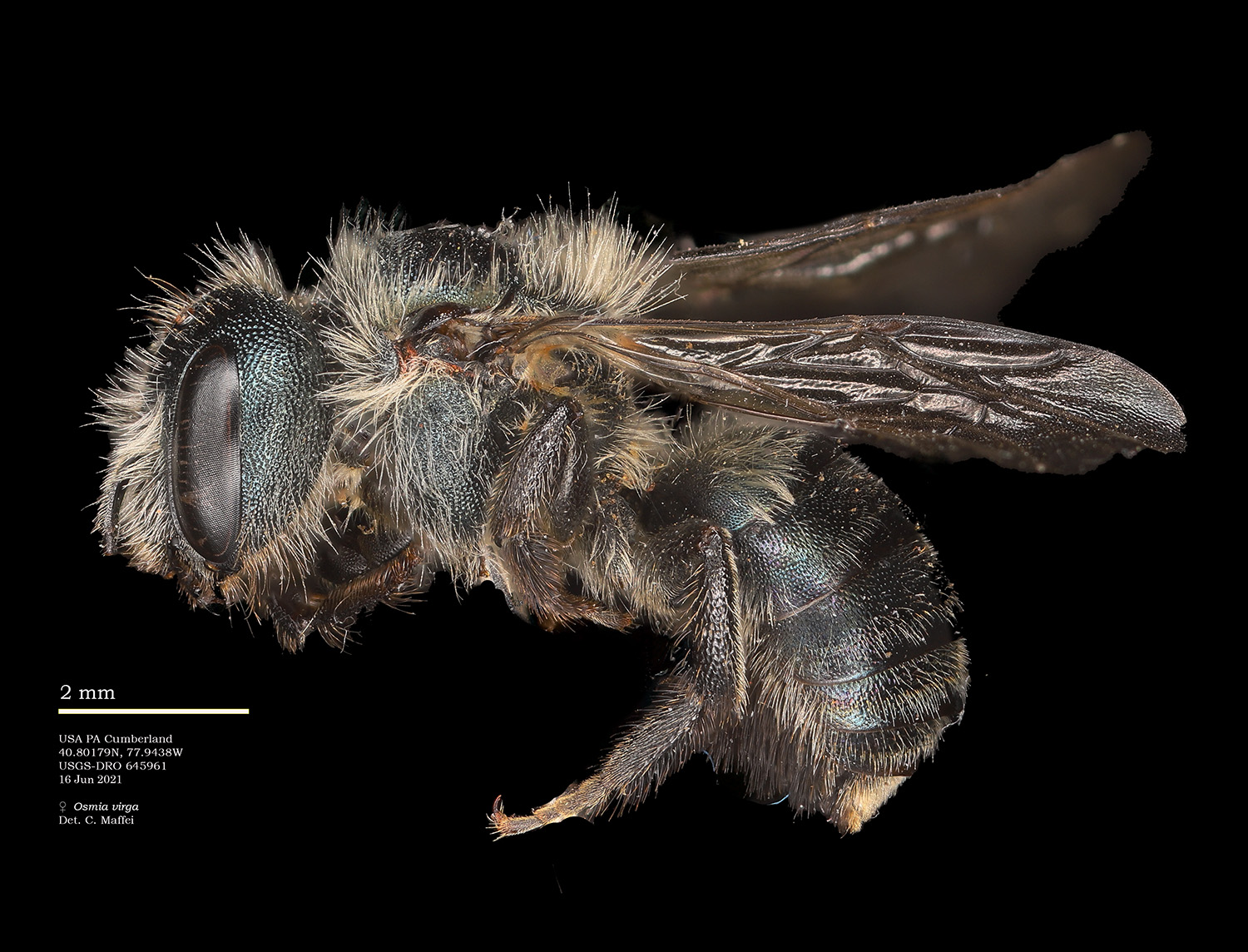
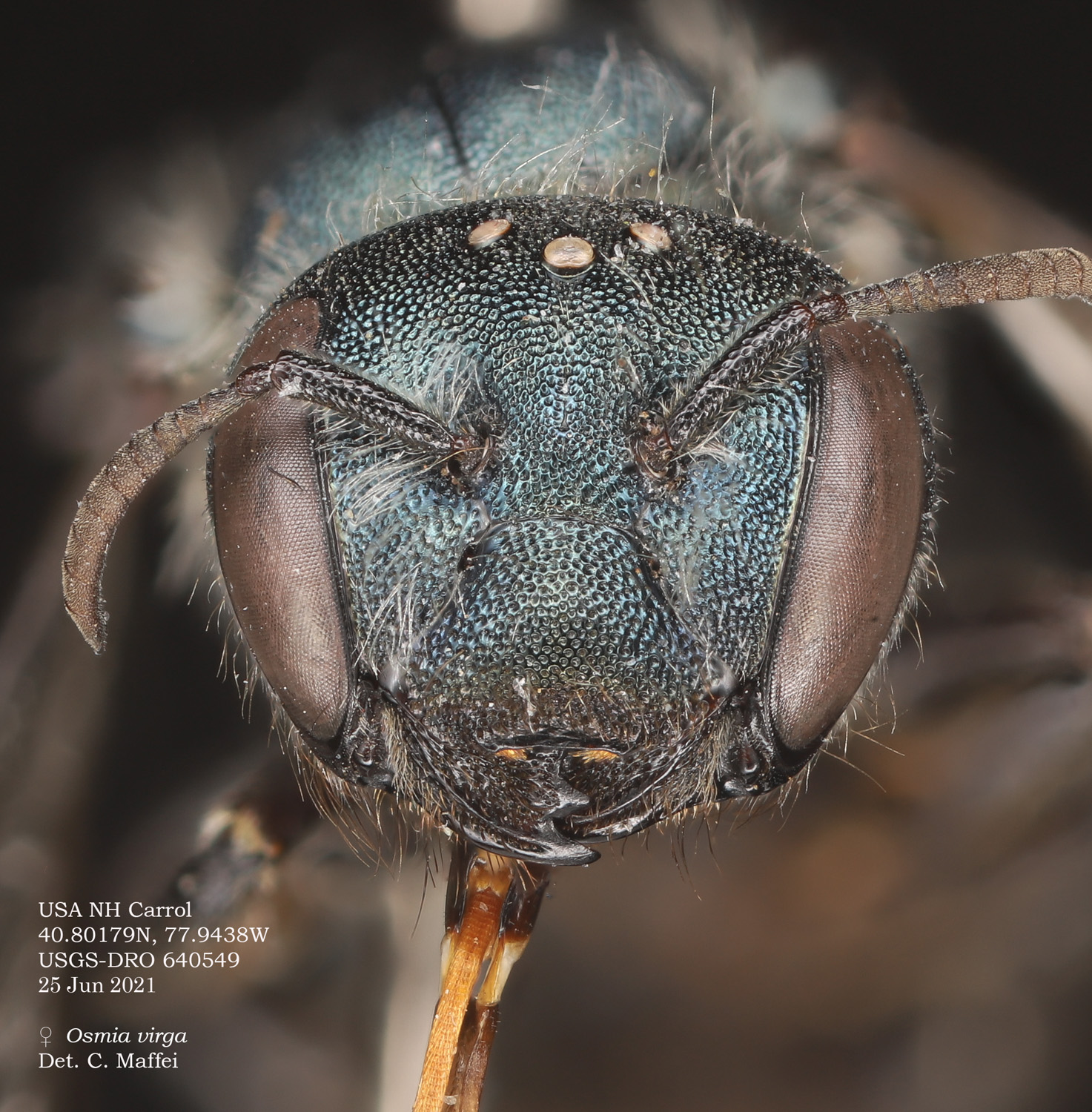
But the ultimate confirmation should come from a species diagnosis. Sandhouse named virga as a new species in 1939, but described only the male. Species descriptions often appear as part of a taxonomic synthesis; for O. virga the detailed description appears in a brief paper:Identification of Osmia kenoyeri and Osmia virga by Rust and Osgood, in Entomologial News Vol. 104, No. 3. May & June, 1993. Rust and Osgood offer this remark in the O. virga diagnosis: the female of O. virga keys out (in Mitchell's Bees of the US) as O. atriventris Cresson (couplet 17) from which it differs in body color, hypostomal carina, mandibular carinae, impunctate bands of metasomal terga 4 and 5, structure of the strigilis, and scopal color. !!! The details will get you. |
|
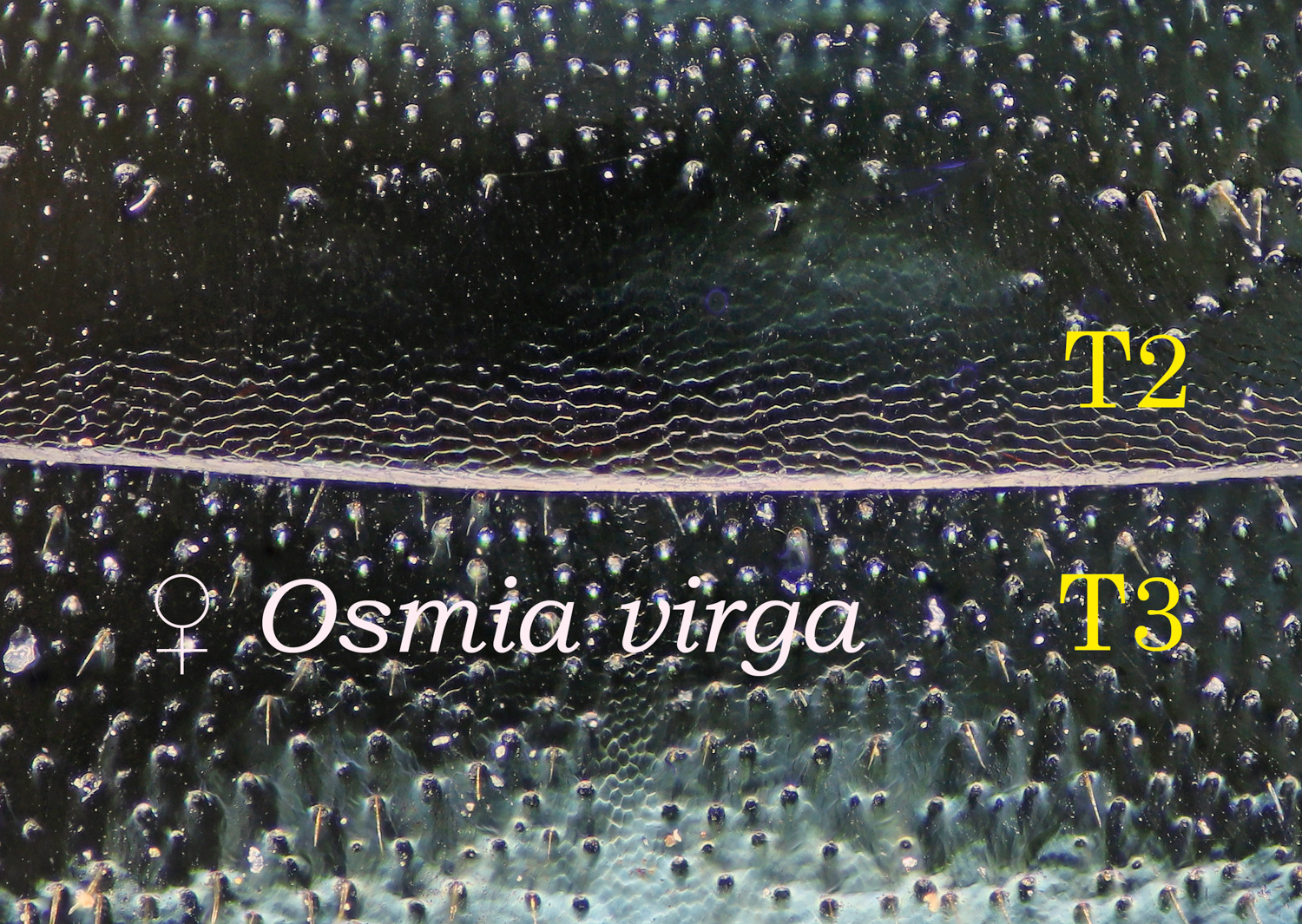
Very long unpitted band on T2.
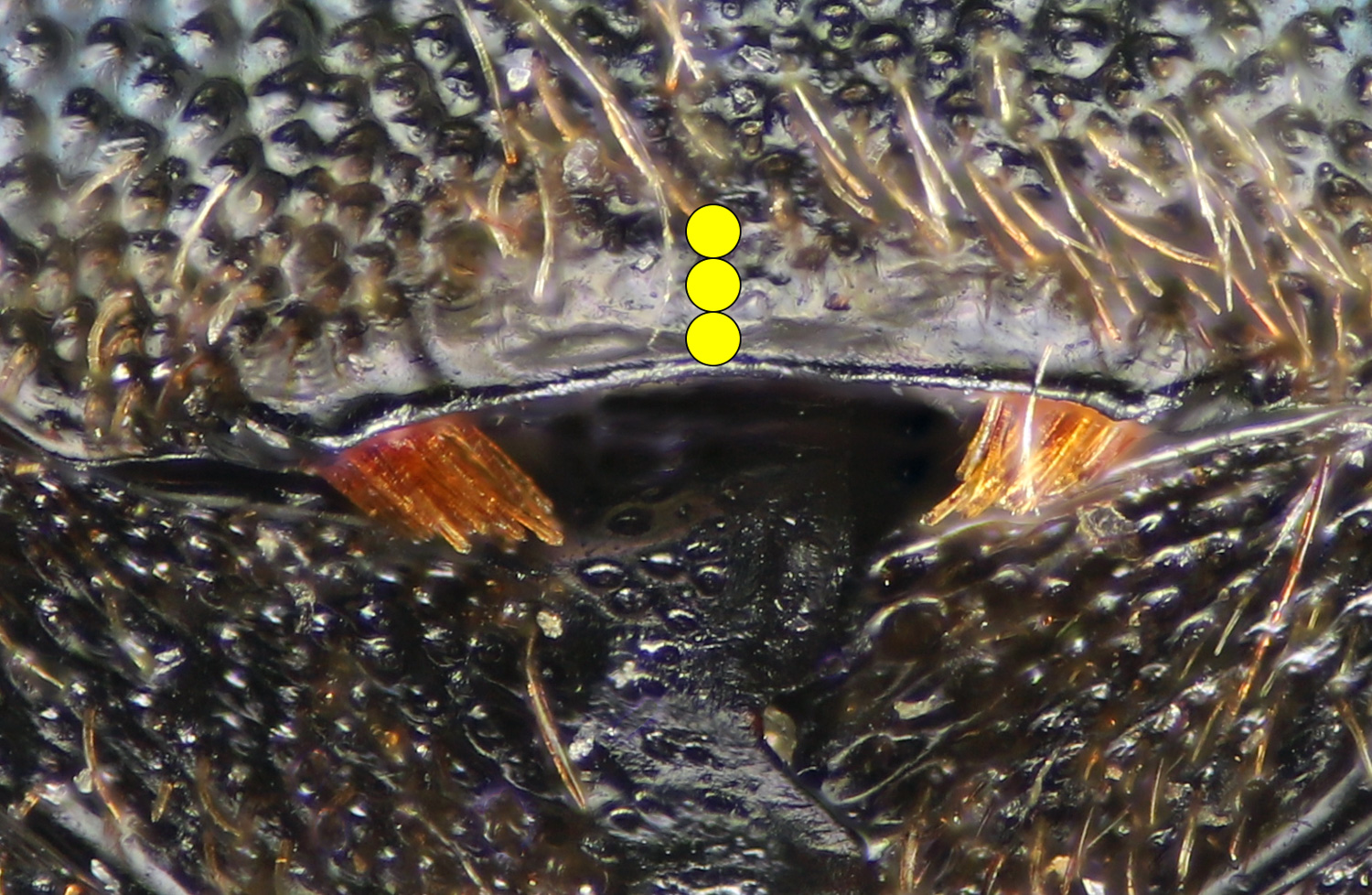
Unpitted rim of clypeus 3 puncture diameters long.
Truncate strigilis.
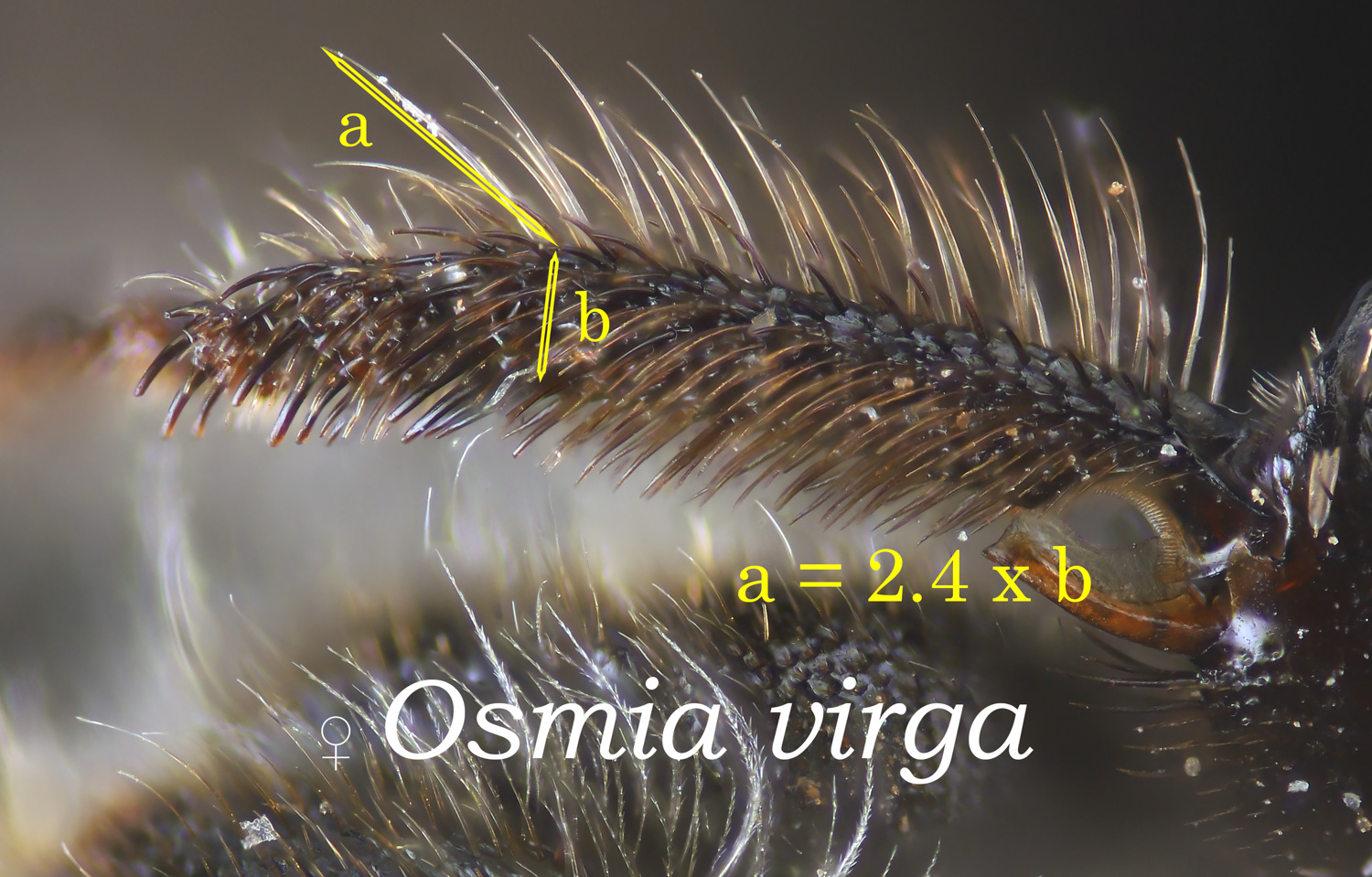
Fore basitarsus 5X longer than broad. Hairs 2.4X longer than basitartus width.
|