|
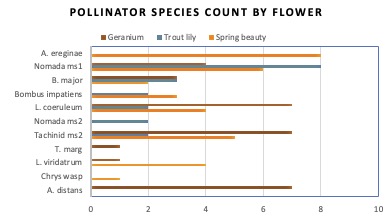
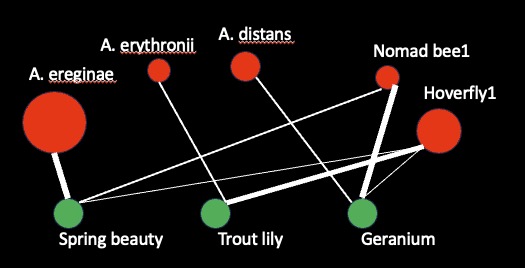
Ann Arbor, Michigan is an urban area increasingly surrounded by development and habitat fragmentation. Yet it retains large blocks of protected land that host diverse native flora. This study will evaluate a subset of flowering species in four woodland preserves to determine the species composition and relative abundance of pollinators for the focal plants. Results will inform land managers about local ecology of key native plants; suggest follow-up research with a broader scope; and foster excitement about the charismatic taxa upon which plants rely. Initial target Plants (or, see alternative based on all plants for target date)The choice of target plants is somewhat arbitrary, but the three suggested here might best fit several criteria. One, they are each abundant and widely distributed, likely to co-occur in most local woodland preserves. Two, the plants bloom in early-to-mid-spring, and likely share generalist pollinators. Three, early season flowers are of special interest, given that climate change may be driving a mis-match in plant/pollinator synchrony. Finally, each plant has at least one specialized pollinator species that may be key to reproduction. |
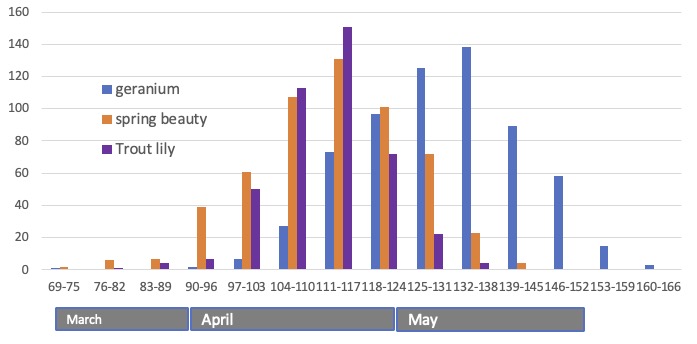
Phenology, iNaturalist data for Washtenaw County over several years
|
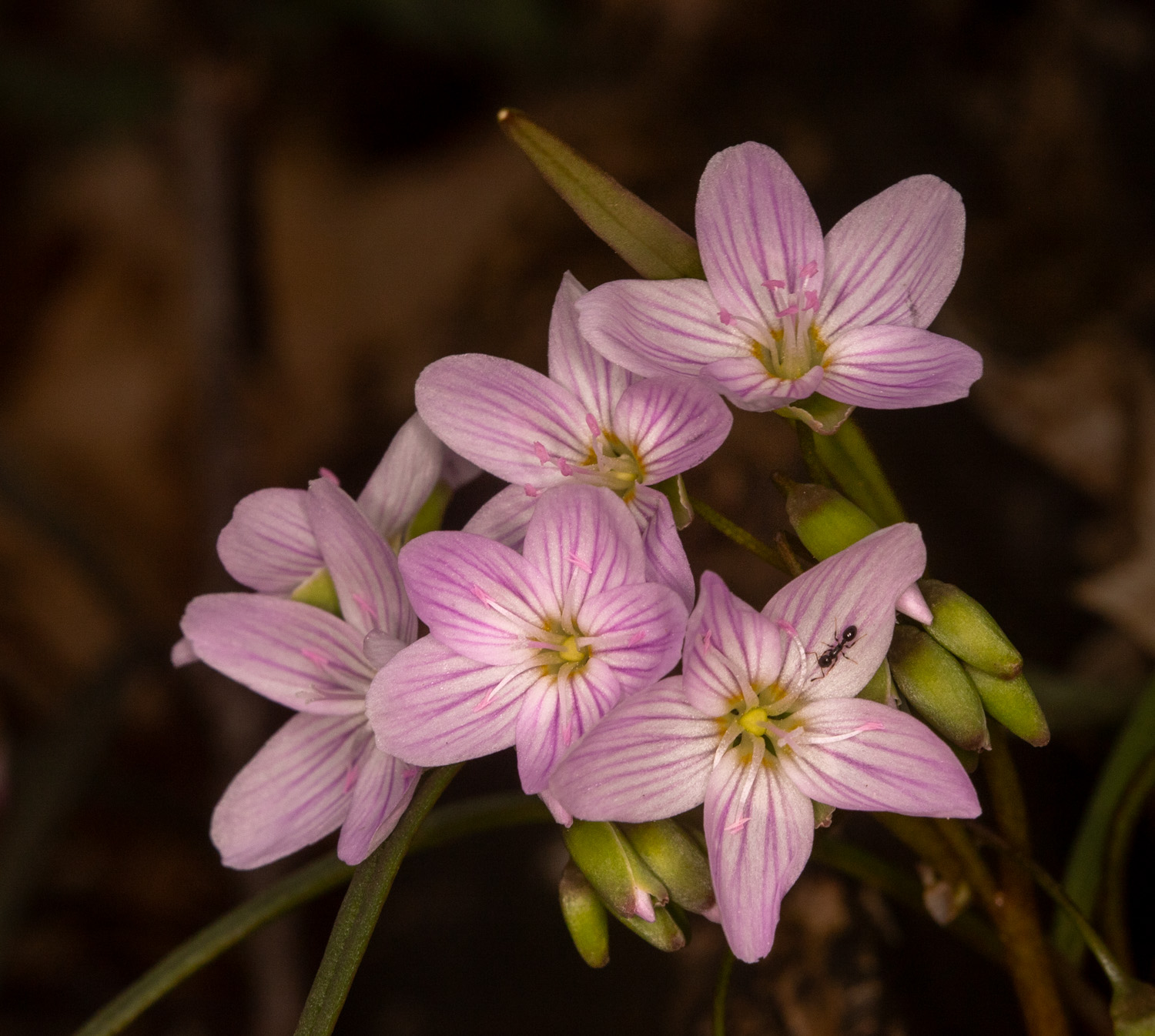
Spring beauty |
Spring beauty, claytonia virginica
|
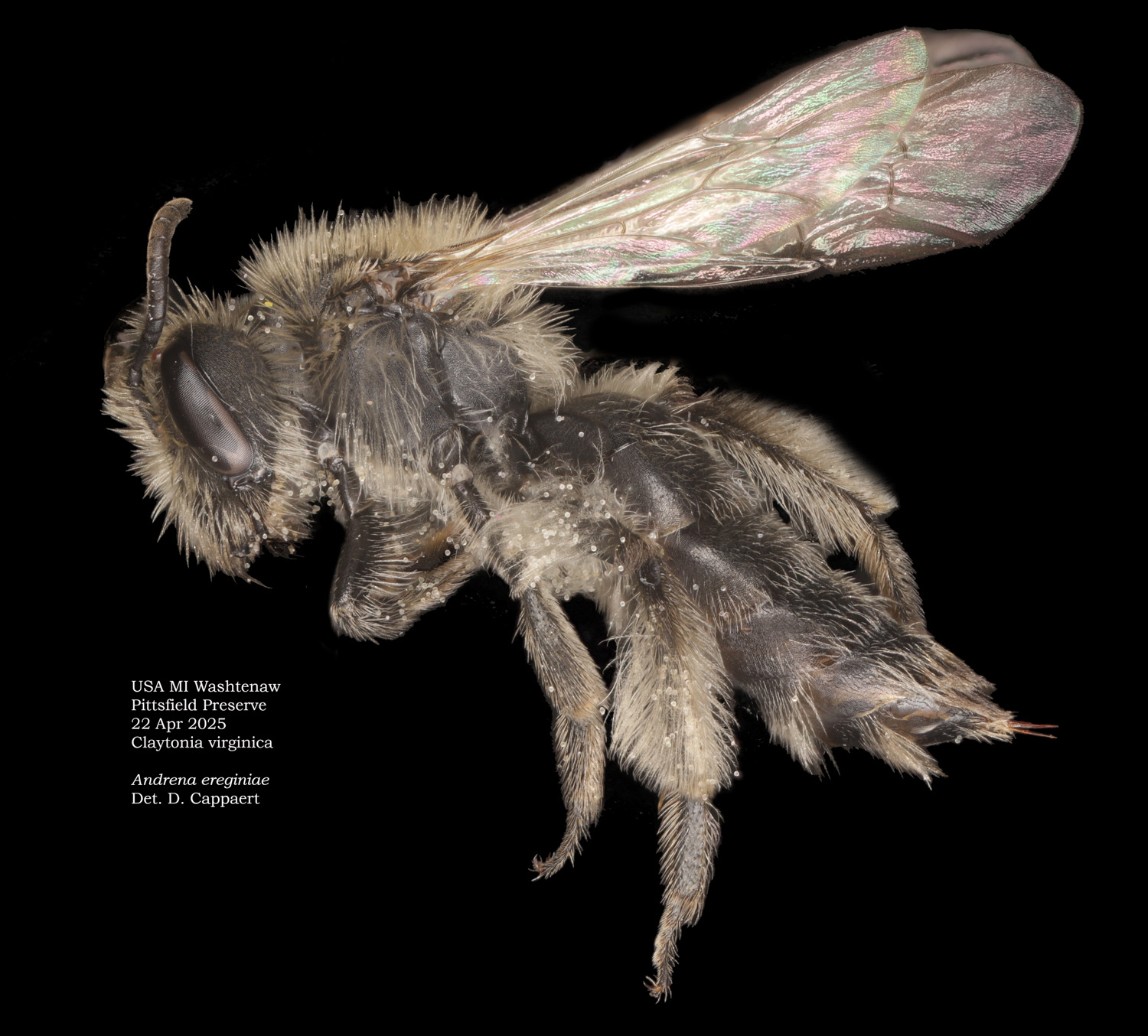
Specialist pollinator: Andrena erigeniae. Click to magnify and view the pollen.
|
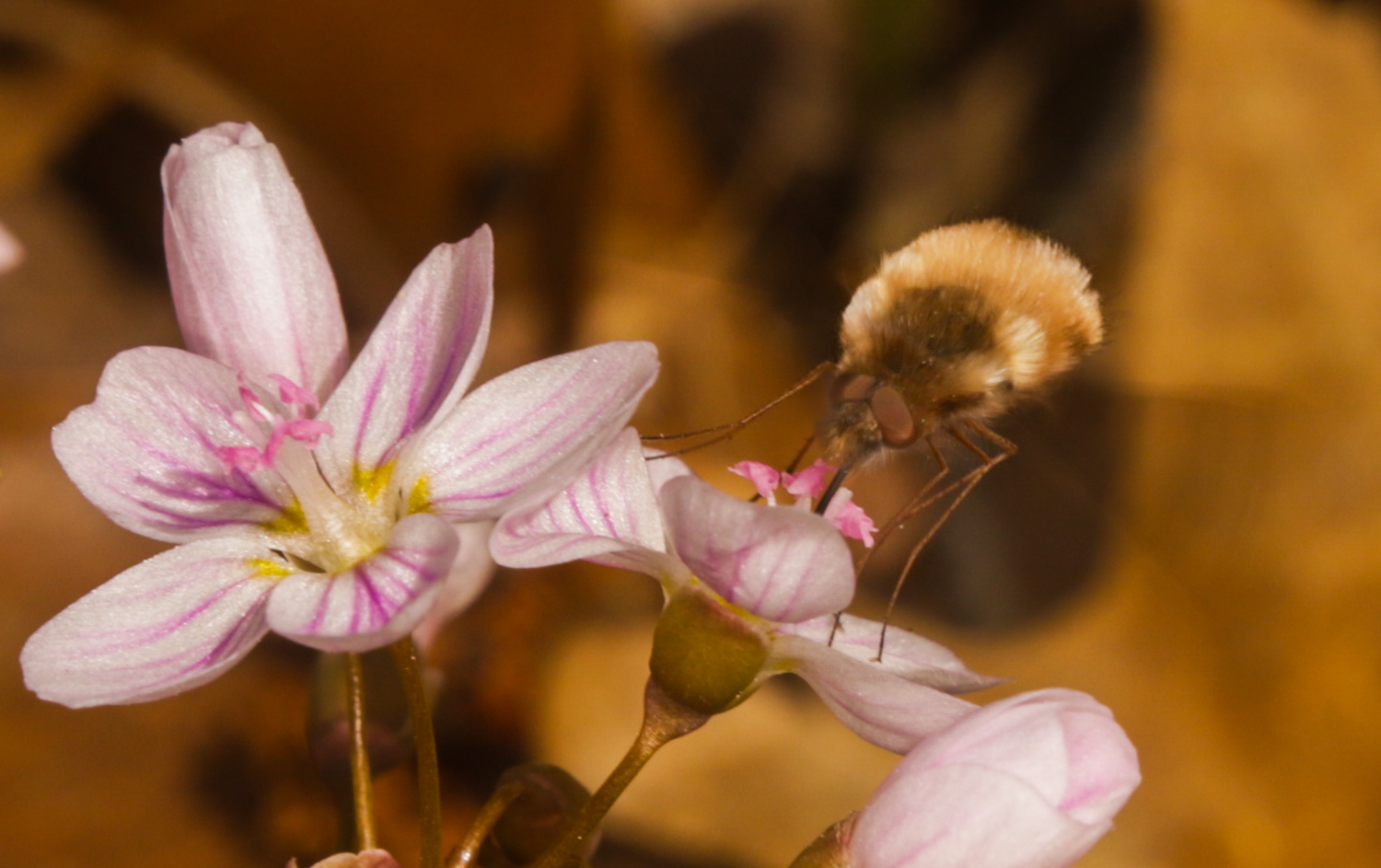
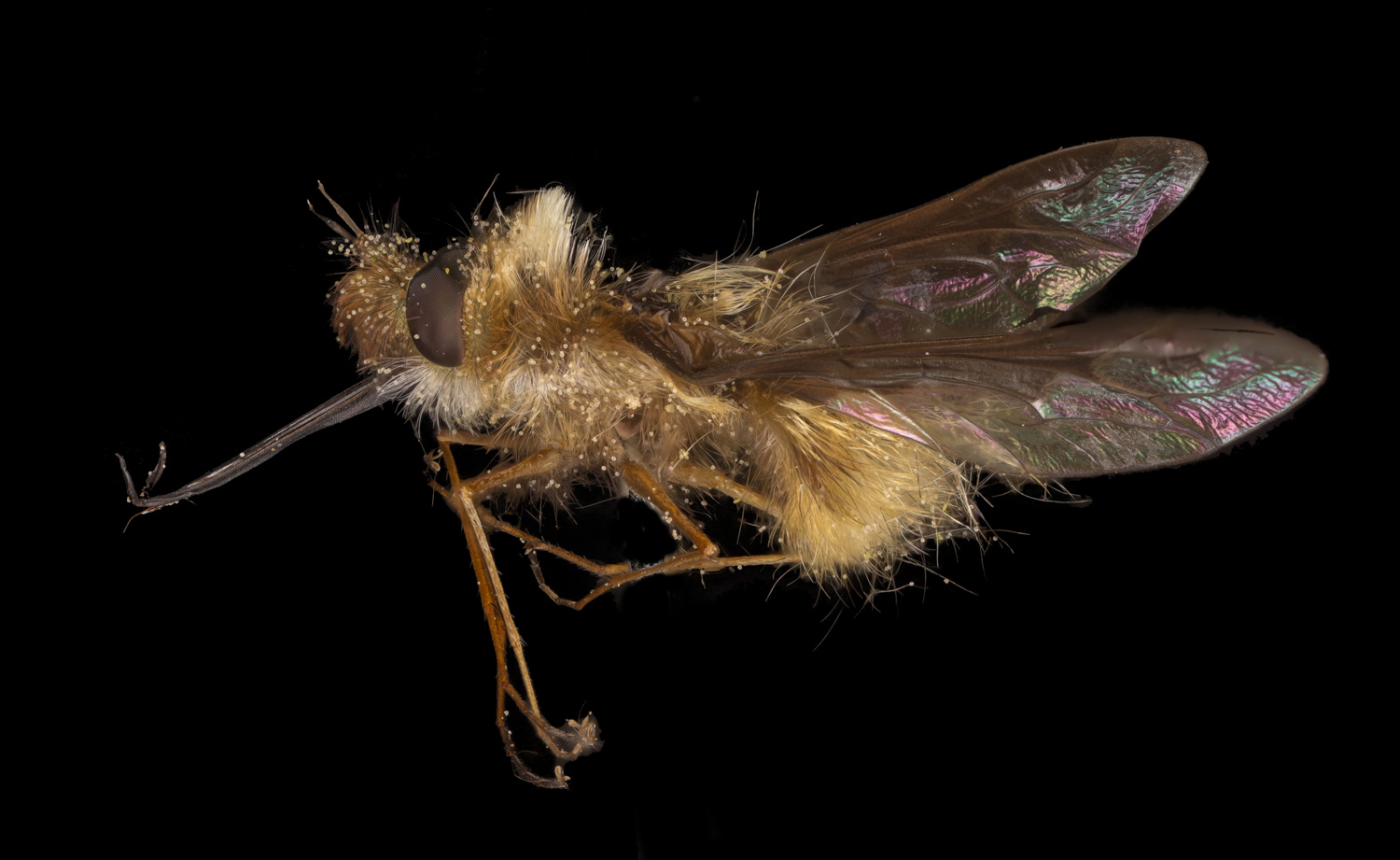
Beefly, Bombyliius major, generalist pollinator
|
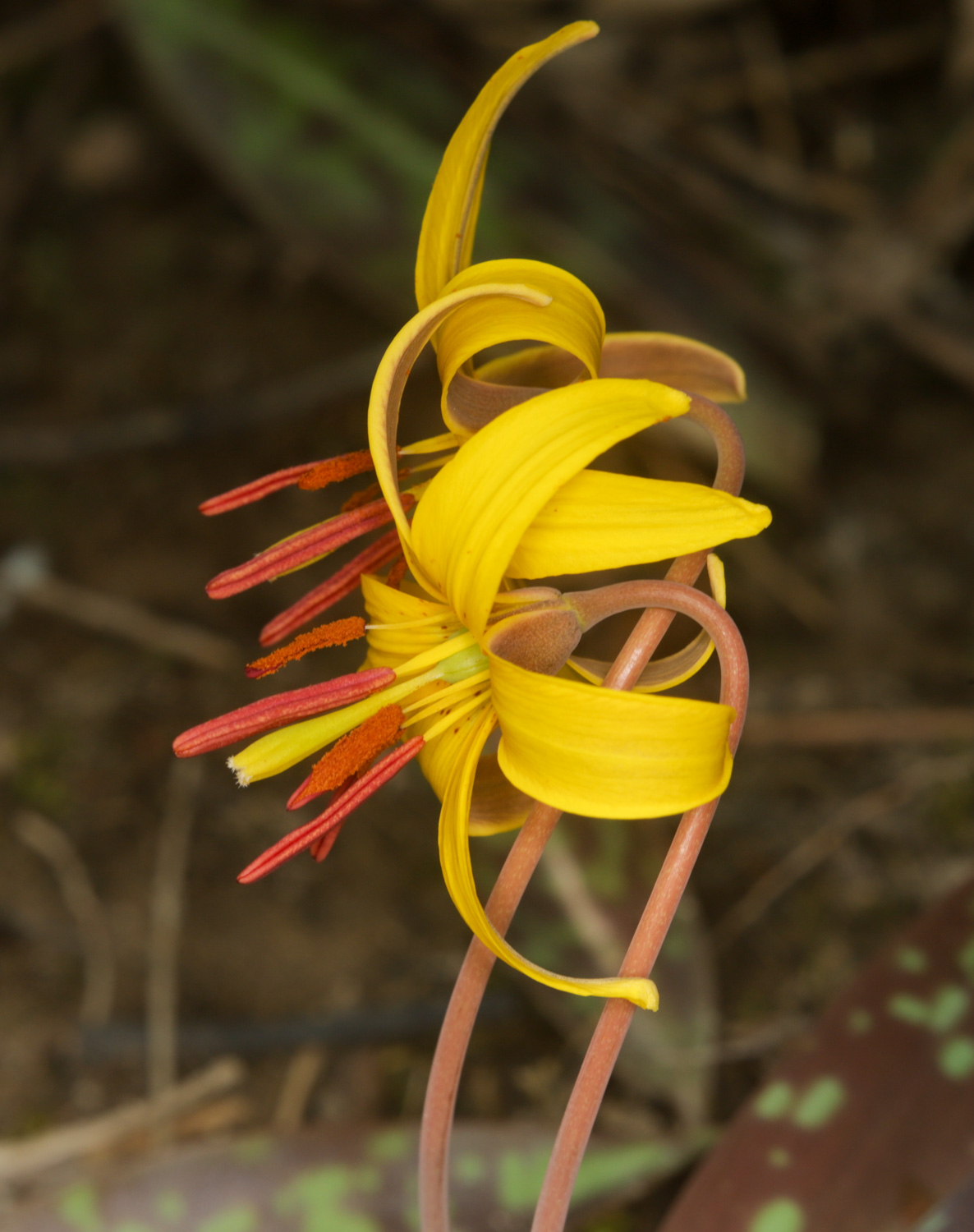
Trout lily |
Yellow trout lily, Erythronium americanum
|
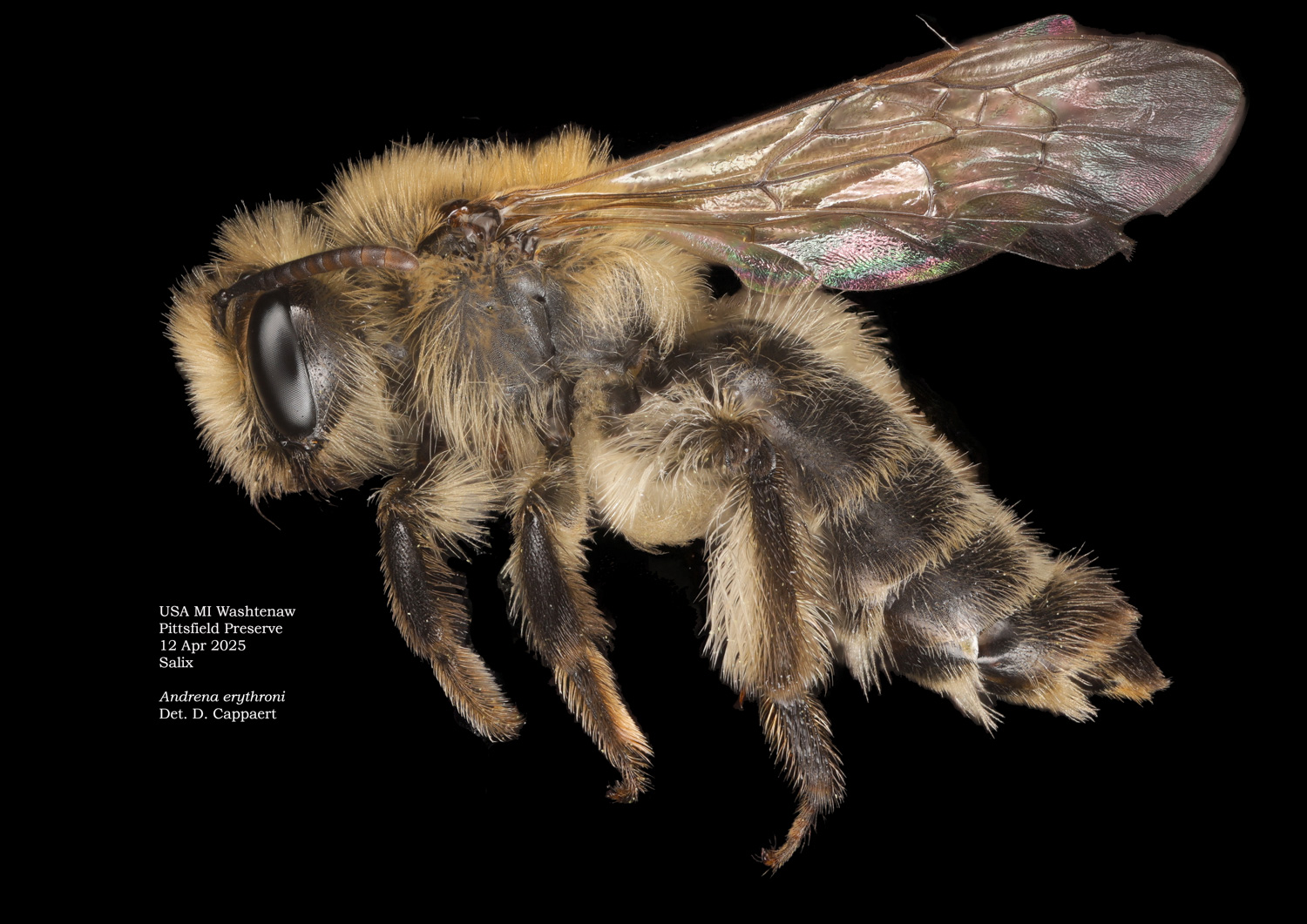
Specialist pollinator: Andrena erythronii
|
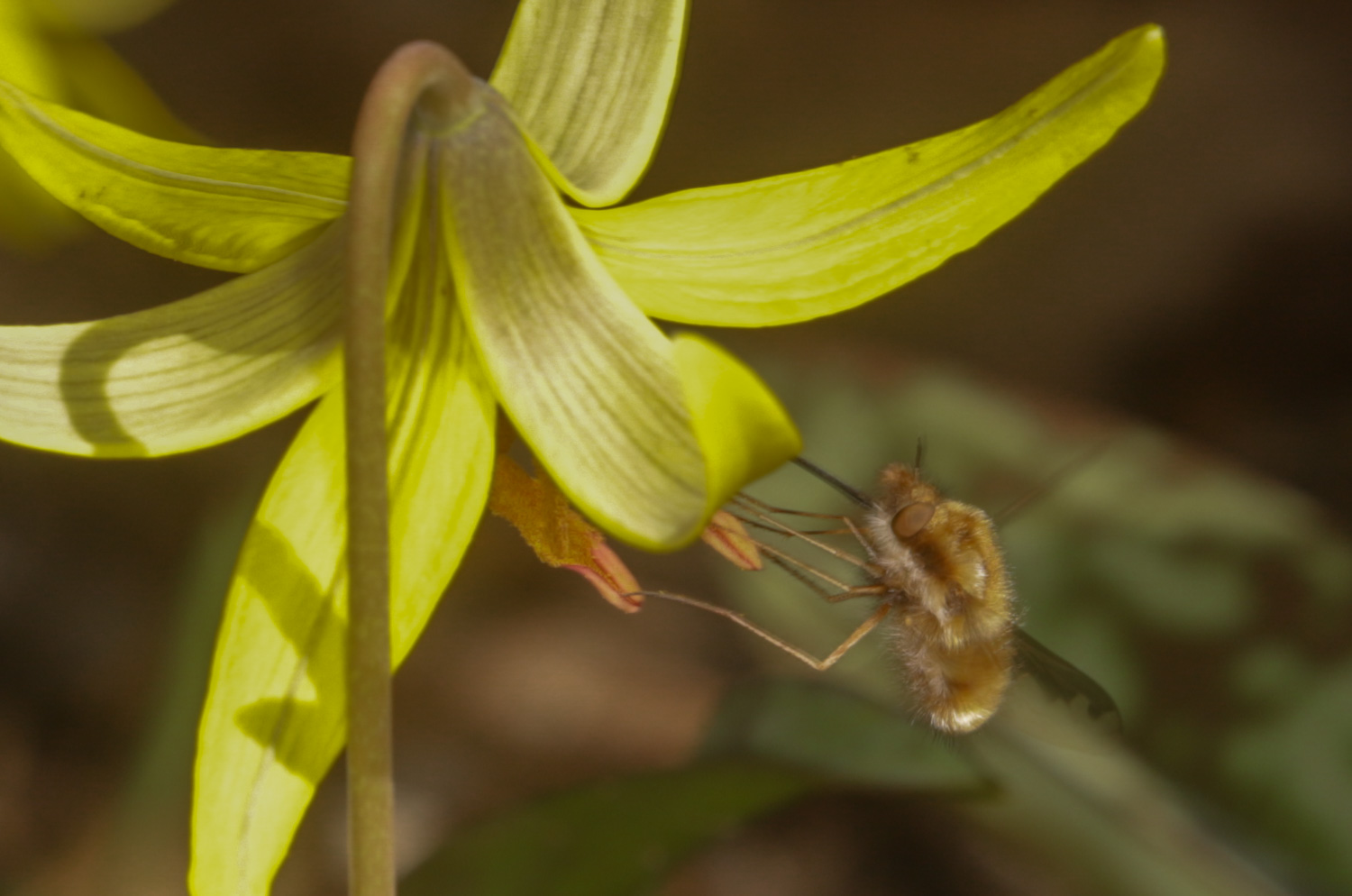
Beefly, Bombyliius major, generalist pollinator
|
Wild geranium |
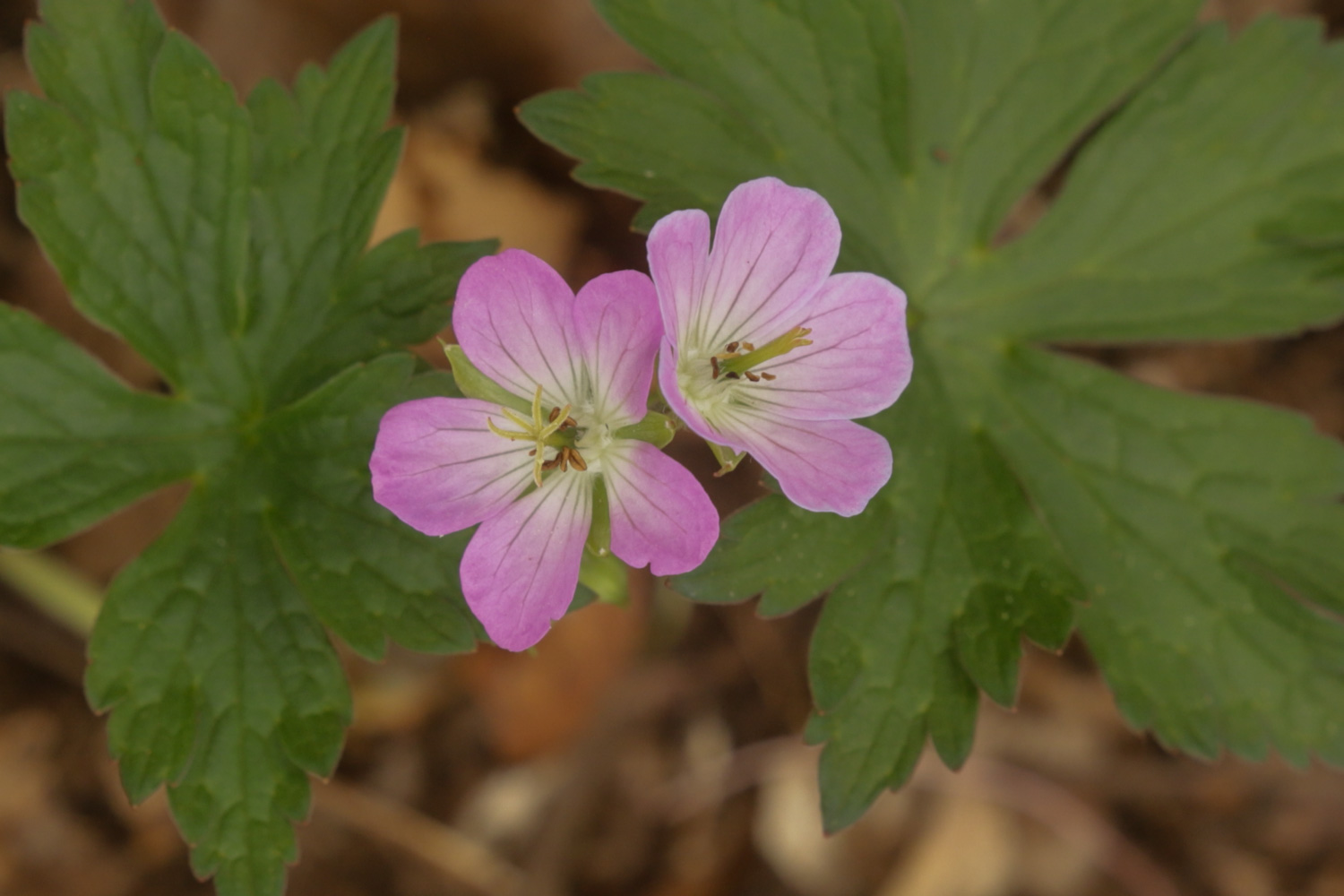
Wild Geranium, Geranium maculatum
|
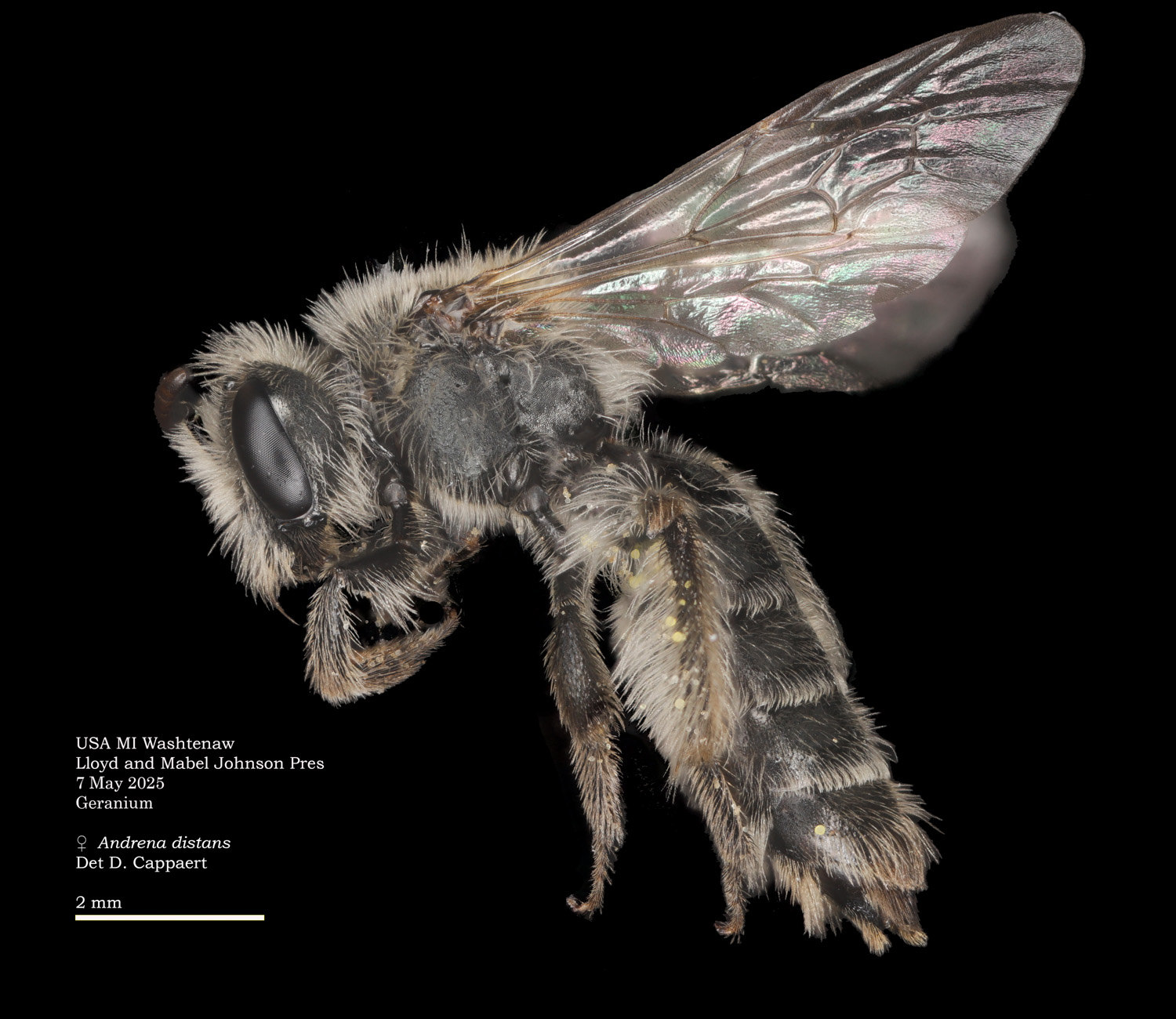
Specialist pollinator: Andrena distans. How do you ID this species? Diagnosis.
|
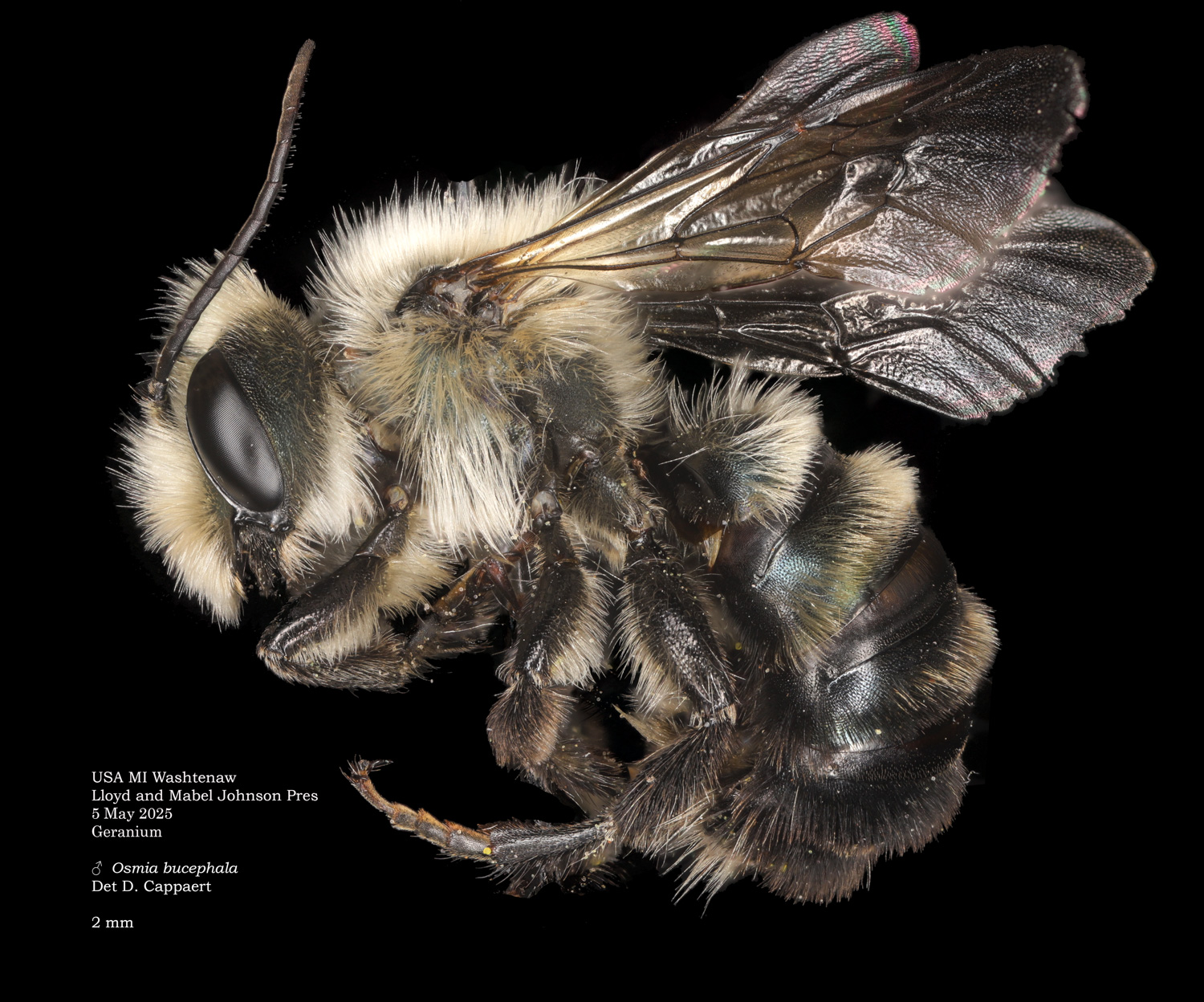
Bufflehead mason bee, Osmia bucephala, generalist pollinator
|
Washtenaw County sites will include Greenview/Pioneer, Marshall Park, and County Farm Park in Ann Arbor, and Iron Creek Preserve in Manchester.
In mid-April and mid-May, we will patrol at least 3 target plants at each site for 30-60 min, net all visiting insects, and freeze them for later pinning and ID. The plant list will be increased or modified based on site manager interests, and available volunteer hours.
All previously frozen specimens will be identified to species, or morphospecies* This could be accomplished by David Cappaert; however it would be preferable to share this work with participants, so that ownership and taxonomic knowledge might be shared with collaborating organizations. David could train anyone interested to ID to the genus level, or morphospecies.
More 2025 observations on spring beauty |
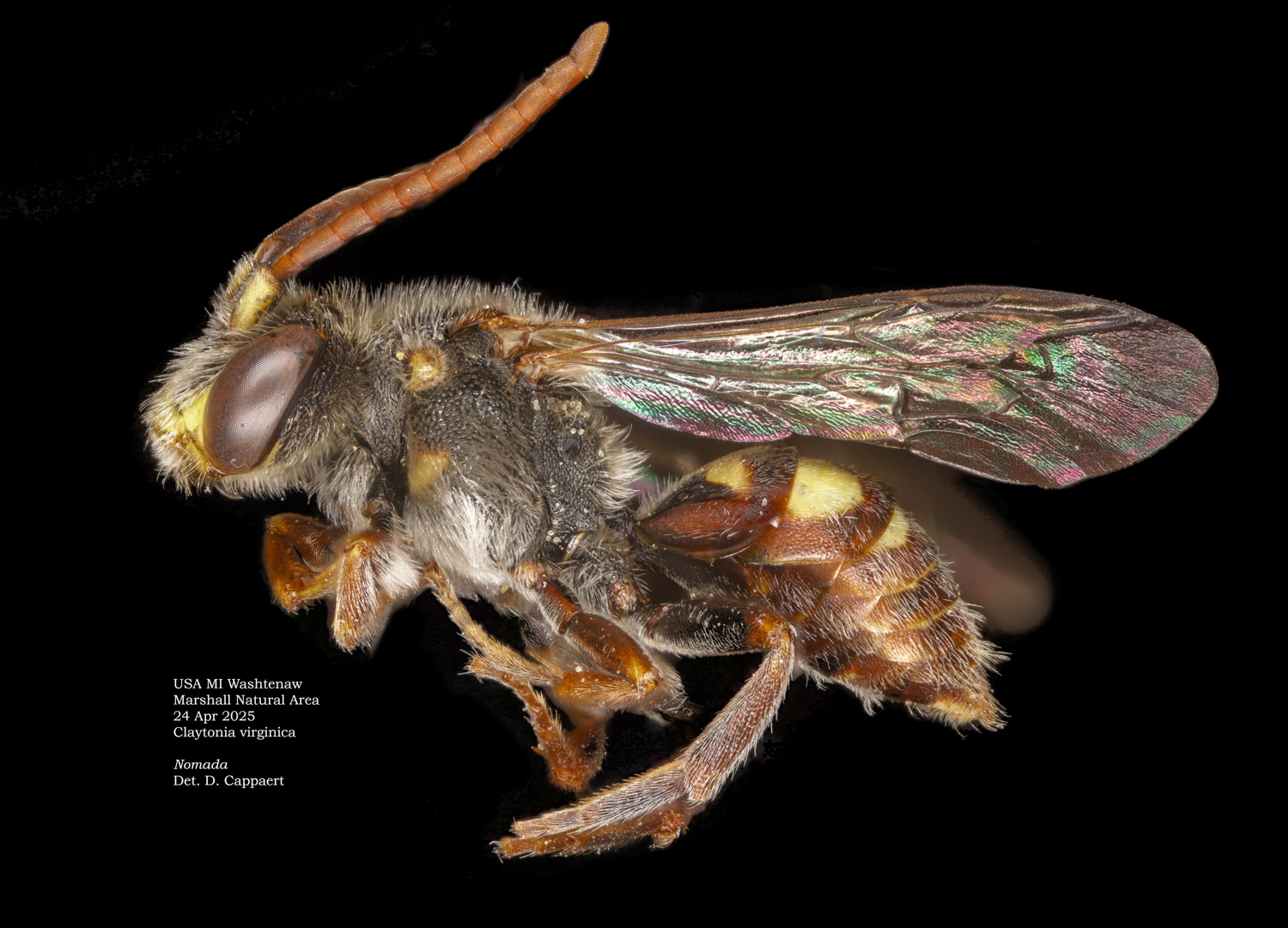
Nomad bee. These are parasitic in the nests of other bees.
|
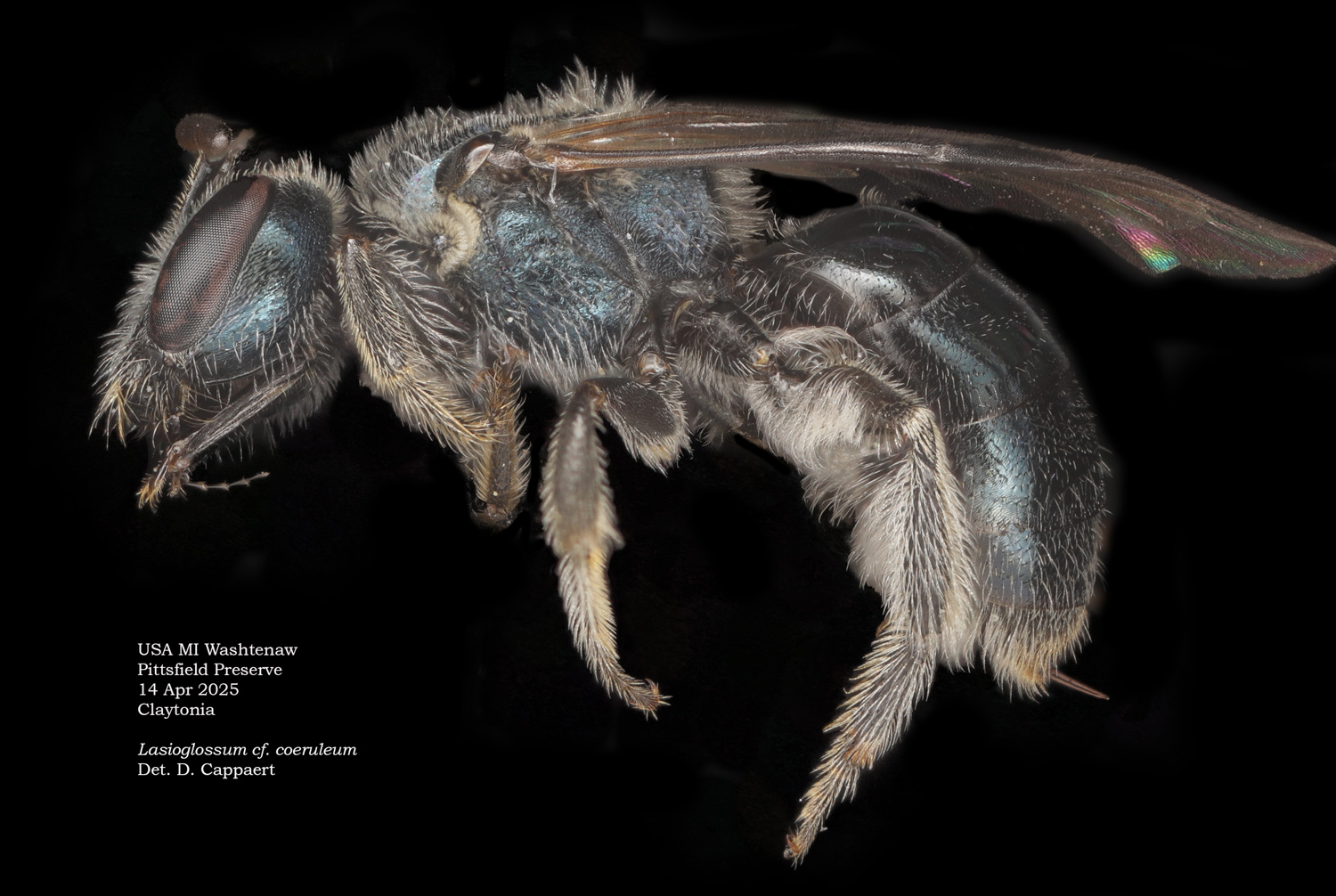
One of the several dozen species of tiny sweat bees in the subgenus Dialictus. ID depends on microscopic details.
|
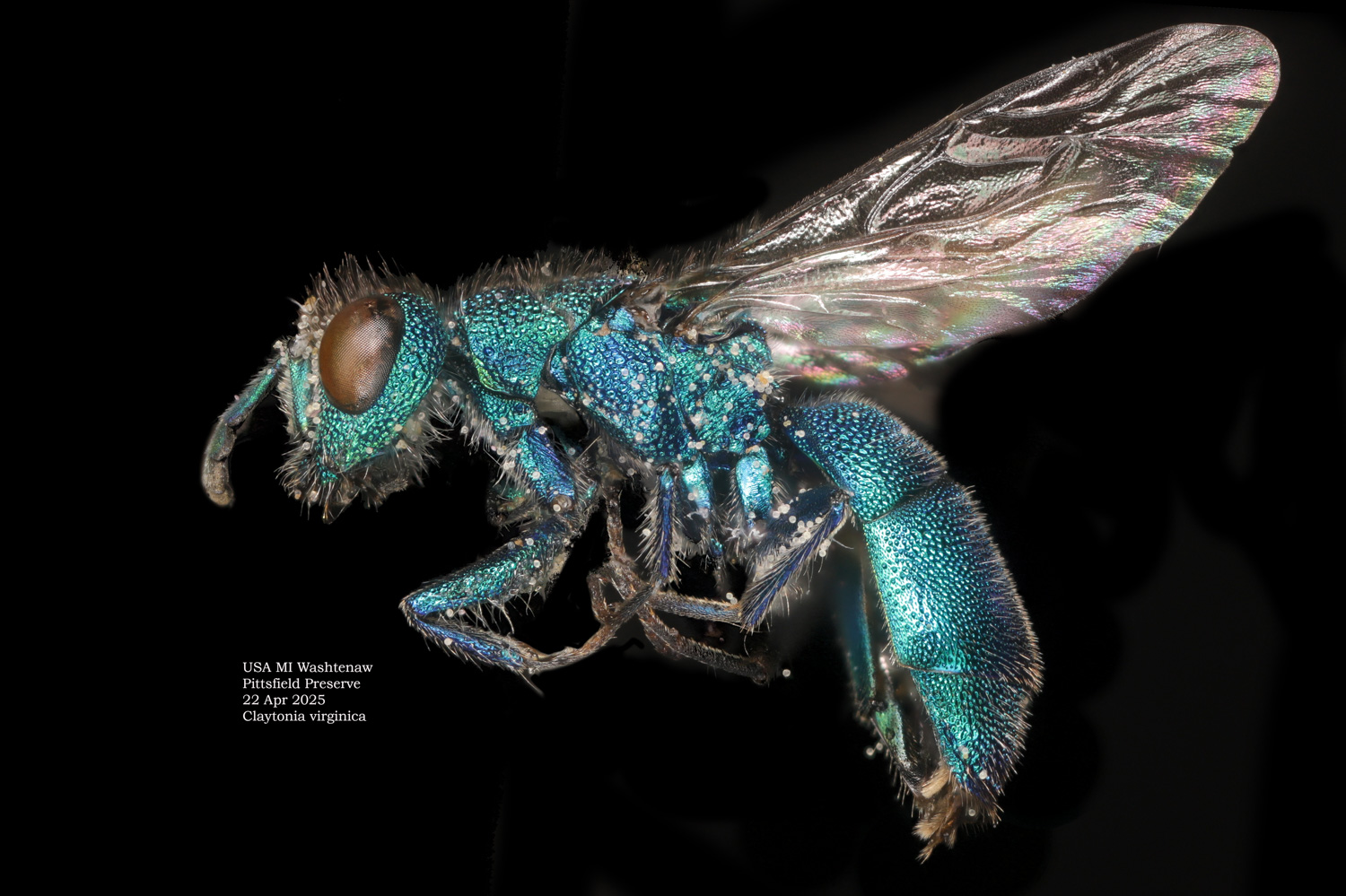
Chrysidid wasp, another parasitic species.
|
Beefly, also a bee parasite.
|
Specimens will be photographed in the field, and detailed focus-stacked images will illustrate details that inform identification.